Protect

We want to protect others.

We don’t want to hurt feelings, share unpleasant truths, give negative feedback. We refrain from difficult conversations, and we let issues escalate until they become too big to be tackled. We rarely push. We almost never ask. We always assume it is not the right time.

We want to protect others. And by doing that, we protect ourselves.

It is a noble intention. Let’s just not take cover behind it every time we are not ready to leap.
Stretching further

If you are not making mistakes (i.e., missing a deadline, delivering a project that is not ready, failing to achieve your goals, being rejected for a role you care about), one of two things is true.

Either you are covering up your mistakes or you are not stretching further enough.

The point is not being flawless.

The point is using mistakes to do three things.

  1. Prepare a space to grow into. A mistake tells where you cannot go yet. It is space to fill up, a beacon pointed in the direction of growth.
  2. Build more resilient relationships. A mistake tells you are a fearless peer. I am sorry unlocks deep empathy and fortifies the ground beneath you and those you care about.
  3. Add to your story. A mistake tells you are not done yet. When you put it into words, it becomes an inspiration and a model.

A practice of research

What you create is not going to be consumed the way you thought it would.

There is no education. There is no explaining. There is no walkthrough. The only way you address this is by committing to a practice of research.

Ask.

Listen.

Aggregate.

Adjust.

Ask.

Listen.

Aggregate.

Adjust.

It might be that at some point what you create is no longer what you want to create. It is not likely, but it is a possibility.

In that case, move a step away and start over.

Ask.

Listen.

Aggregate.

Adjust.

Meeting checklist

I don’t know how many people I have heard at different levels of any given organization complaining about meetings. And I don’t know how it is possible that despite this we are spending between 20 and 50% of our working time in meetings.

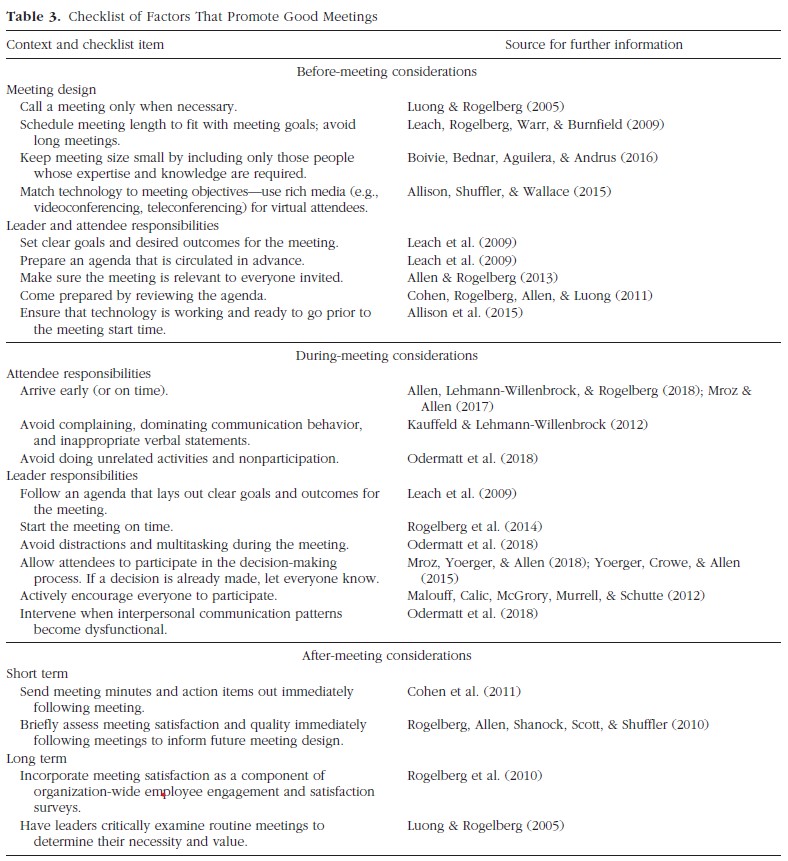
A study by Mroz et al. features a very useful checklist to make the best out of meetings – thanks to Ethan Mollick for sharing it.

Start with considering if the meeting is necessary or not – information sharing and updates are not valid reasons to have a meeting -, as well as who should be present – being a fly on the wall is a huge waste of time. Then have an agenda (and stick to it), avoid complaining (as in nothing ever works or this issue cannot be fixed), and follow up with a request for feedback, from which you commit to take ideas to improve future meetings.

We all want to get better at meetings. Who is taking the first step?

Mroz et al., checklist for a good meeting
Mroz et al., meeting checklist

Dull and easy

The stigma around topics such as failure, ignorance, inexperience makes us hide the very same seed that would allow us to grow. We do not ask the question, we do not show the weakness, we do not seek guidance. Eventually we end up being the same, if not diminished.

We are more silent when we should be more vocal.

And on the other hand, we are met with silence when we should be cheered loudly.

How often do you share just to meet an embarrassed withdraw? How often do you ask just to meet an awkward silence? How often do you open up just to meet shameful rejection?

Everything is dull and easy on the surface.

It is when you go deep, and allow the others to go deep, that things start getting interesting.