Not many people

After becoming a leader, there is a choice you have to make.

As you are in the middle, many think the choice is between siding with management and siding with your team. But the truth is, the two sides are not at war. And a huge part of your responsibilities as a leader is to not act as if they were.

The tension is instead between you and your team.

Every request from the people you lead will cut into your time, energy, and focus. You will not be able to do what you were doing before, what you were good at before. They will ask, demand, pretend, guess, second guess, and ask some more. They will push you to do things you are not used to. They will force you to have conversations you would normally avoid. They will expect that you raise above yourself, often without any guidance, and act as the leader you are paid to be.

And so the choice is between being who you are and being who your team wants and needs you to be.

Not many people are willing to let go – of their ideas, of their ways, of their habits, of their responsibilites, of their work, of their ego.

Not many people are good leaders.
Winners

We read of winners, and somehow we convince ourselves that if we will apply the same tactics we will be winners too.

Of course, those tactics have been used by a countless number of people, in a countless number of situations, and they did not work. We just do not hear about that.

Success is fascinating. Not only because it puts us under the spotlight, but also because it makes others blind to the sweat, stains, and tears that have put us there. There is no magic recipe. Just a story that we craft among immense difficulties and that often gives us back much less than we expected.

Enjoy the journey. It’s the only way.

A practice of research

What you create is not going to be consumed the way you thought it would.

There is no education. There is no explaining. There is no walkthrough. The only way you address this is by committing to a practice of research.

Ask.

Listen.

Aggregate.

Adjust.

Ask.

Listen.

Aggregate.

Adjust.

It might be that at some point what you create is no longer what you want to create. It is not likely, but it is a possibility.

In that case, move a step away and start over.

Ask.

Listen.

Aggregate.

Adjust.

The dumber marketer

Is being dumb giving you an edge in marketing?

I am not talking about a lack of intelligence, but rather of a genuine, näive ignorance around topics you probably can never be very sure about.

Why is this campaign working?

What do you mean by that word you are using so frequently in your copy?

What is our ideal customer? Where do they hang out? What do they care about?

Why is this blog post performing way above average?

Do our visitors approach our resources in terms of “case studies”, “videos”, and “whitepaper”, or are they seeking information about what type of customer, what use cases, what pain points?

Are we expressing our product this way because it is comfortable for us or because it makes sense to our target customers?

I am not sold on the idea that being certain and confident is a good thing in marketing. What worked yesterday, what is working today, will probably not work tomorrow. What worked for that campaign, will probably not work this time. What worked in one company, will probably not work in the new one.

So, is the dumber marketer the one who is going to ask those questions?

Meeting checklist

I don’t know how many people I have heard at different levels of any given organization complaining about meetings. And I don’t know how it is possible that despite this we are spending between 20 and 50% of our working time in meetings.

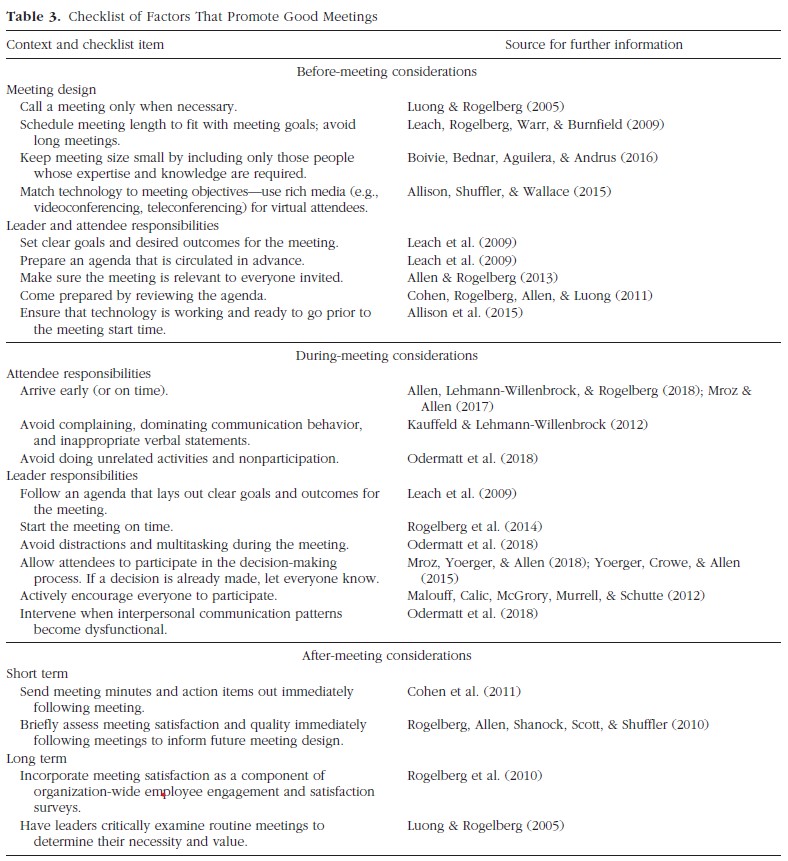
A study by Mroz et al. features a very useful checklist to make the best out of meetings – thanks to Ethan Mollick for sharing it.

Start with considering if the meeting is necessary or not – information sharing and updates are not valid reasons to have a meeting -, as well as who should be present – being a fly on the wall is a huge waste of time. Then have an agenda (and stick to it), avoid complaining (as in nothing ever works or this issue cannot be fixed), and follow up with a request for feedback, from which you commit to take ideas to improve future meetings.

We all want to get better at meetings. Who is taking the first step?

Mroz et al., checklist for a good meeting
Mroz et al., meeting checklist