What we’d like

How would you like others to treat you?

If you are having a bad day, and still need to go out to buy some groceries. You just grab the first clothes you can find and don’t worry about your hair. What would you like others to say?

If you are having a tough period, and at work you can only do the bare minimum. You avoid coffee breaks as you do not want to talk to anybody, you delay your lunch break to grab a quick bite by yourself. How would you like others to talk about you?

If you are not answering that message because it would mean you finally need to have that difficult conversation you have postponed for so long. What would you like others to call you?

The next time we reach for an easy judgement, let’s keep in mind what we’d like others to do when it’s our turn.
Nice and rude

Both nice and rude are roadblocks to change.

One because it hides a truth, the other because it distracts from it.

Being in the middle is worth the effort.

Two attributes of stories

We are much more likely to show empathy to people who are not regularly in our life.

That’s because our partners, colleagues, bosses, friends, acquaintances, parents, kids at some point become characters in the stories we build. Stories that have two interesting attributes.

First, they are unnecessarily brutal in representing our situation. We make our stories worst than the reality is, partly because we need to motivate our ambition, partly to excuse our feelings, partly as a byproduct of the laziness of our brain. What is negative sticks, and so we are never happy, never achieved, never quite there yet.

Second, they establish an escape to our responsibilities by assigning over proportioned weight to the context in which we live. A huge part of this context are the people with whom we spend most of our time. And so, our negative status is often because of what others do, how they treat us, the opportunities they miss to recognize us, the time they suck out of our days. Why should we show empathy to those who are keeping us down? To those who always have it their way?

Stories are brutal, and they solidify over time.

Yet, they are still stories. And as such, it is in our power to change them when we realize they are roadblocks on our path.

One last time

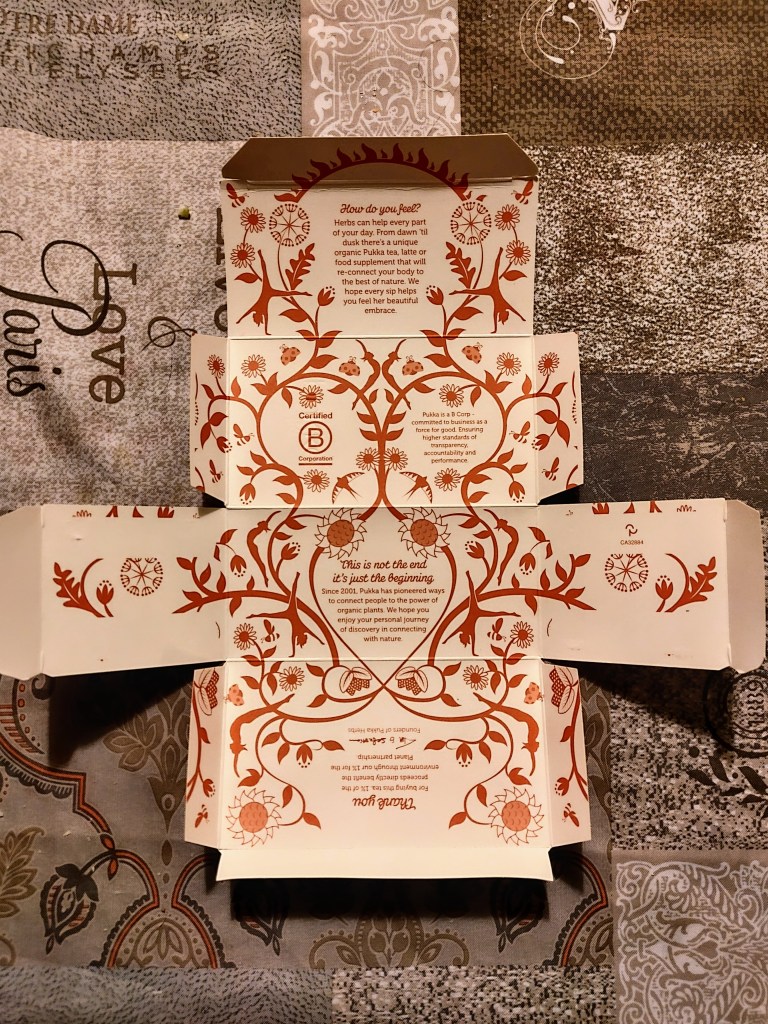
Why would you design the inside of a package and fill it with content?

Perhaps it’s because it’s cheap to do. Perhaps it’s because you can. Perhaps it’s because you want to signal status and quality.

Or perhaps it’s because you know your customers do recycle, they flatten the package to save room in the recycling container, and you want to connect with them one last time before they put the package away.

In any case, it can be beautiful.

Simple and difficult

The first step to achieve most things is figuring out what you want to do.

It is true for life, for career, for relationships. It is true for values and purpose too. It is true when deciding what to study, where to go on holidays, whether or not you should move abroad.

I know it might seem trivial, but many times what we end up doing has little relationship with what we want to do. And so, it’s good to dedicate time and energy to figuring out the first step.

Ask difficult questions.

What do I care about?

What type of person do I want to be?

What do I see when I look ten years from now?

What does success look like for me?

Once this is clear, then the second step is to go all-in.

This is where the challenge starts.

The moment you have made up your mind is the moment you start to be distracted and seduced by a million other possibilities. And the longer your resolution stands, the easier it will be to get demotivated and disappointed, as the path unfolding is never immediately, exactly the one you had imagined.

There is no shortcut though. You can’t achieve much by investing 10%, 50%, 99% of the effort. You can’t change course at the first opportunity, or falter in front of the umpteenth challenge. You can decide to go somewhere else, sure, but you have to go back to step one for that to be effective. And it won’t be any easier.

How simple is this to understand. How difficult to practice.