We know what to do

We know what to do in most situations.

We know that when we approach a potential customer, we should focus on their story, not on our.

We know that when we plan which channels to use for our marketing tactics, we should be selective and carefully craft our messages.

We know that culture eats strategy for breakfast, and that employees are attracted by purpose and leadership, and that losing a talented person is much worse than losing the manager that made them quit.

We know we should be nice with each other, do not fill our calendars with appointments, be respectful of other people’s agendas, avoid showing up late and being distracted by our phone when somebody is sharing something with us.

We know a great deal of things. And yet, most of us fail at the same very things.

There are different reasons why this is so. It’s certainly partly due to our laziness. Partly it’s the fact our focus is misplaced. Partly it’s because we get carried away and we lose control.

And the biggest part, is us feeling we are special. There’s certainly something we know and that all others before us have missed. Our situation is unique, and we will succeed where everybody else has failed. This time, this time only, it is going to be different, and the rest of the world is going to see what I am, where I am at, why it’s important and follow me blindly.

Open your eyes. That is (almost) never the case. If you just stick to doing it, you will still end up a whole lot better off. And people around you will as well.
Renewing trust

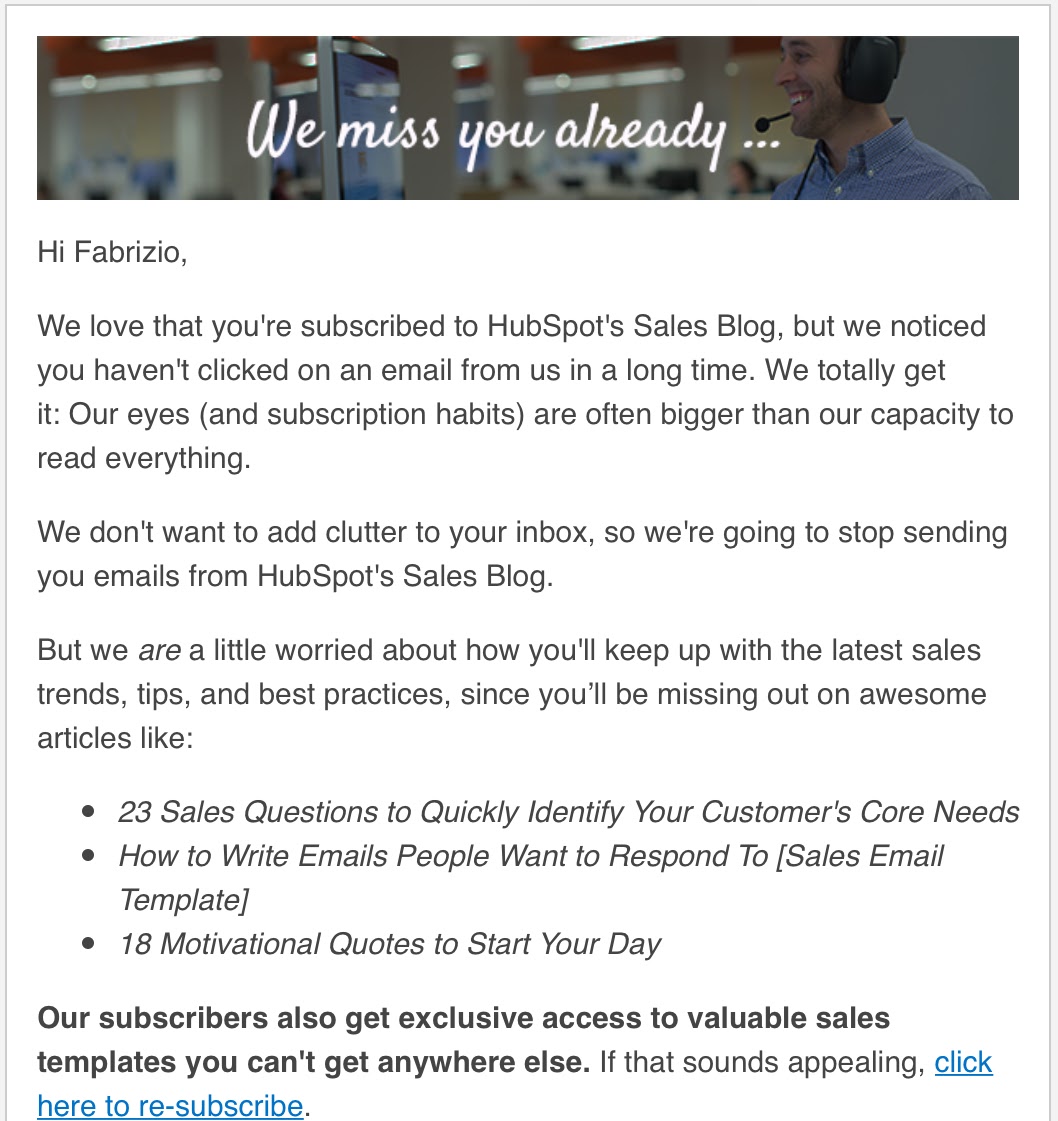
The automatic renewal feature, enabled by default in plans that seal an agreement between a service company and the final consumer, is not designed to improved the user experience.

Despite the bullshit about “continuity of service”, that particular feature is designed (and enabled by default) to leverage our tendency to forget, and therefore fictitiously increase the recurring revenue metric.

It feels like yet another instance in which companies that invest loads of money in second-guessing personalisation of marketing messages (ads, newsletters, offers, etc.), fail to design their services and operations in a personal way when it would actually be easy.

Hi there, we have noticed that your plan is expiring in 30 days.

We do not do automatic renewal, as we believe in how good our service is. And on this note, this is what we have done for you this past 11 months (*list of features that the user has used, articles the user has read, videos the user has watched, …).

We’d like to continue delivering this and more, and to renew we ask you to answer two questions on this online form (the questions being: Do you want to renew? Is your credit card still valid?).

On the other hand, if you decide not to continue with us, we respect your decision and hope to have you back soon. We would still like to know if it’s something we’ve done (link to online feedback for churn).

Thanks for being a valuable member of our community. For any question on renewals, just reply to this message or call us at xxx.xxxxxxx.

Have a wonderful day!

Promises

We all make promises. Sometimes we say we will do something, other it’s just the mere fact that we are in a certain position that “promises” we will act in certain ways and not in others.

Promises are extremely complicated. Once a promise is made, a pact is established. Nobody likes to be break pacts, yet it is a fact of every day life that most promises are not kept. We forget about them, we do not have time to actually stand by them, we change our mind, we probably did not intend to commit in the first place but thought it was nice or appropriate in the moment.

I found few things to help when it comes to promises and acting on one’s words.

Promise little. Wanting to please people around us is normal, and so we tend to say we will do things even when we already know we don’t have enough time or energy, we don’t really care, we have not the skills to, and so on. Be honest with yourself in the first place, and promise only what you know you can deliver.

Be specific with the promise. Tell what you will do, how, when, with whom, add as many details as you possibly can. This will help you set a plan in your mind that will eventually make it easier to stick to your word. This is particularly helpful also when the promise is done because of the position you are in: if you start in a lead role, it is for example very useful to sit down with the people you will lead and set clear expectations about your role.

Remember and do. This is the tricky bit. Promising little will help you remember, and being specific will help you with doing. Yet eventually, you will still have to follow up on the promise. Doing it is ideal, yet if for any reason you realise you can’t, you will still have to openly and candidly tell something like: “I know I said I would, and for this and that reason it is not possible right now”.

A beautiful note

The way you treat people that gravitate around your business is as important as the way you treat people that are at the core of it.

This below costs nothing, is caring and generous. It is beautiful, and tells a lot about how this company does work.

Free trialling trust

If you are considering offering a free-trial for your subscription-based service or product, you first need to answer the following question with great honesty.

Do you trust your service/product enough to believe customers will stick around after the free trial period ends? 

If the answer is yes, then all you need to get the interested customer started is their e-mail address.

If the answer is no, then of course you’ll ask them to fill a form, enter their telephone number and street address, and provide a valid credit card information before even getting started.