Right in the moment

As an Italian abroad, I am a huge importer of pasta from Italy. When I saw this today, I got hopeful.
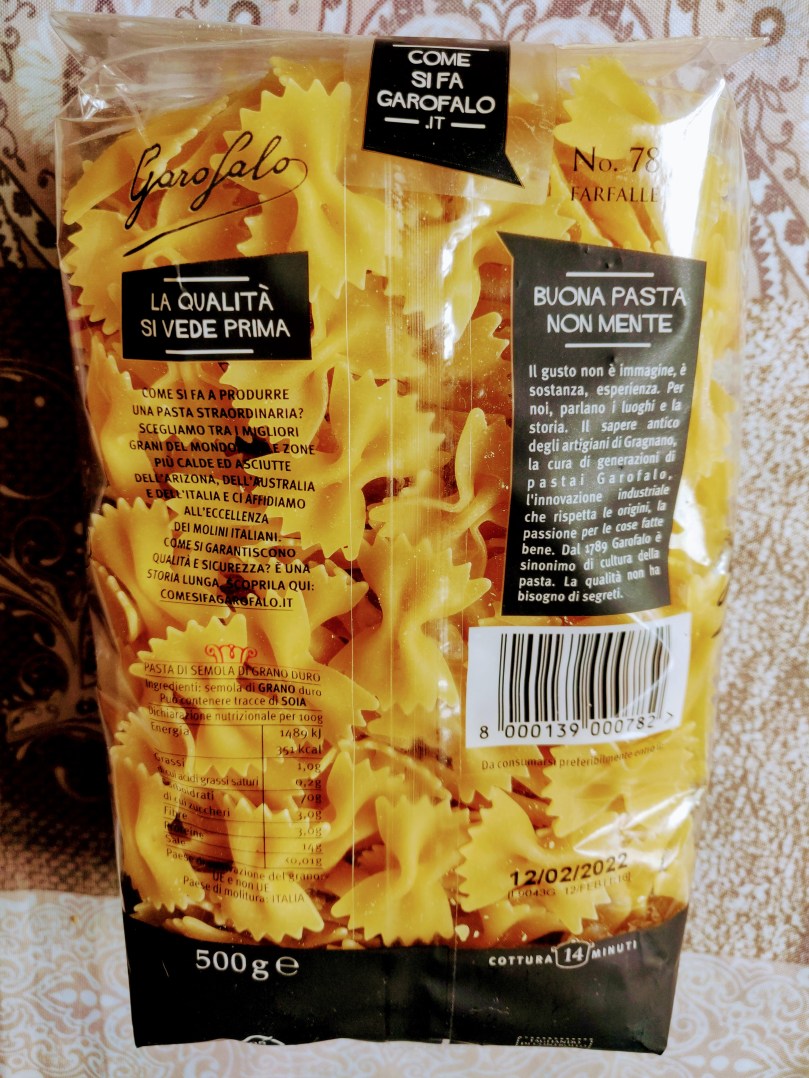
fabrizio-trotti-pasta-garofalo

The packaging is in Italian, but what got my train of thoughts started was the little branded tape that sealed the thing. It reads “comesifagarofalo.it”. A custom site the producer really wants me to check out as I am opening the package! (“come si fa Garofalo” could be translated into “how Garofalo is made”, yet in Italian the verb “to make” could also be used as “to cook”).

I got interested in the label as I have experienced many people do not know how to cook pasta. I have been asked about that quite a lot since I moved out of Italy, and I have some horror stories about how people actually go about cooking pasta that I will leave for a stormy night in the forest.

I hoped the company did recognize the problem and decided to put up a mini-site to educate people about this. I imagined a very simple site with the 3-4 key instructions (it is really that simple) right on top, perhaps a video, some hilarious “don’ts”, and a bunch of recipes. A company who made its name because of the quality of its pasta (Garofalo definitely has) should also care about how that is cooked and consumed. The possibility got me really excited.

That did not last long, as I unfortuntely found the mini-site was a mere way to showcase the manufacturing process of Garofalo pasta (where the ingredients come from, what is the process that goes into it, and so on).

I find this a missed opportunity to build a meaningful relationship with customers. When people have a package of pasta in their hands, the water boiling in the pot, I doubt they might be interested in where that pasta comes from or whether the ingredients used are genuine. I don’t mean to imply these are not important things in the buying process of a package of pasta (to some people, at least, they are). Yet by the time you have read the information on the website, your guests might have arrived, your water will have evaporated, and pasta will not be served for another half an hour.

When you think about how to promote your brand and its quality, always keep in mind that the customer has different types of interactions with the product. And while consistency is important, that does not mean you have to feed information about manufacturing and quality when they are about to cook their dinner. Think about what their needs might be at every stage, and give them what they might need the most in that moment. It is that simple, and yet definitely not easy.

In search of a sweet spot

Taking responsibility is important, and it shouldn’t mean we have to beat ourselves up.

Not beating ourselves up is wonderful, and it shouldn’t mean we don’t have to take responsibility.

There’s a sweet spot we are looking for here.

It’s the point at which we understand that things happening are never fully one’s fault, we recognize that we had a role in making the situation what it is, and we attempt to move forward with a small or big improvement. Possibly, bringing the others involved along with us on the same path.

Naming and acting

If you call mean, “mean”.
Or if you call kind, “kind”.

That is OK, and despite some discomfort in the first case, people will have the tools to decide if they want to stick around or not.

The real disaster, though, is when you call mean, “kind”.

As in.

The most important asset is our people, and then people are asked for regular overtime to keep up with management/customers/partners requests.

We embrace innovation, and then to kick off a new project people have to go through a rigid approval system.

We want to hear from you, and yet it is a machine responding the call, and before I get there I have to wait 20 minute on the line.

How we name things is important. And even more important is that we follow up to the naming with actions and practices.

Sticky ideas

The ultimate test to your ideas is to see if they stick once you are gone.

Crystallise them, test them, make them spread. And then, remove yourself from the situation and see what others do with them. If they are good, people will continue using them, they’ll make them yours and eventually even improve them. If they are not and people spend most of their time working around them, finding shortcuts and alternatives, you can make one of two choices.

You can discipline and seek compliance, further explain why your idea is good and everybody should adopt it, implement processes and checkpoints to make sure they do. And at some point realise you have landed very far from where you intended to.

Or you can sit down with the people involved, share your observations, start a discussion and together come up with a shared idea that works even when nobody is watching. It seems to me this is the only path to progress.

Bending the rules

We are all subject to the pitfalls of “this time will be different”.

Sometimes ago, I was listening to a podcast featuring Guy Kawasaki. Guy promotes a pretty interesting and well known framework for presentations – the 10/20/30 rule. That is to say 10 slides, in 20 minutes, with text on the slides set at a minimum of 30 points.

Despite people knowing about his “rule”, he was amazed by the fact they were still pitching ideas to him with presentations that did not respect any of those precepts. When the host asked why he thought that happened, he said that people always tend to think that the rule does not apply to them: “Sure, I know about the rule, but that does not apply to me. My idea is the most interesting, what I have to say is incredibly powerful, my insights are superb. This time will be different, I promise.”

It turns out, it almost never is.

A slightly different version of the pitfall is “this time alone”.

Working with start-ups, I have often heard the mantra: “this is not who we are, we’ll do it this time alone, and when things will start getting traction, we’ll finally be able to act the way we really, deeply, sincerely are”. Of course, if you are eventually lucky enough to get some traction, you’ll have forgotten and most likely shit on how you really, deeply, sincerely are. No reason to go about searching for excuses.

Some rules are set for you, some you get to set.

I am not promoting absolute obedience and compliance, yet we should be aware of these traps and be completely honest about a fact. When we start bending the rules, chances are we are starting to bend ourselves as well. We ought to make sure we are doing that in a direction we’ll feel confident and proud about the morning after.