Sales and Marketing

The leads we are getting are no good.

Sales reps do not know how to sell.

This is a common exchange in B2B. And it’s where most strategies and plans go to die.

Try changing the approach to the following.

What information might we benefit from to get better leads?

What information might we need to close more sales?

You know the saying, two pairs of eyes are better than one. Imagine two pairs of eyes, two experts, two brains, two departments focused on solving the same problem.

Figure it out

The current situation is unprecedented. The pandemic is putting a strain on everybody. A huge amount of people have suffered serious consequences.

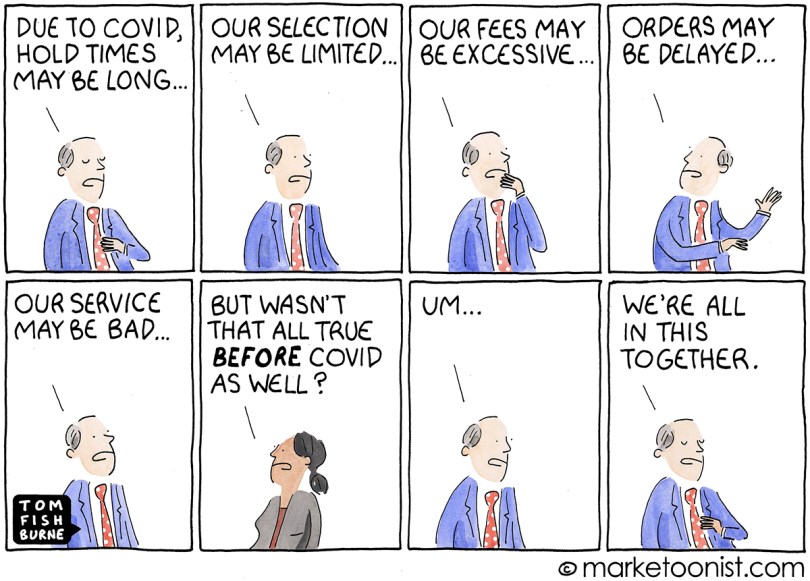
And if after two years your company is still using Covid as a tentative reason to excuse poor customer service, delayed deliveries, price increases, product shortages, it’s time for you to stop.

Rethink your business, instead, and figure out a way to provide the experience people expect.

That’s your responsibility.

Note: the image of this post is from Tom Fishburne @Marketoonist.

Goals

Give people goals that:

  • matter for the achievement of a more generic business goal;
  • they can impact with their own actions;
  • they can easily track and report on;
  • are clearly communicated and consistent across time.

It does not end here, but this is a fantastic place to start from when managing a team.

No barrier

It’s easy to fall into the familiar refrain that goes: “B2B marketing is boring”.

That is just an alternative version of the hit: “We have always done it this way”.

The reality though is that most marketers don’t have the guts – sure, sometimes it is the budget, or the time, or the team, but let’s be realistic, it is mainly the guts – to try anything new.

Fortunately, some do. And some others do as well. And some others do it some more.

There is literally no barrier to B2B marketing today.

Just go experiment.

Note: the image in this blog post is from Postman‘s graphic novel, The API-first World.

Drama

Organizations are perfect sets for dramas.

The problem is that drama is a great way to keep people busy and a poor way to keep people engaged, motivated, creative, purposeful.

While everyone is waiting for the next big reveal, no one will commit to a new idea.

While everyone is betting on which of the two executives will win the next argument, no one is listening to what customers are saying or grasping the emerging trend in the market.

While everyone is invested in wowing their managers, no one will buy into the vision and values that would make employees, shareholders, customers, and community better off.

That feeling of overwhelm, of tiredness, of pointlessness is not due to the job. It’s due to drama.

When you get rid of the spaces where drama flourishes – the hidden information, the decisions behind closed doors, the selected circles, the executive approvals, the vertical silos -, you can repurpose the resources to allow your people and your business to grow.