Mentor

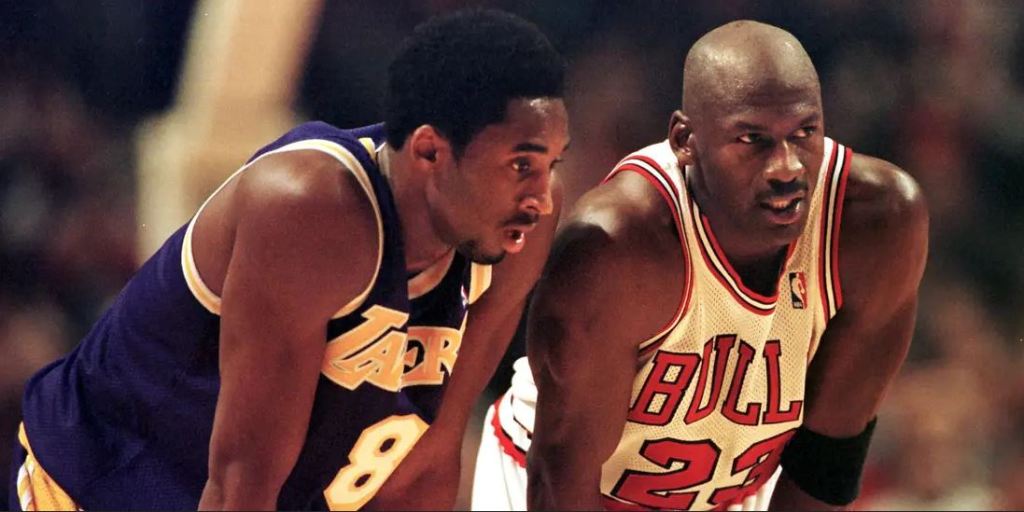
In December 1997, Los Angeles Lakers played the Bulls in Chicago. Many consider that the first real face-off between Kobe Bryant (who had been drafted the year before) and Michael Jordan (who had already won five championships).

During a break in the game, Bryant is close to Jordan. Bryant grew up watching Jordan play, he’s his idol. Bryant is bold enough to ask Jordan a question about his game: “how do you feel the defense when you turn around on your jump shot?”.

Now, Jordan could have done many different things here. He was the undisputed star of the NBA, he was going to win another championship that year. Yet, he knew that could not last forever, and many thought Bryant was his successor, the new rising star destined to take his place in the hearts of millions of fan.

Jordan could have done many different things. He could have walked away, he could have laughed it off, he could have hidden his secret, he could have shared the wrong information, he could have told the newbie to come back after winning five rings.

And he decided to share his expertise. “You feel them with your legs.”

Knowledge is no longer a limited resources (provided it ever was). Knowledge is incremental, and every time you share your knowledge, you add another person’s perspective, experience, take to it. Knowledge grows, and eventually it makes a community (whether it is the National Basketball Association, your team, your neighborhood or your family) better.

Mentoring is the very act of sharing knowledge. We can make of it a practice and be generous with what we know, be open to give it away, and perhaps see it returning in time with some new twists.

And if you are in the young Bryant’s shoes, be bold enough to ask.

This is the practice of leadership.
What feedback is not

You can’t respond to feedback with a counterargument, a justification, an elaboration of the original idea.

Feedback is not a discussion, something you ought to win, a way for you to influence others with your perspective. Feedback is not an attack, something you have to defend against, a way for others to bring you down. In most cases, feedback is also not supposed to start an action, something that puts an obligation onto you, a way for others to have your work rectified or changed.

The only, immediate, acceptable response to receiving feedback is always: thank you!

Tension breaks down

You are never the best judge of your own work. You cannot be.

Sometimes it is because of sunk costs, other times because of laziness, more often than not simply because your perspective is narrow, as it takes an incredible effort to see the world as others might. And so, we are often in tension between judging our work too harshly or too softly. Either way, it is never an appropriate measure for how we are doing.

This is valid also for groups. Going beyond the boundaries of what is known, liked, achieved is extremely difficult. Sometimes, we can mitigate this with diversity, and we should certainly try. But in the long term, a group will always appreciate their work with some degree of distortion.

Of course, this should not stop us from doing the work. Actually, it is an additional reason to put our work out there as soon as we deem it good enough. To see if there’s a fit, if it resonates, if it works, if it can spread. And if the answer is no, go back and repeat.

What we should never do, on the other hand, is protect the work from others, from feedback, from criticism, from admiration. We should not become executors that see a delivery (or a missed one) as the final stage. What we should never do is give that tension too much power, because eventually tension breaks down. You might be too far, too lost, too blind by that time to get back on track.

Double reminder

News, magazines, social media, broadcasters, experts, webzines, blogs, radios.

They are all out there fighting for our attention. And of course they exaggerate the things they say and they write.

Here’s a double reminder, particularly useful in these days of overexposure and quick bursts of fear.

As consumers, we can decide what to dedicate our attention to. It’s often not easy, but we can concentrate on the job we are here to make and cut out all the rest. No matter how dramatic, alarming, important the news of the moment is framed to be.

As content creators, we have a choice to make between trying to shout louder and use a softer tone of voice. If we decide for the latter, it will be tougher at times. But when we go for the former, the message we want to share will simply fade in the overwhelmingly buzzing noise that jams our audience’s ears at all times.

Simple and difficult

The first step to achieve most things is figuring out what you want to do.

It is true for life, for career, for relationships. It is true for values and purpose too. It is true when deciding what to study, where to go on holidays, whether or not you should move abroad.

I know it might seem trivial, but many times what we end up doing has little relationship with what we want to do. And so, it’s good to dedicate time and energy to figuring out the first step.

Ask difficult questions.

What do I care about?

What type of person do I want to be?

What do I see when I look ten years from now?

What does success look like for me?

Once this is clear, then the second step is to go all-in.

This is where the challenge starts.

The moment you have made up your mind is the moment you start to be distracted and seduced by a million other possibilities. And the longer your resolution stands, the easier it will be to get demotivated and disappointed, as the path unfolding is never immediately, exactly the one you had imagined.

There is no shortcut though. You can’t achieve much by investing 10%, 50%, 99% of the effort. You can’t change course at the first opportunity, or falter in front of the umpteenth challenge. You can decide to go somewhere else, sure, but you have to go back to step one for that to be effective. And it won’t be any easier.

How simple is this to understand. How difficult to practice.