Elaborate

The Flickr for videos.

A Netflix for video games.

The Airbnb for parking.

It’s a great way to describe what your product does, but do you and your team understand what that means? What are the characteristics of the original that you believe you have? What will ensure that you will still be in that same game in the future? Or is it a trick to cheat your stakeholders into believing you will get to a similar valuation?

It is a useful exercise to clarify what you mean by taking this useful shortcut. It brings your team together and creates alignment throughout the company. It gives you milestones to look forward to and a manifesto customers can buy into.

Start with:

  • What features matter to the original and to us alike.
  • What parts of both stories are common and what are not.
  • How do we ensure we continue on the same path.

A matter of responsibility

Feedback is not a command. Yet many, both givers and receivers, take it as such.

Feedback is a way to open the mind to a different approach, to something that had not been considered, to a new interpretation. Then, it is up to the receiver to filter it with their knowledge, expertise, purpose, to decide what to keep and what to let go.

Feedback is no judgement and no decision.

At any point, the receiver has the power to decide on the actions that will be taken. They are responsible for the final results.

Exactly the same

It’s not enough that you make your story clear for yourself. You also have to make it clear for those you serve.

Most companies have a clear idea of why they are in business, of the problem they solve, of the new world they want to build. But then they stop there. They fail to put in the work that is necessary to spread the word, to tie goals into their vision, to buy others into their perspective. And that’s why most companies feel like they are exactly the same.

Differentiation also means leveraging that unique story and making it relatable. If you don’t understand this, you are in a perfect competition.

If you’re innovating in a nascent market, the push for recognition of your product category needs to be a major chunk of your go-to-market strategy.

Stewart Butterfield, From 0 to $1B

Irrational

It does not tell much about our product.

What about talking about that feature we have spent all that money on?

We should probably play it safe.

I don’t think it’s going to work.

It’s nice, but it lacks appeal.

Why don’t we put a nice picture with a smart description of our product capabilities?

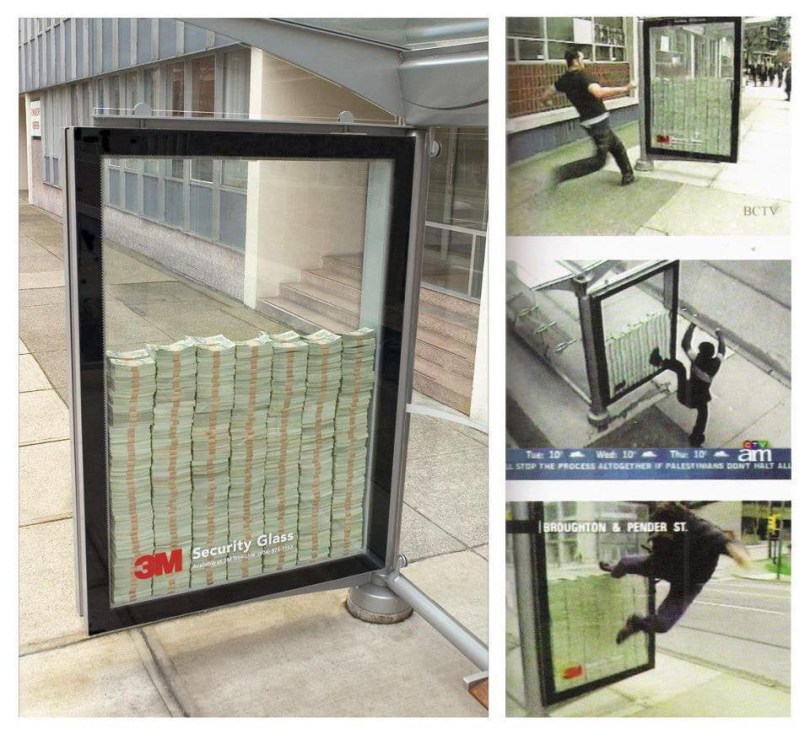
I am sure whoever is behind this genius campaign by 3M has heard some versions of this many times, as many marketers have. Some give up, some persist.

One way or the other, keep in mind that people are not moved by rationality.

Hitting a wall

When a plan hits a wall, two questions can help.

What do I know today that I did not know when I came up with the plan? This will tell you if the conditions have changed, if the stop came because of that, if there are shifting forces that you underestimated. It tells you whether the general direction is still valid.

To what degree do I still believe in the original plan? This will tell you if you are still committed or if it’s time for a change instead. It help you stay clear from easy, short-term fixes, and it tells you whether it’s worth it to try once more.

Rest assured, most plans hit a wall at some point.