One last time

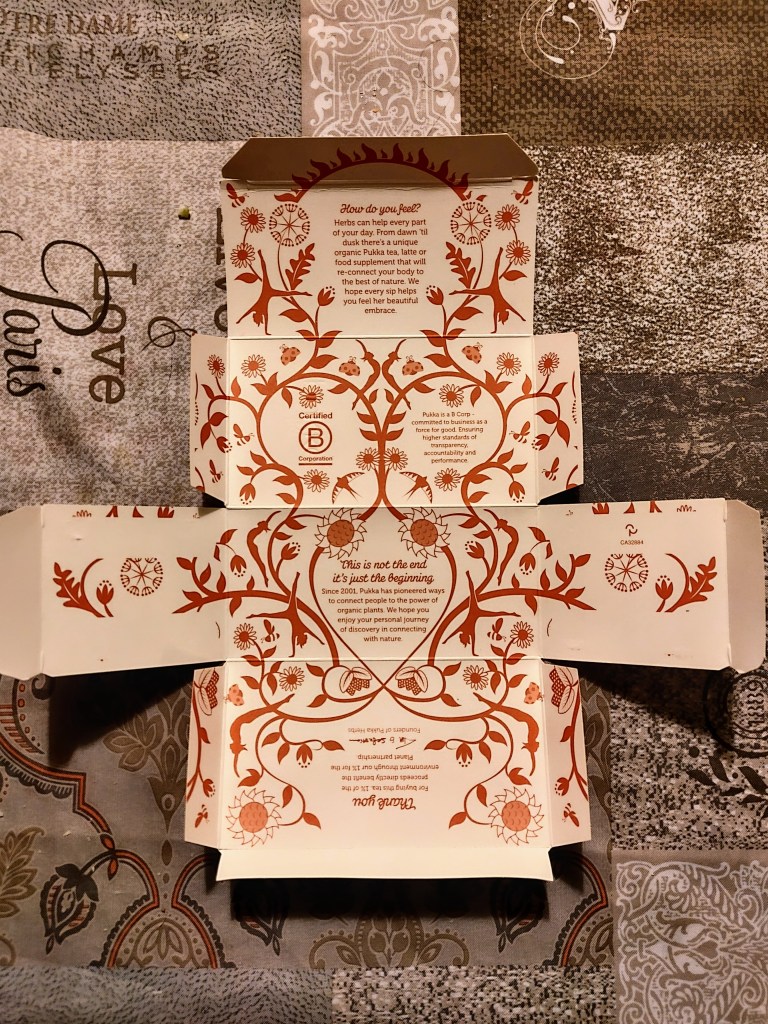
Why would you design the inside of a package and fill it with content?

Perhaps it’s because it’s cheap to do. Perhaps it’s because you can. Perhaps it’s because you want to signal status and quality.

Or perhaps it’s because you know your customers do recycle, they flatten the package to save room in the recycling container, and you want to connect with them one last time before they put the package away.

In any case, it can be beautiful.

Take my data

You are more ok with the idea of paying taxes if you regularly benefit from tangible services your taxes contribute to cover.

The same is valid with data.

The problem with companies collecting information about us is not the collection per se.

It’s the secrecy of the operation, the impossibility to control what is collected and what not, and the fact that six months after buying a new car you are still getting ads with car offers.

“Have you already purchased a car?”

“Yes.”

“Ok, from now on you will stop seeing car offers while navigating the web. If you want to reactivate car offers in the future, you can do so by typing ‘activate car offers’.”

“Thanks, and feel free to take my data.”

Everywhere

The voice of your customers – what they feel, what they want, what they say, how they speak about their problems, your product and your competitors, what they think – is everywhere.

It’s in the messages they send to your sales and support.

It’s in the reviews they leave online.

It’s in the forums and discussion boards.

It’s in the noise at trade fairs and conferences.

It’s in the interviews transcript for the next case study.

It’s in the blog and social media posts they write.

It’s in the way they use the material you provide them.

It’s in the results to the survey you are running on your website.

It’s in the questions they ask the first time they meet you.

It’s in their choices after you’ve sent them the final proposal.

Of course, to make all of this relevant, you have to first shut up. Then listen. And finally act on what you have learned.

Working on the voice of customer is an expression of servant leadership. That’s probably the reason why so few succeed with it.
Unusual requests

Three ways to address an unusual request from one of your customers.

1. Sorry, we can’t help, you can try over there.

2. We are sorry, we have tried and checked our policies, we can’t help. You can try over there.

3. We are sorry, it’s not perfect, but it should work. No need to pay for this, come back later and we might have a better, more permanent solution.

They are not so different from each other, in fact they stand on a continuum. And it is certainly possible to emphatize with each one of them.

But whether you go for 1, 2 or 3 makes a huge difference in the experience you shape for your customer and the relationship you are building with them.

Three books

Three amazing books about how people make up their minds that can enhance your marketing skills.

Thinking, fast and slow – by Daniel Kahneman.

The righteous mind – by Jonathan Haidt.

Influence – by Robert Cialdini.

If you read any one of these, you’ll have a much better understanding of why talking about features and how brilliant your product is will not help you boost your sales.