Feel, think, and behave

If you tell me you will increase my productivity, that’s an idea that comes and goes very quickly.

If you tell me you will cut the time it takes me to translate my research into deliverables for my stakeholders, that’s a much more difficult idea to shake off.

If you tell me you will improve my efficiency, that’s an idea that comes and goes very quickly.

If you tell me you will provide a platform where I can store, search, and analyse all customers’ feedback, that’s a much more difficult idea to shake off.

If you want me to be interested in an apartment, and all you show is the floor plan and the energy consumption, you would probably be much more successful if you would take me on a tour of that apartment well furnished and decorated.

If you are asking me to buy a new car, you should not stop at the pictures and the range of colours it comes in, but you’d better give me the keys and let me drive it for a couple of hours.

Doing marketing is easy.

Doing marketing that changes the way people feel, think, and behave is not.

And it is the most beautiful thing in the world.

Culture

I made a list of the happiest periods in my life, and I realized that none of them involved money.

We believe that it’s really important to come up with core values that you can commit to. And by commit, we mean that you’re willing to hire and fire based on them.

The ultimate definition of success is, you could lose everything you have and truly be OK with it.

People may not remember exactly what you did or what you said but they always remember how you made them feel, that’s what matters the most.

Our philosophy has been that most of the money we might ordinarily have spent on advertising should be invested in customer service, so that our customers will do the marketing for us through word of mouth.

Our belief is that a company’s culture and a company’s brand are just two sides of the same coin. The brand is just a lagging indicator of the culture.

Tony Hsieh

Productivity score

There is no evidence correlating longer hours with increased productivity. If anything, there is evidence that after a certain threshold (that might depend on the type of job), your productivity goes down (some evidence here and here). Sure, you still get something done on your 60th, 70th or 80th weekly hour of work. It is just not worth it.

And so, it is strange to see Microsoft launch a service for companies called Productivity Score. A service that tells employers how staff uses Microsoft apps, essentially measuring for how long certain apps are used, or how many interactions there are with a certain shared document.

There is a huge discussion about whether or not Productivity Score is a violation of employees privacy. But from a marketer perspective, I would argue that the biggest mistake Microsoft did was naming the service as it did.

In the article linked above, Jared Spataro (Corporate Vice President for Microsoft 365) says that Productivity Score is “about discovering new ways of working, providing your people with great collaboration and technology experiences”. Elsewhere, Microsoft argues that employers can use Productivity Score to ensure their investment in technology goes to fruition: for example, by signaling that certain areas of the business (or certain employees) spend less time on emails or Teams, the company might want to organize specific training to increase adoption.

That is all great, but that is not productivity.

Productivity Score is a wrong name, a misleading name, a lazy name. It suggests a link between usage (mainly in terms of hours) of Microsoft apps and productivity that is non existent. Microsoft itself cannot make that link, and in fact here is the closer they get to it in one their blog post introducing the service:

Indeed, in a survey of more than 2,000 customers globally, those with the most complete adoption and use of Microsoft 365 had 66 percent higher confidence in their organization’s ability to adapt and thrive amidst uncertainty than those less far along.

Again, that is not productivity.

Names are sticky. They are the first chapter in the story of a product, a service, a feature. They create expectations and often guide the way users will use (or not use) what you offer.

Names need to be picked carefully.

What you must look for is a name that begins the positioning process, a name that tells the prospect what the product’s major benefit is.

Al Ries, Jack Trout in Positioning: The Battle for Your Mind

Levels of understanding

When is the last time you felt good about somebody trying to outsmart you?

Probably, never.

Yet, most B2B marketing feels like a run at outsmarting the customer. Obscure language, unclear pricing, absurd experiences, inconsistent services. And that is mainly because at some point the company decides that their product is better than anything else, and it is the customer’s job to pay attention, put in the effort, understand the ins and outs, and be wow’ed.

It might indeed be that your product is good. But as a marketer, your role is to remind yourself of the challenges you faced when moving from somebody who knew nothing about it to somebody who knows enough to tell about it.

From somebody who is on a 2 to somebody who is on a 7 on the scale below.

10Is world’s leading expert on the idea.
9Can ask expert questions and generate new information/data on the idea.
8Can answer expert questions and reconcile contradictory thoughts about the idea.
7Can answer any layman’s question and forms independent thoughts on the idea.
6Can answer any layman’s question and forms intelligent opinions on the idea.
5Knows about the idea, and can discern inaccurate statements about the idea.
4Knows about the idea, and can explain what’s been learned in one’s own words.
3Heard of the idea, and recites what others have said about it.
2Heard of the idea, but doesn’t know anything about it.
1Never heard of the idea.
Tim Urban’s scale of levels of understanding (full article at First Round).

Marketing is not a competition. It is not about outwitting your customer, finding smarter ways to express complex concepts, putting on display all the knowledge you have.

Marketing is about going back to your journey across the scale and bringing some customers along.

If you succeed in this, you succeed in marketing.

Bandaid

When you launch a rebrand, it’s often better to just rip off the bandaid.

One piece of evidence.

Google launched Workspace today, as a replacement to Google G Suite offering.

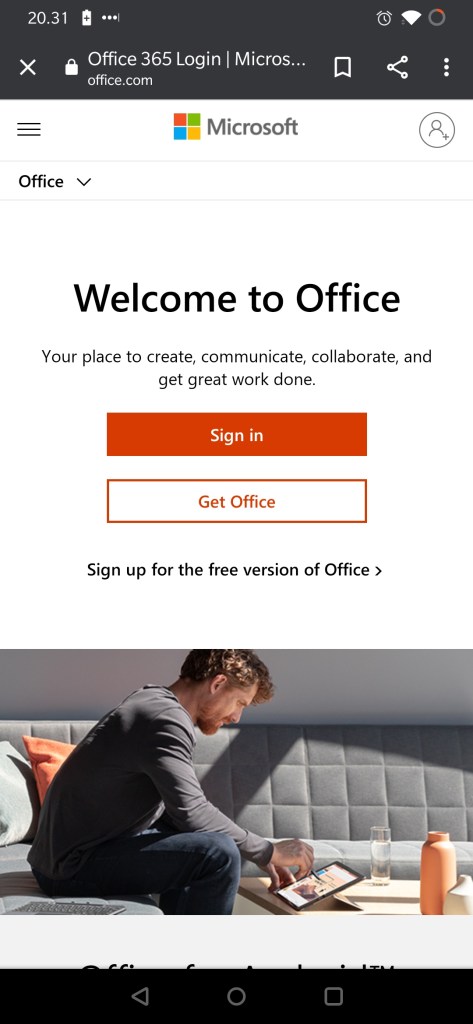
Microsoft launched Microsoft 365 six months ago, as a replacement (?) to Office 365 offering.

Judge for yourselves.

Google Workspace above the fold
Microsoft 365 above the fold