When you broadcast a message, some will get it and subscribe, while others will resist it and deny it.
You can either foster and engage with those who get it, or you can attempt to convince and prove wrong those who resist it. Sometimes it will look like you are doing both at the same time, but do not fall for it. It’s either one or the other.
Customer service should be a function of marketing.
It’s an opportunity to establish a personal relationship with the customer, right in the moment when the customer wants to speak to you and is willing to provide information about their experience.
Not only.
If an organisation is smart enough to mine the information collected from customer service interactions and analyse them qualitatively (sentiment, voice of customer, etc.) rather than quantitatively (first rime response, contact rate, etc.), a treasure trove of customers insights could be found, good to use in messaging, positioning, differentiation, price and promotion, and more.
Customer service has the potential to become a true channel for personalisation, as well as the source from which all other personalisations originate.
Few years ago, during an hiring process, I was asked to come up with ideas to improve how the company was presenting the product to prospects. I decided to title the presentation I put together “targeting millennials”.
The presentation featured few suggestions that still today I believe would have benefited the company, but of course the very same idea of “targeting millennials” is nonsensical.
“Millennials” is a wide group of people that has in common only the fact of being born between 1980s and 1990s. Sure, there are some similar traits, a shared cultural background, some icons everyone from those years can relate to. And yet unless your product is really, truly a mass product, targeting a generation is as ineffective as and article about knitting on the front page of the Financial Times.
A better way to approach the assignment would have been asking “why do people buy this product?” (instead of “what type of people buy this product?”, as it typically happens when targeting based on demographics).
I was out of the hiring process after this stage, and to be honest I think they did take a sensible decision.
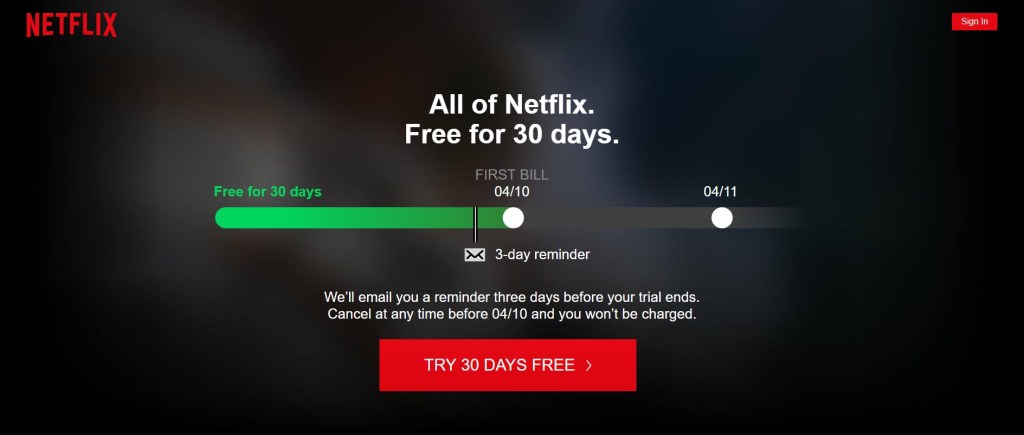
As in this beautiful, clear, honest page by Netflix introducing their free trial. They don’t fear you won’t like the service, and so they are straighforward about when the trial will end (even before you sign up). They will also let you know three days earlier, so that you can cancel if you want (they know you won’t). A credit card is still needed, but I am more likely to trust them with it with this kind of approach.
Marketing is (sometimes) also about doing what is funny.
That happens when you spot an opportunity in somebody mispronouncing your brand name at a conference. Instead of rectifying, you build numerous products with names very close to yours, and run campaigns to promote them. Everyone cheers you, and your brand is stronger than ever.
If we would be better at communicating change underlying its benefits for the target, we could perhaps make transitions smoother.
A mistake that is often made in corporate communication is telling the customer:
Here, we changed this, it’s good for you, trust us. And this is the list of things you have to do, on your own, to make the change effective.
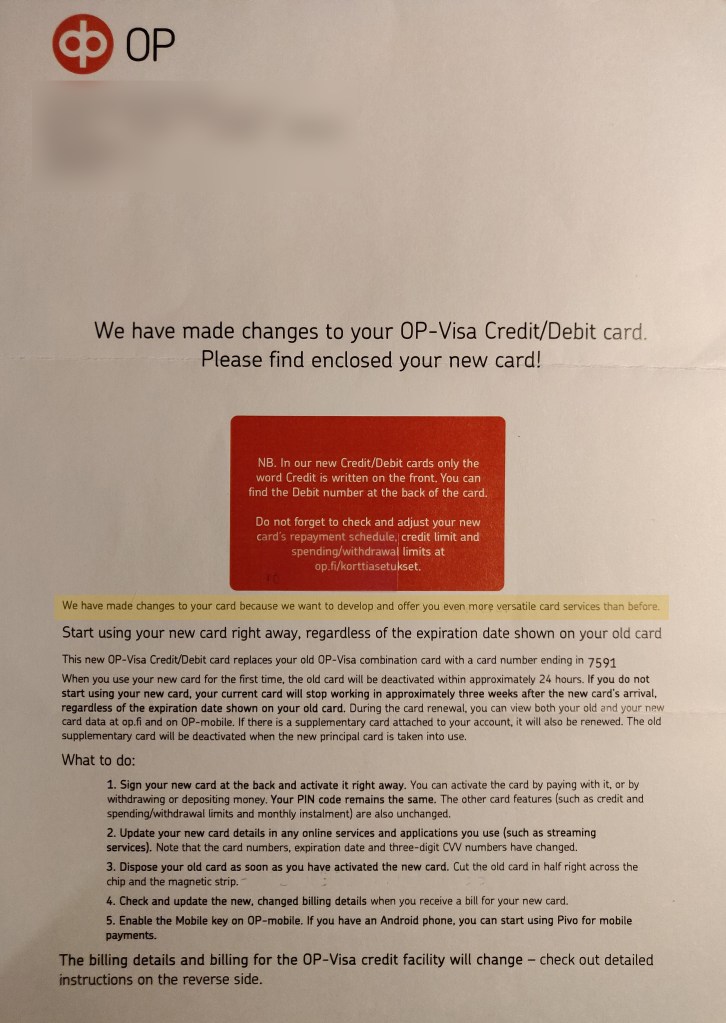
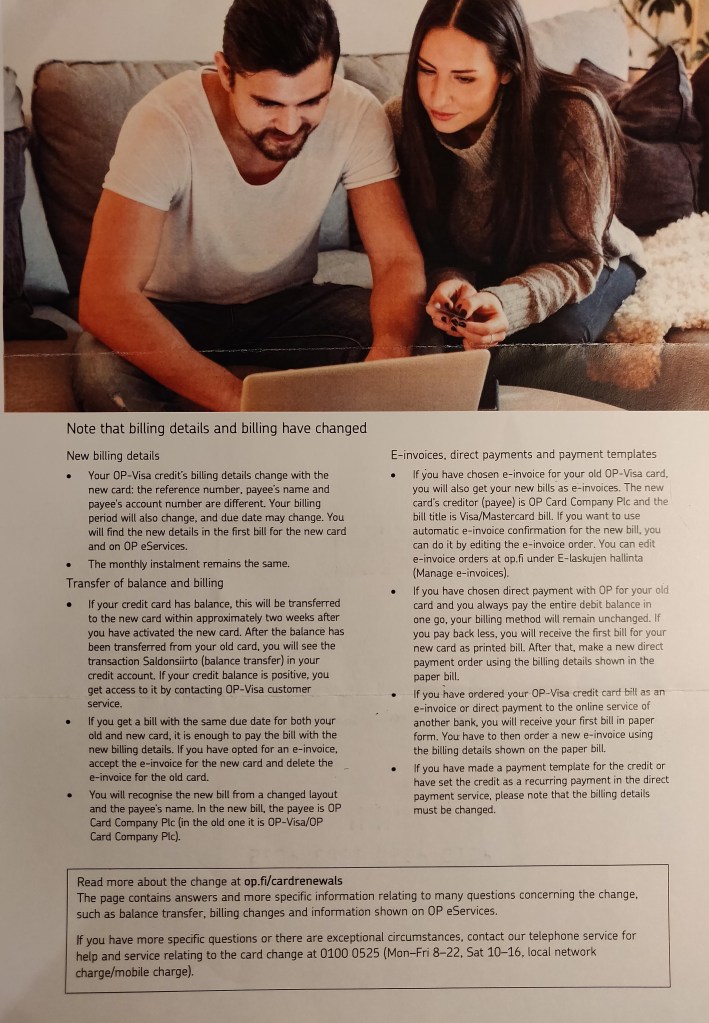
You can see a good example at the end of this post. One line to tell “more versatile services” will be offered (when? to whom? which services? do they matter?), and two pages full of things I have to do, or I have to check, or applicable to me in case I have this or that service (don’t you know which services I have subscribed? or if my card has balance? or if I have chosen e-invoice?).
Of course, we can see this type of messages as something that “needs to be done”.
Or, we could approach them as an opportunity to strengthen the relationship with our audience. A way to make it personal without second-guessing, to be of service, to establish our brand as helpful, relatable, trustworthy, even indispensable in the long term.
 You've got this