Good eggs

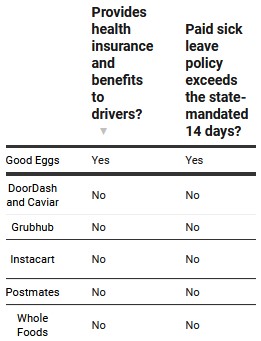
Business decisions can be good marketing too. A way to differentiate from your competitors, express your values and tell everybody what you stand for.

Good Eggs got this right. And for once, a page stating corporate values does not sound like shallow promises.

The original article by KQED is here. The full chart here.

Content frenzy

In the content frenzy of these pandemic days, there are few exceptions that stand out.

What the people at Velocity Partners (B2B marketing agency) did in their last newsletter struck me. Here is why.

  1. It is possible to use a widely overplayed concept (Working From Home) and one of the most frequently felt feelings nowadays (worry) and mix them together with a funny and relieving result.
  2. The content shared (as well as the tone used) denotes a crystal clear understanding of their audience, of their current pain points, of what they want to read right now, in this present situation.
  3. It is possible to call for a donation to a charity without going out of brand (the charity chosen is focused, specific, unknown to the masses) and without sounding cheesy or promotional.

Against common sense

Sometimes things do not turn out to be as they should have.

And so, a podcast ad by Dashlane that follows the general rule for which you are supposed to leverage the potential of the channel might fall flat. Simply because it is not enough to go on a show that often aims at social media and their negative impact on society to claim that a tool that remembers passwords makes the internet better.

On the other hand, an ad for a fast food chain, that common wisdom would want featuring juicy pictures on steroids, can become incredibly effective when it shows a moldy burger.

Things are almost never as straightforward as they seem. That’s one of the reasons why marketing is extremely difficult and requires continuous attention.

Frameworks

Frameworks, matrices, canvas are great tools to organize thinking and guide action.

And they should be approached with two things in mind.

First, you need to understand how they work. To do that you often have to read articles and papers from the people who have proposed the tool you want to use, and possibly also from people who have challenged their usefulness.

This is particularly problematic with models that are very well known and frequently quoted in organizations, such as the 5 forces by Porter, or the S.W.O.T. matrix, or the Competing Value Framework by Cameron and Quinn. People use these without actually knowing what the authors had in mind, or without having any reference to get them started, and as a result they are often misused. Even when a colleague suggests they have all the information you might need to get started, challenge them and dig into the original material.

Second, they are simplification of reality. And so they might not fit 100% to the specific case you are trying to apply them to. They might need some adjustments. And that is one more reason why it is important to study them, so that when rules need to be bent, it’s not going to betray the purpose or the essence of the tool.

Slavishly applying a framework, a matrix, a canva to your business, and doing that by only looking at the superficial level, it’s most likely not going to bring about the change you are seeking.

One last time

Why would you design the inside of a package and fill it with content?

Perhaps it’s because it’s cheap to do. Perhaps it’s because you can. Perhaps it’s because you want to signal status and quality.

Or perhaps it’s because you know your customers do recycle, they flatten the package to save room in the recycling container, and you want to connect with them one last time before they put the package away.

In any case, it can be beautiful.