Chosen

When choosing someone for a task, make sure you clarify the reason why they’ve been chosen.

You were the first one entering the door this morning.

Everyone else is very busy at the moment.

We’ve already purchased a license for you.

I allocated the tasks so that everyone has a fair chance to show their value.

Sure, these are reasons, and they are used more often than one thinks. But if we leave these decisions to chance or rationality, chances are the person chosen will not really feel motivated to do the task. After all, if anyone can do it, why give that little bit more, why deliver your best game, why bother in the first place.

We consider this a critical task for the company, because of X and Y. You have shown you can deliver fantastic job in this area, for example when Z. You have also told me that you are passionate about A and would like to contribute. This is why I could not think of anyone better in the team to take on this challenge and really turn things around. What do you think?

On the other hand, if the decision is based on a real knowledge of the other person, of their job, of their strengths, of their passions, of what they care about. Well, you can expect the outcome to be a whole lot different, can’t you?
Interests

No company intentionally goes against its interests, the so called shareholders value.

Some companies, though, pursue shareholders value in the long term. And not surprisingly, by doing so, they also manage to more positively contribute to the communities they operate in.

Other companies, instead, pursue shareholders value in the short term. And when doing that, it’s very challenging to also juggle the interests of people that happen to live where the company carries out its business.

A good example of the first type of company is Mars. In 2009, 2013, and 2016, Mars has interpreted a raising trend and has shrinked the size of their snacks, so that they could be consumed while still meeting general guidelines for the assumption of sugars. They have also doubled down on the effort by challenging some high level partnerships and campaigning to reduce weekly consumption of their products.

A good example of the second type of company is Facebook. Despite having been asked to take action for the negative effects on communities all over the world – from threatening western democracies to being a platform used for inciting genocide, from the horrific impact on mental health to the malicious inflation of ads metrics to fulfill their own agenda -, management sticks to their guns and refuses to translate a part of their financial success into effective measures to counter these (and other) problems.

A company is never expected to be a charity, and there are negative side effects to most products or services we are happy to live with. Yet the way business is done draws a clear line between the two types. As you build and grow (or help building and growing) your organisation, you should think about on what side you want it to be.

Going about growth

If you are lucky enough to see your company growing, or if you are an early stage employee at a growing company, here are four things for you to consider.

Four things I have consistently seen working when taken into account, or snowballing into disasters when disregarded.

As you promote people into managerial positions, make it crystal clear that their new priority is managing people. This requires a very different set of skills, and most likely some external training is needed. Do not assume that just because somebody is good at their job, or is an expert in a certain area, they will also be good bosses. If they are too busy, make space for them. They should not.

When somebody makes something that is very good for the company, make sure to take some time to acknowledge that and craft a story out of it. This is valid at many levels, and it is one of the responsibilities of leaders and managers to elaborate on why what was done matters, here and now, as well as to spread it. This is the behaviour you want more of.

At this point, you probably have some type of culture deck or presentation or brief. Put it to test, and change it as the company grows. Finding examples and stories (see also above) that resonate with the type of culture you want to establish is fundamental. Your culture lives, whether you want it or not, and it’s up to you to approach it strategically.

Finally, remove “good job” (and its variants “great work”, “amazing content”, “superb teamwork”, …) from the accepted phraseology. If something is truly good, make a commitment to say why it is so, and how it does serve the purpose of the organization at this stage. If it’s not, establish an environment in which candid criticism is accepted and not taken as a personal judgement of someone’s abilities.

Right and funny

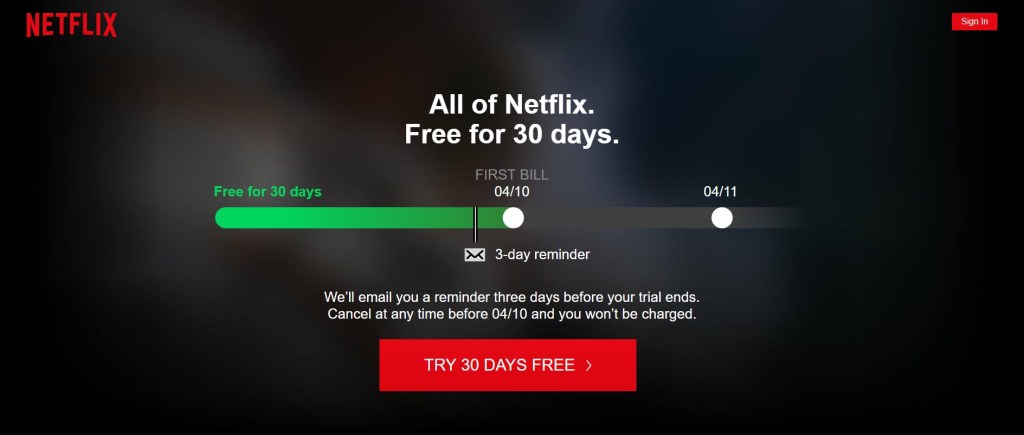
Marketing is often about doing what is right.

As in this beautiful, clear, honest page by Netflix introducing their free trial. They don’t fear you won’t like the service, and so they are straighforward about when the trial will end (even before you sign up). They will also let you know three days earlier, so that you can cancel if you want (they know you won’t). A credit card is still needed, but I am more likely to trust them with it with this kind of approach.

Marketing is (sometimes) also about doing what is funny.

That happens when you spot an opportunity in somebody mispronouncing your brand name at a conference. Instead of rectifying, you build numerous products with names very close to yours, and run campaigns to promote them. Everyone cheers you, and your brand is stronger than ever.

One message

Kantar Millward Brown has found that the more you try to say, the less likely your message is going to get across and stick.

A great reminder for all the times we are tempted to tell of all the great things our product does, of all the features our service has, of all the magic we can deliver.

When the temptation kicks in, just think how effective such a message would be if you were the customer. Would you understand it, appreciate it, remember it? Would it make you buy?

Keep it simple.