Sales emails

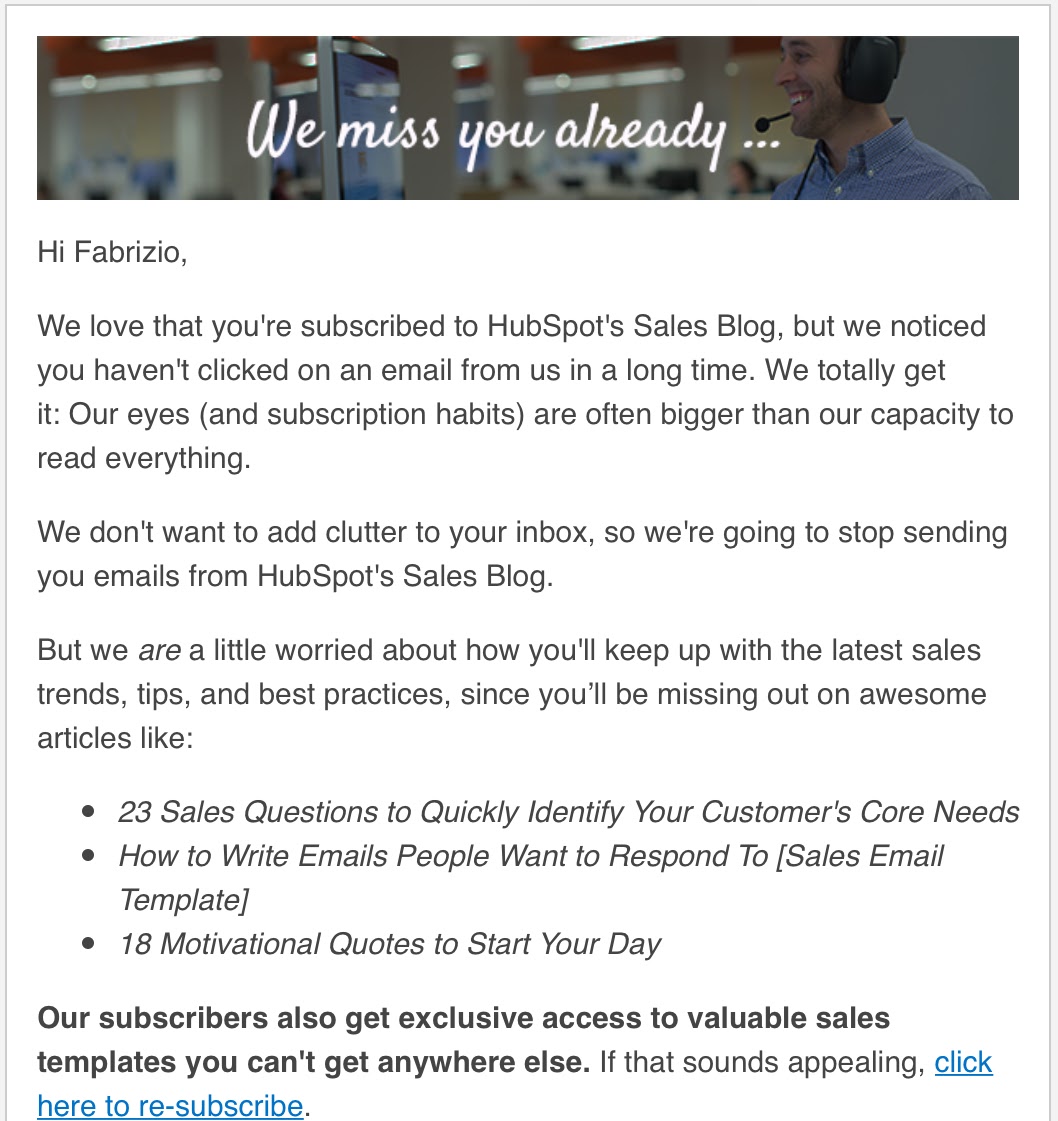
Sales emails are bad more often than they are not. Really bad. I remember a sales rep reaching out to me on LinkedIn while I was unemployed, telling me how great I was, how much he appreciated my work and how the tool he was selling could have improved the performance of my company.

Yet sometimes, sales emails are kind of ok. I got one today that went something like this.

Fabrizio: 
 
I am Vice President of Sales at *Whatever Company* handling business development for the company and their entire portfolio of assets.  I was hoping you would have some time to take a call or a meeting.  We have worked with many growth companies over the years building effective campaigns that deliver tremendous results.  I am confident we can do the same for *your Company*. 
 
*Whatever Company* is one of the world’s largest outdoor advertising companies with more than xxx displays reaching more than half a billion people in more than xx countries on x continents each month.  In the U.S., *Whatever Company* operates in xx of the top xx U.S. markets and is the leading outdoor advertising company with the fastest-growing digital outdoor network now surpassing xxx displays. 
  
*Whatever Company* has successfully developed and maintained the most comprehensive network of major airports in North America and has over xxx airports worldwide.  We market an effective combination of both international hub airports and targeted local O&D airports which creates opportunities for potential national or regional campaigns of all size. 
 
Would you happen to have some time to do a conference call or have a meeting in the next couple of weeks?  
 
Thanks in advance!

No grammar mistakes, the name of my company is correct, there are a couple of nice personalisations here and there, and all in all the text explains what they have to offer.

And still, they will never get an answer.

It is very easy to tell a lot about what you do, your coverage, your numbers, how you’ve helped this and that. But suppose you are in a room with somebody who only talks about themselves. Is that pleasant? Are you likely to meet them again? Would you do business with them? Of course not. Nonetheless we keep thinking that telling our story will simply awe everybody.

Few ways to avoid this trap.

Connect with me on a personal level. Tell me how much you appreciated the latest story I shared on LinkedIn, or how you see from my recent posts that our company is hiring and growing even further, or how you were impressed to find that we made it to the *Whatever Analyst* report also last year.

Mention ONE business challenge that I have, and how you can fix it. You say you have worked with many growth companies, so tell me about the common pains, the difficulties in affirming your brand when every other competitor has ten times your marketing budget, the impact of your work on metrics a growth company cares about.

Show me that you can deliver. You must have a customer success story, some narrative I can relate to more directly, a difference you’ve made for a company our size and in our stage. Tell me how it did work out, and how happy they were after they have made the investment.

It is a lot less easier, and perhaps not as scalable as the traditional approach. And you’ll find your work has greater purpose, is more exciting, and can actually change people and their businesses.

You choose to lie

It is possible, some would say even easy, to lie when you advertise something. When all you care about is getting few more clicks, a bunch more registrations, a bump in your growth line.

There are different types of lie.

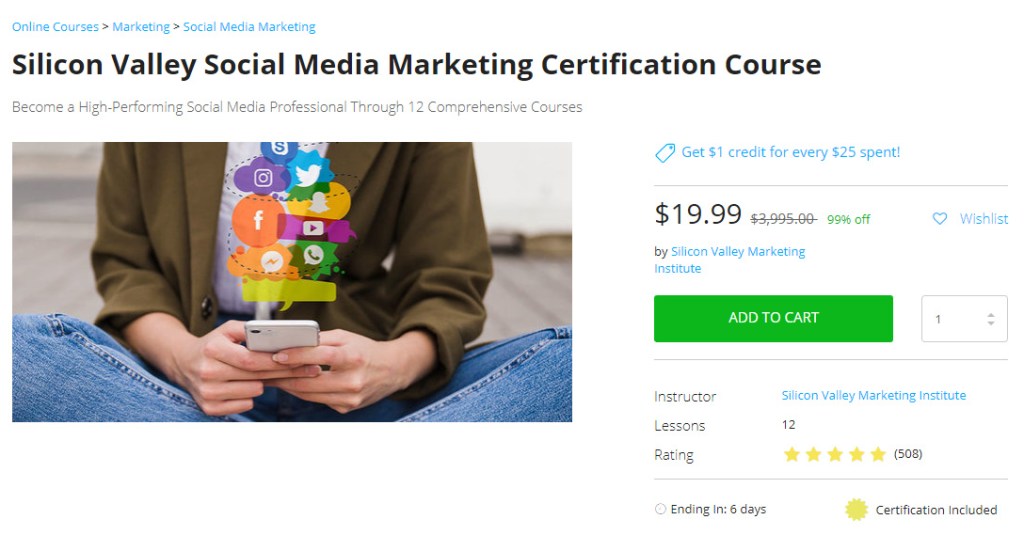
The first type of lie is the one that promises. “Buy this and you can be this”, “Register to our webinar and you will find your path”, “Become a pro in few steps”. It is a pretty common strategy, not inherently bad, and it becomes a lie when the promise is simply too much to deliver for what you have to offer.

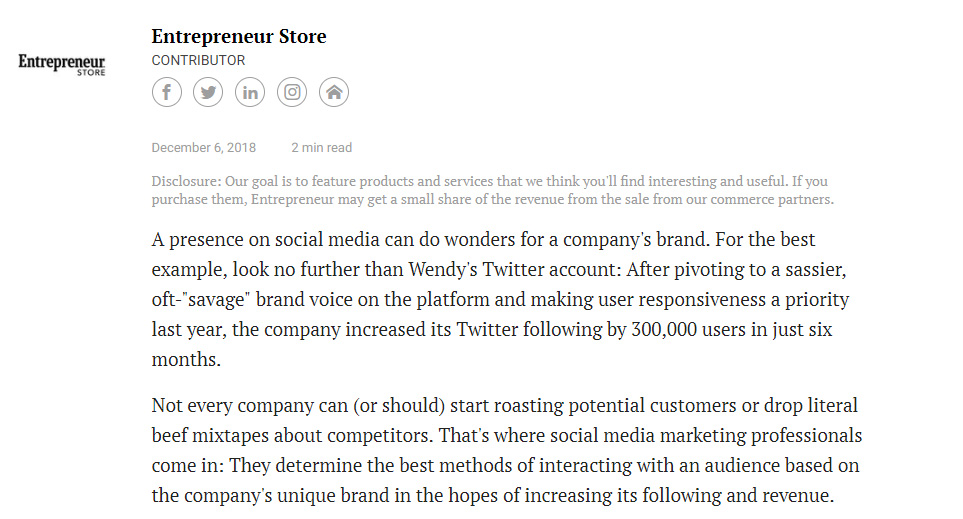
The second type of lie is the one that misdirects. Wendy’s did not get 300,000 more followers on Twitter after their social media marketing people attended the promoted course. Not to mention that, without context, we do not really know if those 300,000 more followers were or were not a good thing for the company.

The third type of lie is the one that seeks approval. 508 people rewarded this course with 5 stars out of 5 (in average). Of course, there is not way to read the reviews, or the feedback given by any of the 508 people. Be it enough for us to know that’s the case.

It is indeed easy to lie when you advertise something. Is it worth it? Does it get you to where you want to be at the end of the game? That is a whole different matter, one that should get most of your attention.

A beautiful note

The way you treat people that gravitate around your business is as important as the way you treat people that are at the core of it.

This below costs nothing, is caring and generous. It is beautiful, and tells a lot about how this company does work.

Marketing problems

I have worked with start-ups and SMEs for most of my career (about 14 years now), and up to this day, it is difficult for me to explain why there is a general lack of interest towards marketing in these contexts.

There is plenty of evidence out there that tells that startups often fail for reasons that good marketing would address. Be it focusing on building the product/service and not the customer, lack of market need and pricing issues, product market fit or plainly bad marketing.

Perhaps the most reasonable explanation for why this is happening is that people still equate marketing to advertising. If you fall into this trap, it’s easy to believe that marketing is something to take care of only once you get traction (i.e. you have cash).

In one of his most recent posts, Seth Godin suggests a list to understand what a marketing problem looks like.

. There are people who would benefit from your work who aren’t engaging with you.
. There’s a change you seek to make in the culture, but it’s not happening.
. You’re having difficulty persuading other people of your point of view.
. The service or product you make isn’t resonating with those you seek to serve.
. You’re fighting in a race to the bottom, and it’s wearing you out.

Seth Godin

I would add:

  • The story people tell about you is not the story you tell about yourself.

Be sure to give these issues a thought if you are starting something important, and be sure to have somebody close to you who can help you investigating a solution. Marketing has moved a long way past advertising, and continuing promoting that false equation will just drive your enterprise into one of the future articles about why startups fail.

Lazy holidays

I have the feeling that social media has made us lazier. I can’t find another way to explain the multitude of indistinguishable posts and newsletters from organisations one is exposed to during the holiday season.

“Merry Christmas from our team!”, “Here’s to a wonderful 2019 together!”, “Happy New Year!”.

Here are few ideas for next year. To stand out from the crowd and attempt to establish a stronger connection with your audience.

  • Tell me how the holidays will impact my business and how I can prepare for that.

  • Tell me how to get ready for the holidays.

  • Give me access to a service that is usually closed, for a limited amount of time.

  • Tell me your story, what you have achieved during the year, what’s on the agend for the next. Make it personal.

  • Raise awareness on a change your organisation wish to make, and explain why it is important to me too.

  • Match all donations to a charity of you choice.

  • Send a gift.

  • Give a discount.

  • Share a video of someone higher up in your organisation while they do something impactful in your community during the holidays.

  • Share a video edit with each one of your employees saying why we should pick or continue picking your organisation the next year.

If any of these ideas work for your organisation, go make it in 2019 and shine in your customers’ timelines or mailboxes during the next holiday season.