If you are not making mistakes (i.e., missing a deadline, delivering a project that is not ready, failing to achieve your goals, being rejected for a role you care about), one of two things is true.
Either you are covering up your mistakes or you are not stretching further enough.
The point is not being flawless.
The point is using mistakes to do three things.
Prepare a space to grow into. A mistake tells where you cannot go yet. It is space to fill up, a beacon pointed in the direction of growth.
Build more resilient relationships. A mistake tells you are a fearless peer. I am sorry unlocks deep empathy and fortifies the ground beneath you and those you care about.
Add to your story. A mistake tells you are not done yet. When you put it into words, it becomes an inspiration and a model.
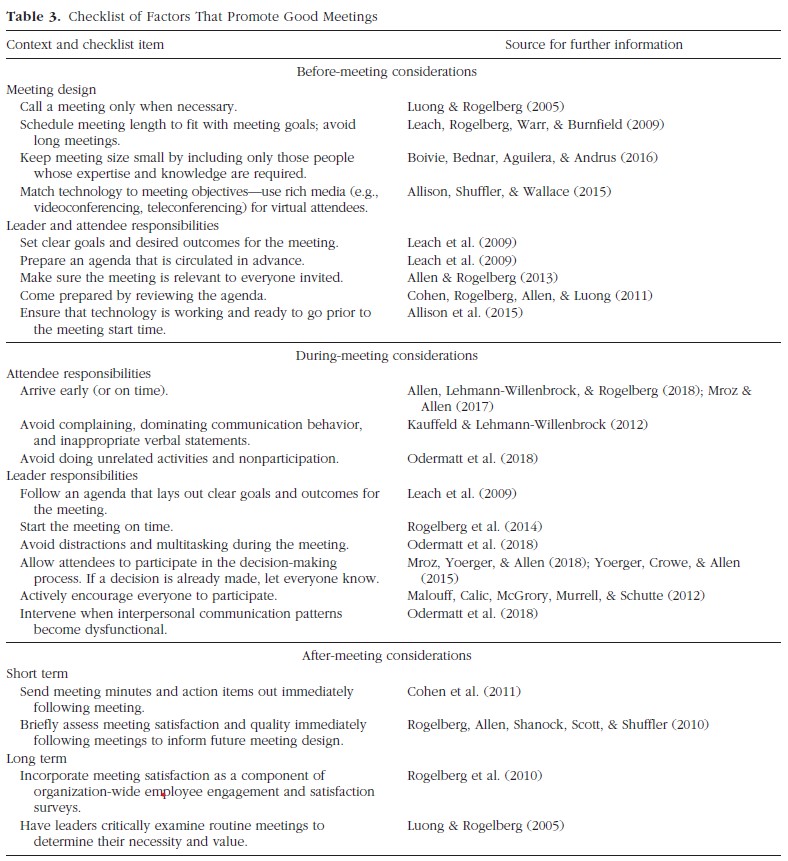
Start with considering if the meeting is necessary or not – information sharing and updates are not valid reasons to have a meeting -, as well as who should be present – being a fly on the wall is a huge waste of time. Then have an agenda (and stick to it), avoid complaining (as in nothing ever works or this issue cannot be fixed), and follow up with a request for feedback, from which you commit to take ideas to improve future meetings.
We all want to get better at meetings. Who is taking the first step?
If you run a company that aspires to grow, you have two ways to support said growth.
You can either try to amass more resources (often translating into hiring more), or you can aim at achieving more with the resources that you have at your disposal.
And while following the logic of addition (add resources) instead of the logic of multiplication (same resources) might seem more humane (nobody wants their people to burn out), it turns out people who work for multipliers are more motivated, more engaged, more satisfied, and eventually turn out achieving more. Both for their organizations and for themselves.
Multipliers understand the power of continuous development.
They are talent magnets. Not only because people want to work with them, but also because multipliers are capable of appreciating different types of talent across the boundaries imposed by organizational charts. They can identify what people can do easily (without effort) and freely (without conditions), and they then find opportunities to employ this natural genius, allowing people to grow beyond their current capabilities.
They are liberators. They resist the temptation to take things in their hands, and they create space. They focus on the execution rather than the outcome, and by doing so they allow people to learn from mistakes. Indeed, they often talk themselves about their own mistakes.
They are challengers. Instead of giving answers, they provide just enough information to provoke thinking, and they then establish the challenge so that it represents a (possible) stretch to the current capabilities. They create a vacuum. Not between what they know and what others know, as many managers do, but between what people know and what they need to know to complete the challenge.
They are debate makers. They spark debate by framing the issue, setting the rules (and reiterating whenever necessary), creating safety (they encourage opposing views even when there are none, and they speak last), and demanding rigor (evidence is the price to pay for having an opinion). As for those who should participate in the debate: those with needed knowledge, those with a stake in the decision to make, those who are responsible to drive the outcome.
They are investors. They give ownership, they spend time teaching and coaching, and nonetheless they hold people accountable. So much so that they respect natural consequences: instead of jumping in to fix things, they talk about what has happened and focus on the next thing.
If you are a multiplier, or want to be one, you will probably find yourself asking these questions a lot.
In what way is this person smart?
What is the next challenge for you?
What other roles could this person shine in?
Thanks for sharing this criticism, what does it look like when I do that? How do I avoid this?
What if this would happen, instead?
In a perfect world, what would you do?
What do you need from me as you lead this?
How do you propose we solve this?
Being a multiplier does not usually come natural. Most cultures have a different ideas of leadership and it is easier for us to think we are better and we could do things better than others in most circumstances.
It is an investment, though, that comes with a pretty high return.
Multipliers don’t necessarily get more with less. They get more by using more—more of people’s intelligence and capability. As one CEO put it, “Eighty people can either operate with the productivity of fifty or they can operate as though they were five hundred.” And because these Multipliers achieve better resource efficiency, they enjoy a strengthened competitive position against companies entrenched in the logic of addition.
In University, I was taught that communication, in its most basic form, is the cooperation between a sender and a receiver to get a message through a shared environment.
And while that certainly holds true still today, I am more and more convinced that in business, communication is in the hands of the receiver.
Think about marketing: the receiver is forced through a myriad of messages and decides what to dedicate attention to in a matter of seconds. Think about internal communication: the receiver can call bullshit on any message management is sharing if that does not reflect their day-to-day experience. Think about presentations: the receiver is so fed up with bullet points and animations (particularly after one year of virtual meetings) to the point they can check emails or write a report while you are struggling to make a case.
The receiver is central in any form of corporate communication.
And the fact that we spend so little time trying to figure them out is the most widely overlooked device a professional has to leverage to get their messages through.
As a leader, the surest way to have your team contribute is to speak when a question is needed and to shut up in the process of finding the answer.
The problem is that we often get this all wrong. And so direct reports ask questions and managers give answers, nurturing an organization that is bottlenecked, does not grow, and demotivates.

 You've got this