Overestimating

We are bad at communicating in written form.

We overestimate our capability to share meaning via a written message, and most importantly to share the underlying emotions, mainly because we fail to understand that our audience is often in a different state of mind.

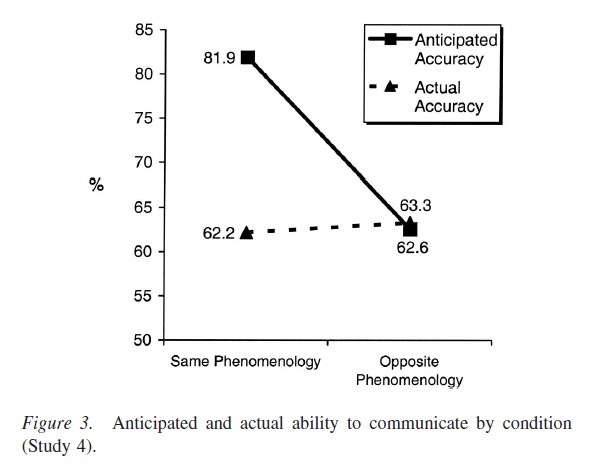
Two considerations.

If you are about to send a written message, and even more so if you do that for a living (as is the case for marketers), you will increase the chances to be effective when you spend enough time understanding who you are sending to. Also, if you plan to add some color to the message (anger, sadness, sarcasm, humor), use visual cues (emoticons, GIFs, images).

If you are responsible for the internal communication of an organization, you will increase the chances for your employees to be effective by providing more training and tools that support visual communication rather than written communication.

On hold

When we hear, read, or consume content, all we get is often about us.

Our fears, expectations, experience, knowledge. What we think about the author, about the medium, about the source. The day we are having, the day we are not having. Likes and dislikes. How confident we are today, what we have been told yesterday, where we are going tomorrow.

In order for us to learn, we need to be able to put all that on hold. To make it about the one delivering the message. To suspend our reaction and just be hearing, reading, consuming content in the moment.

If we do not that, everything will just be a confirmation of what we already know.

What question

What are the next steps? Do I get to be involved?

These are two questions, or is it actually one? We could ask what is our real intention.

If we are genuinely curious about the next steps, then we should just stop at the first question.
If we want to know if we need to allocate time because of our involvement, then we should just go with the second one.
If we want to be involved, then we should just say it and avoid the question.

Can I ask if you have made the decision already?

This is one question, but it turns out we are asking two. Out of excessive politeness, most definitely.

If we want to know if the person is free to answer, then we should just stop at the first question.
If we want to know whether a decision has been made, then we should just go with the second one.
If we want to know the decision that was made, then we should just go ahead and ask directly.

Communication is complex, so much so that it often fails. Why add complexity?

Ask yourself what you want to know, then make the question that can get you the answer.

Leave behind

A truth of life is that, at any point in time, we leave behind a wealth of opportunities, almost infinite chances.

And a second truth of life is that we often care much more about what we are leaving behind rather than what we have with us.

I guess the point is, why are you doing what you are doing?

If it is an intentional and purposeful choice, cherish it and dedicate all yourself to it. With no regrets for what could have been, if only.

If it is not an intentional and purposeful choice, you still have a wealth of opportunities and almost infinite chances to pick from.

The time you are not answering this question is the time you will feel incomplete.

The best list

The best thing to get something done on a lazy day is to make a list.

And the best list you can do is planned, intentional, and purposeful.

Planned, because you have to prepare it in advance. To give it time to rest, to ensure you are putting some thoughts into it, to have it ready when the day kicks off.

Intentional, because you are the one in charge. Don’t make other people’s priorities get onto the list, unless you find a way to make them yours as well.

Purposeful, because the items on the list need to fit your purpose for the day. Even better if, when completed, they drop you a little bit closer to a bigger purpose.

Might work as well for not-so-lazy days after all.