“Chiacchiere da bar”

“Chiacchiere da bar” (that literally translates into “bar talk”) is an idiomatic expression we use in Italy when the conversation derails from the specificity of one’s domain. It’s the typical case in which people feel they would be better at managing a football team than actual football managers, or at leading a country than actual politicians, or at manufacturing products than actual manufacturers.

You get the idea.

We all get involved in “bar talk”, some with more passion than others. Wanting to share one’s opinion is probably very human, and nowadays we do not even have to go to the bar (and risk reputation, relationships, status) to let the world know what we would do if only someone would put us in charge of the task force responsible for fighting the coronavirus crisis.

People who have deep knowledge of one or two domains are also prone to this. It’s not a matter of education, gender, profession or race. It’s just something (apparently) incredibly difficult to avoid.

Nonetheless, it’s important to remember that “bar talk” is a choice.

Sending yet another uninformed tweet or getting tangled in yet another bottomless comment section are actions we can avoid. We could spare the time, the energy, the passion for what really matters.

And of course, this begs the question.

What does really matter (to you)?
Accept

Dissatisfaction lies in the difference between what’s around us and how we would like that to be. And of course, the only thing we can reliably change over time is the latter.

Our partner is not going to become more loving because we want them to. Our boss is not going to become a better one because we read a book about leadership. We are most likely not going to be successful in the vast majority of pursuits we undertake and average is going to be our natural habitat. Rainy days are still going to follow shiny sunny ones, and they are going to hurt more. The people we surround ourselves with will continue to pursue their lives paying us little attention and giving us little credit. We are probably never going to be loved as much as we love (mainly because we only feel one of the two), and others are always going to hurt us more than we hurt them (for the same exact reason).

That is life.

It does not get any better than this. Except, sometimes it does. And until we are ready to look at it for what it is, in its entirety and free from all of our expectations and demand, we won’t be ready to welcome whatever positive change it is going to bring.

A strategic choice

Why do people rarely talk frankly to each other when tension arises?

Time inflates difficult situations where two or more people feel resentment towards each other, yet it seems people float through such circumstances without taking action. They talk to other colleagues, families, friends. They feed their anxiety and frustration by crafting a defensive narrative. And they continue escaping a direct confrontation.

That’s how our mind is wired. Clearing the air is difficult, it takes effort and commitment. In the moment, when the time comes to choose between going ahead and speaking to the other person or ignoring the problem and carrying on with the day, the brain will always, instinctively, go for the latter. Because that’s what keeps us safe.

Of course, it is a short-term safety. And in most cases it’s not that we are really in danger of serious consequences should we decide to, once and for all, have that chat.

Difficult conversations are a strategic choice. Have them often, with intention.

Google

Google’s mission used to be “to organize the world’s information and make it universally accessible and useful”.

It still is.

Yet, that’s no longer what Google does.

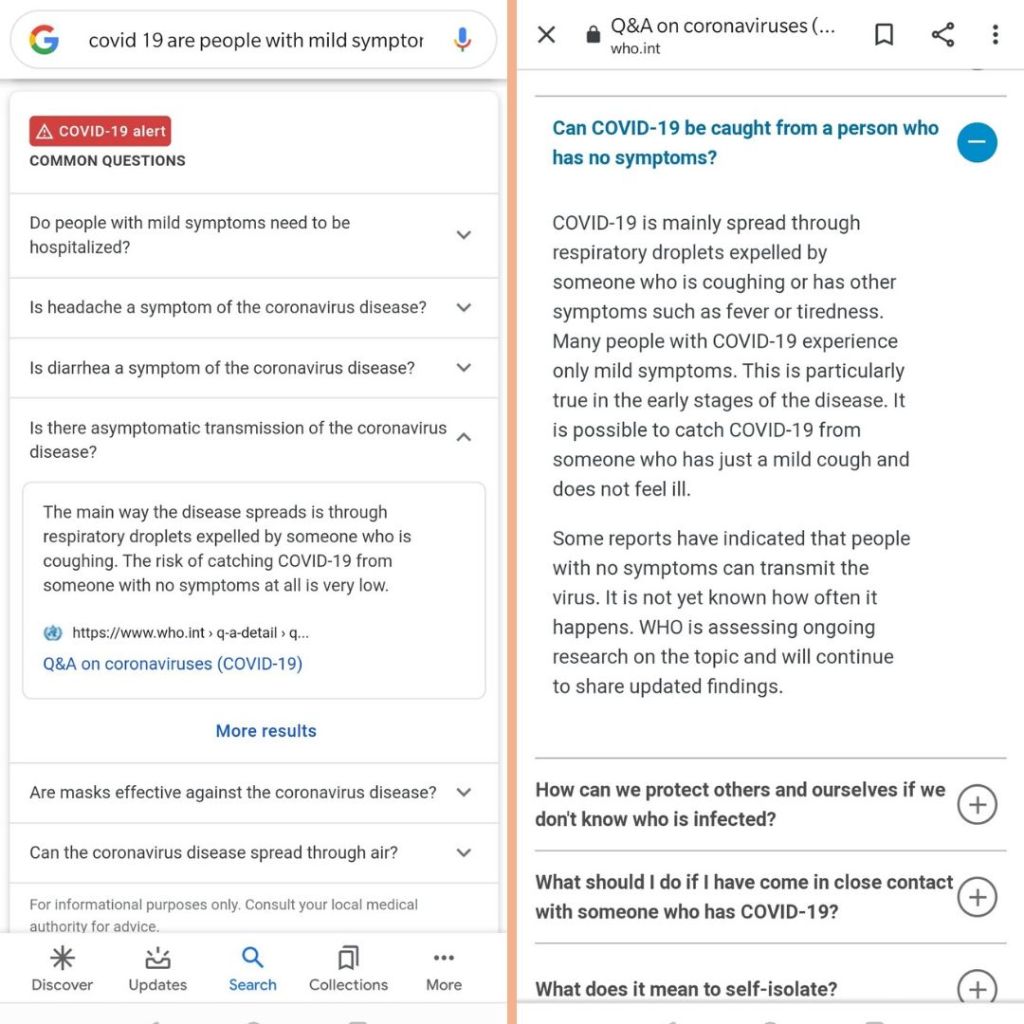
Google is now in the business of deciding what information is and what it is not, it shapes the way people consume the internet and its content, with a clear bias towards information that is either owned by Google or that companies pay Google to promote.

So much for accessibility and usefulness.

Of course, companies change as they grow. But should we trust Google to offer us the type of information we need, at the right time? Probably not.

That’s not what they do anymore.

Good eggs

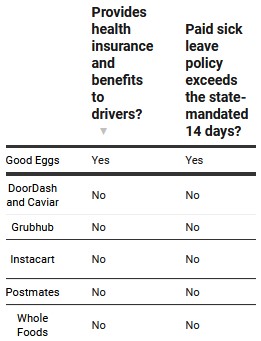
Business decisions can be good marketing too. A way to differentiate from your competitors, express your values and tell everybody what you stand for.

Good Eggs got this right. And for once, a page stating corporate values does not sound like shallow promises.

The original article by KQED is here. The full chart here.