The biggest difference

A difficult step towards awareness is appreciating that we are not so special after all.

The things we think, the emotions we feel, the fears that get us stuck, the ambitions that drive us, the confusion in the face of uncertainty, the defensiveness when we fail. They are common to many and they do not make us any different from all others human beings.

Once we are fine with that, then we can dedicate time to what truly matters: how we react to all that and to an ever-changing world.

That’s where the biggest difference is.

Ambition

Why is it so easy for us to look at where we are today and think at where we could be tomorrow? And at the same time, so difficult to look at where we are today and think at where we were yesterday?

Without the ability to appreciate progress you’ll never be able to achieve your ambitious targets.

A culture that matters

People do not seek transactions.

Or better, if what they seek is a transaction – for example, I give you my time and energy and you give me money in return -, they can find it pretty much everywhere.

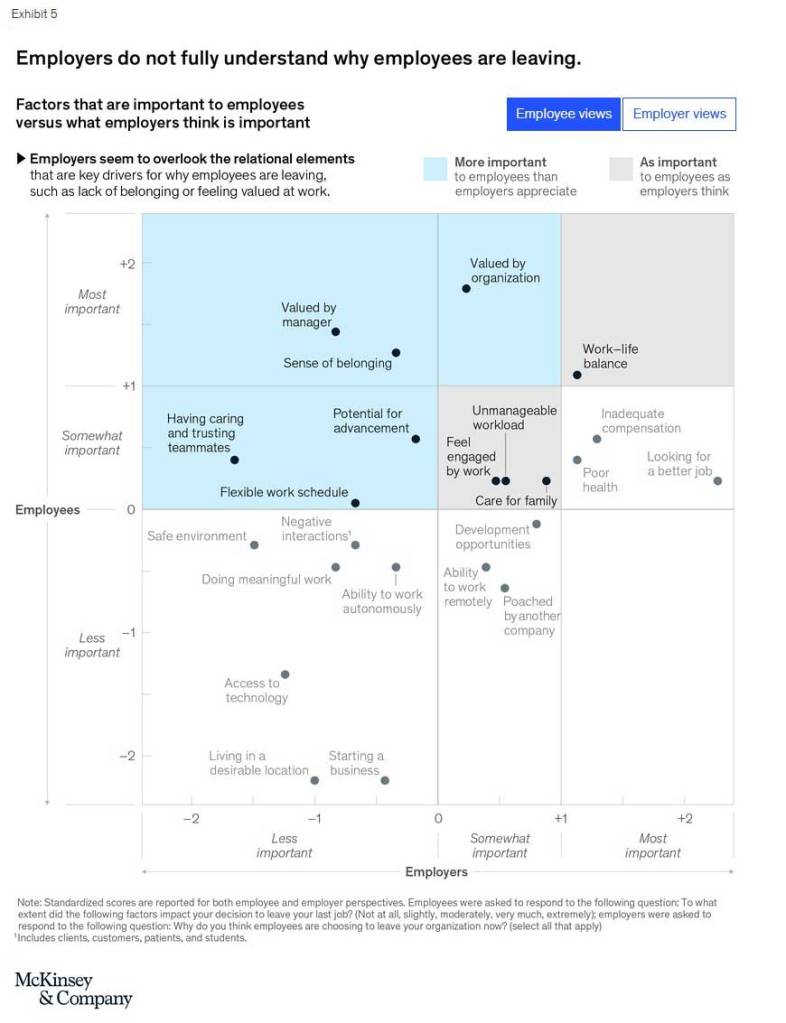
Of the three sources motivating people, the only one that is independent from the context is the work they do. And yet employers focus most of their engagement and retention strategy on that very same source, therefore failing to differentiate from any other employer in the world.

If you work in HR or if you are an entrepreneur, there is a clear opportunity for your company to stand out. Make space for employees to build meaningful relationships, give them opportunities to get to know each other when not talking about work, build a culture from the ground up – the only type of culture that employees can perceive and buy into every single day. Have your managers and leaders show them that they care.

It is not what used to matter a few years back.

It is the only way forward now.

Along the way, many senior executives will be challenged to reimagine how they lead. The skills that made leaders effective before the COVID-19 pandemic—strong coaching, mentoring, creating strong teams—are just table stakes for the challenge of the months and years ahead.

McKinsey, “Great attrition” or “Great attraction”? The choice is yours.

Reactive or intentional

At work, you can be reactive or intentional.

When you are reactive, you drop everything you are doing every time a new urgency comes in. You are stuck in a spiral of novelty and unfinished work. You feel powerless and you often end your days with the overwhelming impression of not having accomplished anything important.

When you are intentional, you respond to a new urgency with a deep breath. You finish the work you are doing, or at the very least make sure that you have a solid plan to finish it or to delegate it to someone else. You take out your plan and you check how the urgency can fit. You say no. You feel in control and you often end your days with the priceless recognition of being done.

The reactive mode is fascinating, because it gives us (and others) the illusion of being relevant, important, busy. It’s what most people call “good job!”. Of course, in reactive mode nothing ever changes, and in the long term you are simply drained.

The intentional mode is a choice. It might go unnoticed for a while, because you are not waving your arms in the face of everyone. And of course, in intentional mode you can affect real change.

To understand your default mode, take note of what happens next time your boss calls with a new thing to do.

Then, make the choice.

Inexperienced

Would you rather.

Learn how to cook from someone who is cooking every day or from someone who has read a book about cooking?

Hearing how to establish healthy habits from someone who has done that consistently over a long period of time or from someone who knows all the theory behind establishing healthy habits?

Take marketing lessons from someone who has successfully established marketing functions at growing companies for years or from someone who has been working at an agency for the past ten months?

Read from a start-up who has just raised €500M or from a start-up who is celebrating their 1,000 followers on Twitter?

There are two lessons here.

First, be mindful about who is advising you.

And second, the safer choice between adding some more knowledge and starting to do the work is the latter.