Influencing others

There is no behavior that you can promote without embracing it fully.

Telling your team that they should not work the weekends while you are working all weekends is not going to be effective.

Telling friends that they should call you more often while you never call is not going to be effective.

Telling your kids that they should not lie while they see you lying every day is not going to be effective.

We have a lot of power to influence others’ actions, we are just not confident enough to acknowledge that.

Misstep

Reconsider your decision, particularly if you have taken it under emotional stress – I was mad when I said that.

Acknowledge the relationship – I do care about you.

Say that you are sorry and ask for help to move forward – I am sorry and I would like to hear how you think we can get past this impasse.

Nobody said it was easy.

A culture that matters

People do not seek transactions.

Or better, if what they seek is a transaction – for example, I give you my time and energy and you give me money in return -, they can find it pretty much everywhere.

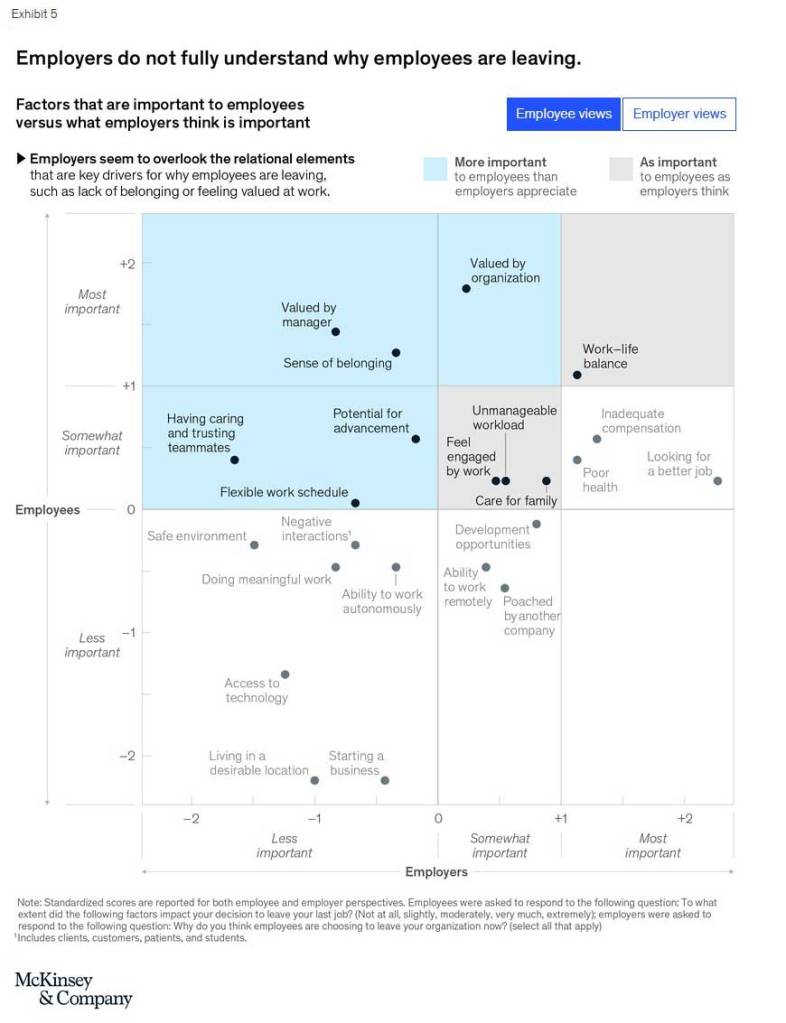
Of the three sources motivating people, the only one that is independent from the context is the work they do. And yet employers focus most of their engagement and retention strategy on that very same source, therefore failing to differentiate from any other employer in the world.

If you work in HR or if you are an entrepreneur, there is a clear opportunity for your company to stand out. Make space for employees to build meaningful relationships, give them opportunities to get to know each other when not talking about work, build a culture from the ground up – the only type of culture that employees can perceive and buy into every single day. Have your managers and leaders show them that they care.

It is not what used to matter a few years back.

It is the only way forward now.

Along the way, many senior executives will be challenged to reimagine how they lead. The skills that made leaders effective before the COVID-19 pandemic—strong coaching, mentoring, creating strong teams—are just table stakes for the challenge of the months and years ahead.

McKinsey, “Great attrition” or “Great attraction”? The choice is yours.

Reactive or intentional

At work, you can be reactive or intentional.

When you are reactive, you drop everything you are doing every time a new urgency comes in. You are stuck in a spiral of novelty and unfinished work. You feel powerless and you often end your days with the overwhelming impression of not having accomplished anything important.

When you are intentional, you respond to a new urgency with a deep breath. You finish the work you are doing, or at the very least make sure that you have a solid plan to finish it or to delegate it to someone else. You take out your plan and you check how the urgency can fit. You say no. You feel in control and you often end your days with the priceless recognition of being done.

The reactive mode is fascinating, because it gives us (and others) the illusion of being relevant, important, busy. It’s what most people call “good job!”. Of course, in reactive mode nothing ever changes, and in the long term you are simply drained.

The intentional mode is a choice. It might go unnoticed for a while, because you are not waving your arms in the face of everyone. And of course, in intentional mode you can affect real change.

To understand your default mode, take note of what happens next time your boss calls with a new thing to do.

Then, make the choice.

Pumpkins

Which do you prefer?

Having two perfectly carved Halloween pumpkins on your doorstep – you have commissioned a master carver to create the pumpkins, you have paid dearly for them, and that allowed your dear ones to keep busy doing their own stuff.

Or having two so-and-so carved Halloween pumpkins on your doorstep – you and your dear ones have carved them together, you had a good time, you made fun of each others carving skills, and you all cherish the memory when you pass by them now.

It’s the camel dilemma all over again, isn’t it?

And the way you choose one way or the other will tell much of the type of leader you might be.