Right and funny

Marketing is often about doing what is right.

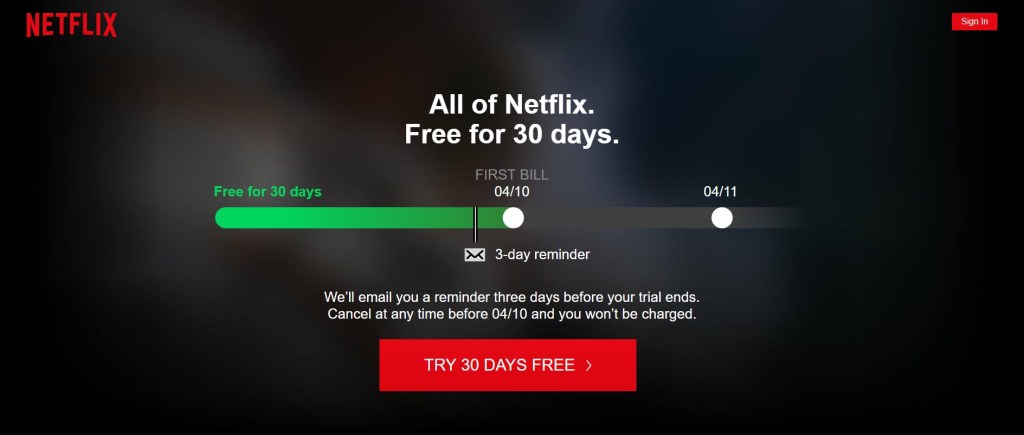
As in this beautiful, clear, honest page by Netflix introducing their free trial. They don’t fear you won’t like the service, and so they are straighforward about when the trial will end (even before you sign up). They will also let you know three days earlier, so that you can cancel if you want (they know you won’t). A credit card is still needed, but I am more likely to trust them with it with this kind of approach.
Marketing is (sometimes) also about doing what is funny.

That happens when you spot an opportunity in somebody mispronouncing your brand name at a conference. Instead of rectifying, you build numerous products with names very close to yours, and run campaigns to promote them. Everyone cheers you, and your brand is stronger than ever.
Two steps

Why is this happening to me?
Why are they doing this to me?

Why is this situation so unfair (to me)?

This is where most people start from. And so the first step is the step of curiosity, taking yourself out of the equation and becoming genuinely interested in what is going on. Both inside and outside of you.

I wonder why this is happening.
There might be some reasons why they are doing this.

What is determining the situation?

The second step is the step of acceptance. We now know what is going on that makes an action, an event, a word, a scenario so unbearable for us, and we realise that all the fuss is determined by a story we are telling ourselves about the world. We are now free to let go of it and continue our important work.

This is happening.
They are doing this.
Here is the situation.

Voice your state

The next time we walk into a situation with a negative feeling (anxiety, fear, anger, shame, doubtfulness, sadness, preoccupation, …), a way to unlock the impasse is to voice our state right at the beginning.

I have had bad experiences before, this is way I am afraid and anxious.

I don’t usually do a good job when there is a deadline looming, and I now feel doubtful and preoccupied.

I was seeking support and I don’t think I have gotten it, that’s why I am angry now.

I feel quite shameful and a bit anxious in being here in front of you today.

When we do this, our feelings immediately start to dissipate, and that’s because they are not just ours anymore. They are shared.

What’s more, we set the audience for empathy, as what we are saying is most likely much more relatable than the behaviour we might manifest.

Two gifts

The two greatest gifts a leader can give their team are the following

  • An interesting problem to solve – Something that looks at the future, a new path to discover, a way to improve on what has been done so far.
  • The support and resources to help them solve it – Tools, budget, attention, care, shielding, buy-in.

If you consider this, how many of the managers you’ve met in your career, how many of those you are working with now, how many of the ones that are in charge of the well-being of hundreds of people, can genuinely be called leaders?

Have you ever considered starting to demand that they behave as such?

Smoothing

If we would be better at communicating change underlying its benefits for the target, we could perhaps make transitions smoother.

A mistake that is often made in corporate communication is telling the customer:

Here, we changed this, it’s good for you, trust us. And this is the list of things you have to do, on your own, to make the change effective.

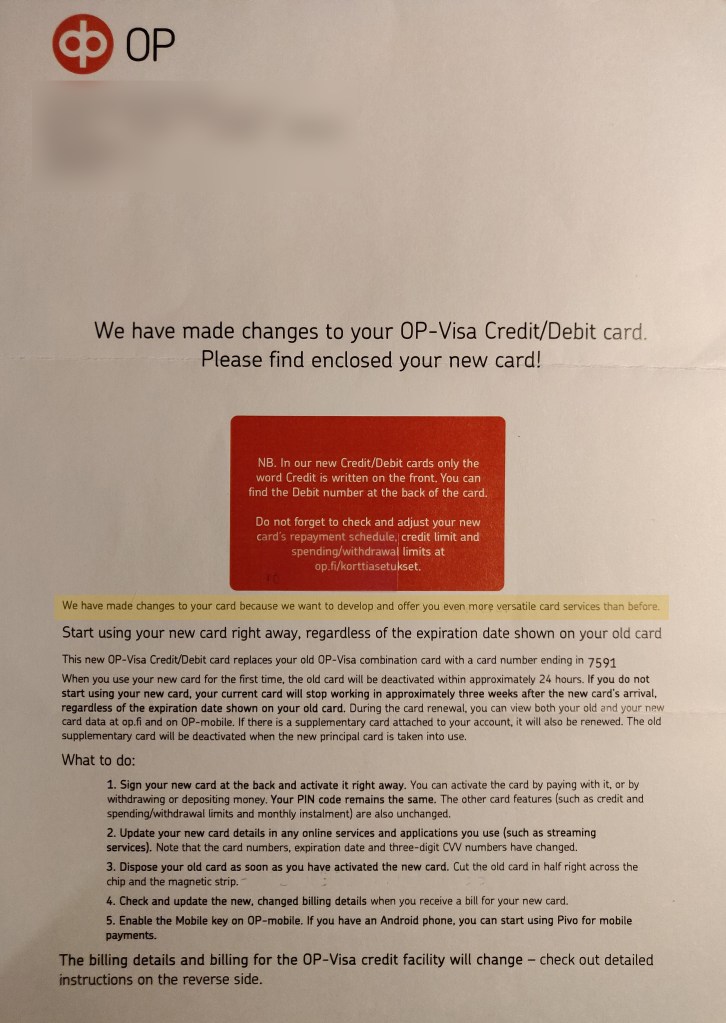
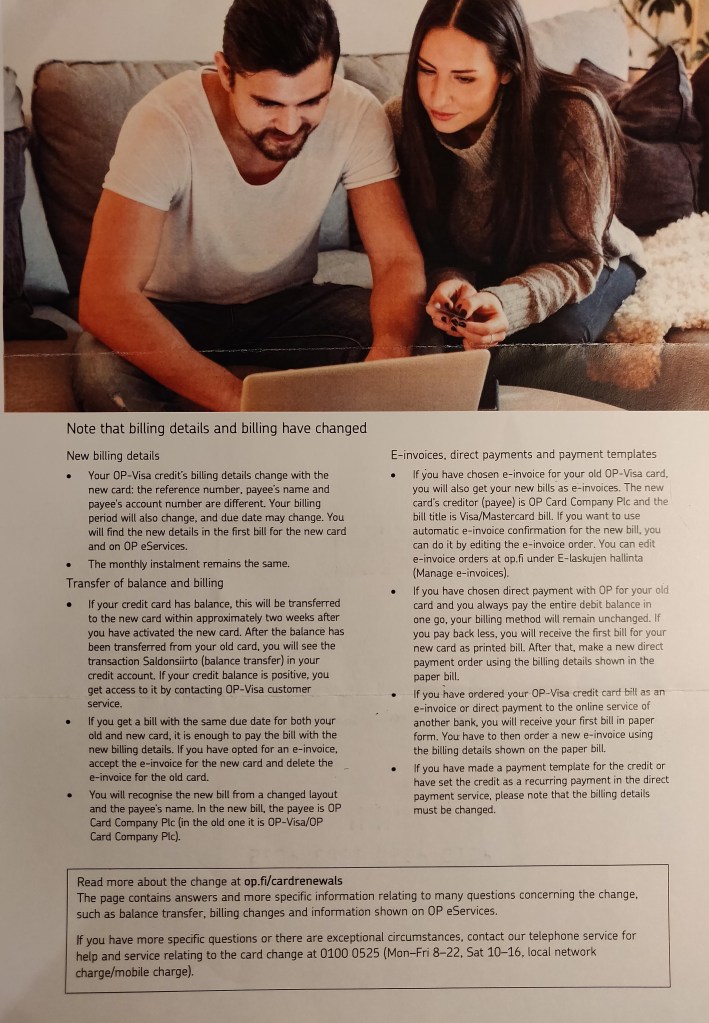
You can see a good example at the end of this post. One line to tell “more versatile services” will be offered (when? to whom? which services? do they matter?), and two pages full of things I have to do, or I have to check, or applicable to me in case I have this or that service (don’t you know which services I have subscribed? or if my card has balance? or if I have chosen e-invoice?).

Of course, we can see this type of messages as something that “needs to be done”.

Or, we could approach them as an opportunity to strengthen the relationship with our audience. A way to make it personal without second-guessing, to be of service, to establish our brand as helpful, relatable, trustworthy, even indispensable in the long term.

What’s your choice?