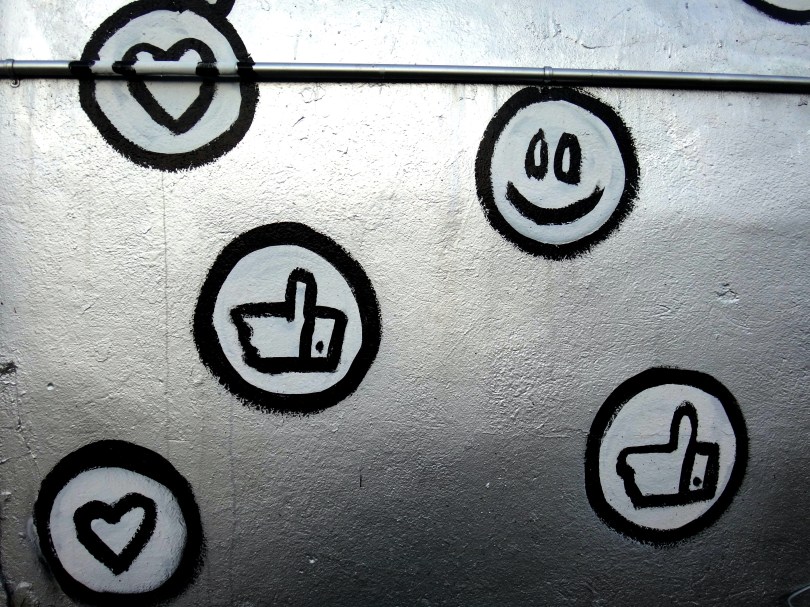
To be liked

Everyone wants to be liked. But there is a different between striving to be liked in the moment and striving to be liked in the end.

To be liked in the moment means that you are betting on your capacity to escape immediate evaluation. It’s about being erratic, leveraging every situation, and since people talk, caring about short-term benefit.

To be liked in the end means that you are betting on the capacity of people to judge by themselves. It’s about consistency, authenticity, and long term.

So, the choice is not really between wanting to be liked and not wanting to be liked.

It’s a choice between now and forever.

For a while longer

There’s no app out there that does not have an active interest in keeping you in for a while longer, in having you buy for a while longer, in liking your content so you can create for a while longer.

It is a legitimate business practice and it is encouraged by our utter disregard for its negative consequences on our life.

Bystanders

We can’t control how others will react to us, but we can control how we behave in their presence. What and how we say and share things, how we respond to their requests, what we do when they tell something unexpected, how we are present and listen.

We over-stress about their reaction and pay little to no attention to how we can influence that. We play the part of the bystander when we actually are (one of) the main character(s).

It’s no guarantee that the other person’s will do what we hope for. But we will at least feel infinitely better.

In the background

If you constantly doubt what you do, people will start doubting you as well.

If you play down compliments all the time, people will stop complimenting you.

If you point at your flaws and the skills you lack, people will turn their heads in that direction as well.

The fact is, if you do all that to stay in the background, modesty is not a good strategy.

Try empowering others instead.

Checklist

A checklist always gets the job done.

It accounts for rules and processes, it ensures that timelines are met, and it guarantees that no critical step is forgotten.

But what a checklist does not do is to consider the emotions of those involved. The stress it puts on them, the uncertainty between one step and the next, the guessing that tends to fill in the gaps.

For that, there’s no checklist that can help.

You’ll just have to be human.