Valuating

Buzz is a misleading distraction.

More than 9 out of 10 venture capitalists think that unicorns (startups worth more than $1bn in the private market) are overvalued, no matter if they have one in their portfolio or not. Lyft‘s and Uber‘s stocks have lost respectively 43% and 28% of their value since they went public last spring. WeWork (and its investors) thought the company was three or four times more valuable than the higher point public investors would consider for its stock.

Buzz is misleading, because it generally focuses on one single thing. You always get what you reward, and so if all investors care about is valuation, the company can get to a high valuation (at least in the private market). And it is distracting, because it takes focus away from things that are more important when building an organisation that impacts millions of lives. Things such as the company culture, the business fundamentals, the effect of the product or service on society at large.

Companies can be built without raising money, without a pitch deck, and without a title in the front page of the financial newspaper.

It all depends on what you want to achieve in the long term.
A road way longer

When we set our mind onto something, it is particularly challenging to accept we might have to wait and bleed to get it done.

We see it so vividly in our mind, we know that it would be a great thing, we can’t wait for others to see its benefits as well, and we are sure that the best way is to actually just let us go ahead however we prefer. No restraints, no questions, no doubts.

Of course, ideas are easy while execution is when stuff gets real. I wonder if it is perhaps our fear of failing that makes us so convinced what we want to do is the greatest thing ever thought. This way it is much easier to simply give up, blame the others and a challenging work environment, simply continue coming up with new ways to not commit.

Doing requires consistency.

It also means taking a road way longer than the one you had imagined. As we walk it, we just have to make sure we are in a mindset that adds rather than one that subtracts. It is a challenging act of balance, and the only way to end with something more than when you started (versus nothing at all).

Selfish and harmful

For a very long time, when somebody would pay me a compliment I was going to diminish it.

Either I was going to switch the attention on the indefinite number of things that were still far from worthy of a compliment (in my work, in my deliverables, in myself, in the world), or I was just going to play down the importance of what I did with reference to the bigger picture (this is not going to help us achieve what we want anyway!).

Somehow, I now realize this is a selfish and harmful thing to do.

It does not give resolution to the person paying the compliment, therefore fostering a culture that is not incline to doing so. And it tends to increase self-expectations, setting yourself up for continuous disappointment.

“Thank you!” is a great way to reply to a compliment.

There will always be ample time later to think about what is still missing and to consider the value of the compliment for your broader story.

Keep them close

It is very easy to project

fear,
anxiety,
doubts,
concerns,
pressure,
shortages,
anger,
failures

on others.

That’s what most of us do most of the time, as a shortcut to get those things out of the way. The problem is, other people care, and relationships get increasingly challenging when projecting becomes an habit.

One way to tackle this, is stop considering what we feel as negative (or positive).

Feelings can help us understand some important pieces about the world we leave in and our place in it. We should keep them close instead of ditching them, even when they hurt. Eventually, they’ll turn into something else.

They are not who we are, and certainly they are not who others around us are.

Smoothing

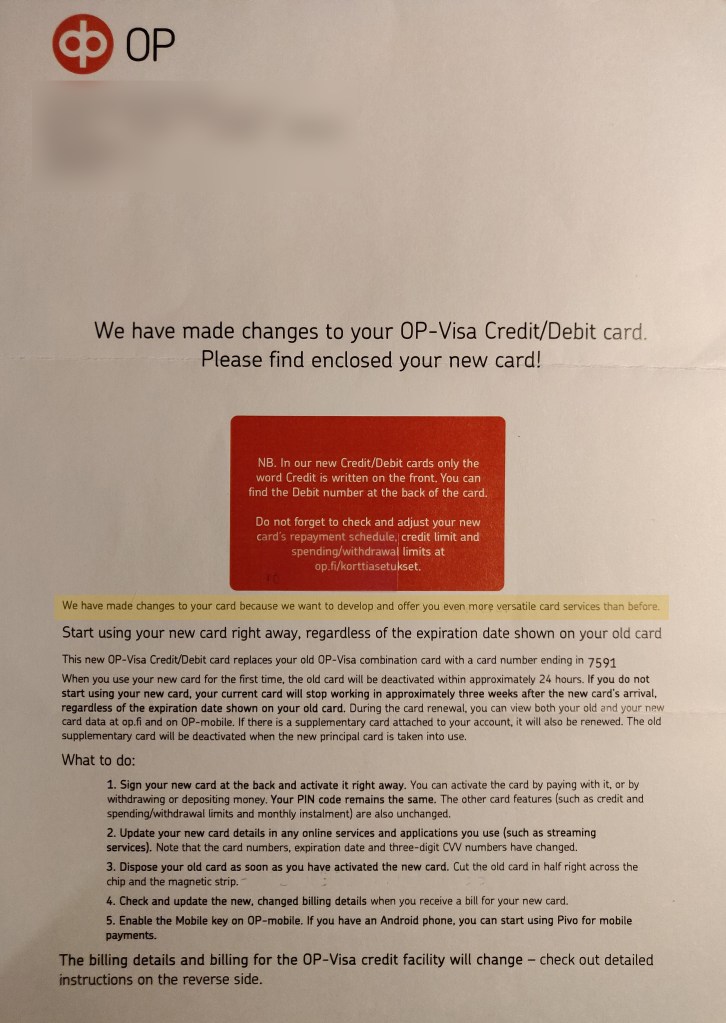
If we would be better at communicating change underlying its benefits for the target, we could perhaps make transitions smoother.

A mistake that is often made in corporate communication is telling the customer:

Here, we changed this, it’s good for you, trust us. And this is the list of things you have to do, on your own, to make the change effective.

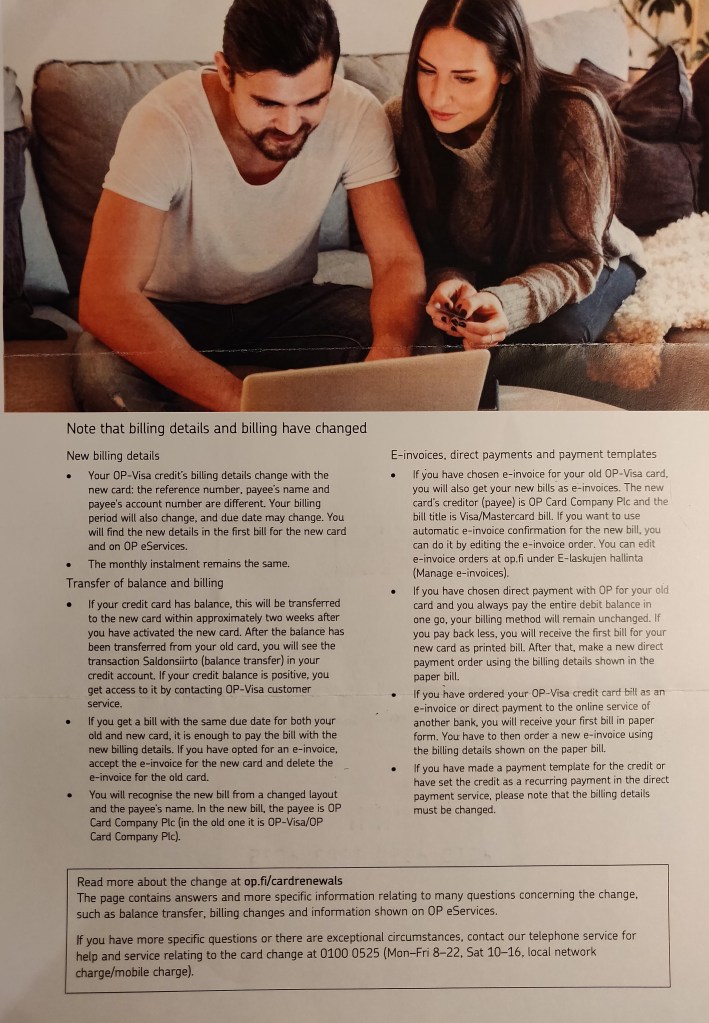
You can see a good example at the end of this post. One line to tell “more versatile services” will be offered (when? to whom? which services? do they matter?), and two pages full of things I have to do, or I have to check, or applicable to me in case I have this or that service (don’t you know which services I have subscribed? or if my card has balance? or if I have chosen e-invoice?).

Of course, we can see this type of messages as something that “needs to be done”.

Or, we could approach them as an opportunity to strengthen the relationship with our audience. A way to make it personal without second-guessing, to be of service, to establish our brand as helpful, relatable, trustworthy, even indispensable in the long term.

What’s your choice?