Unstoppable

Care is something under your full control that can give you an immense edge.

It works on three levels, which are deeply intertwined.

  • Care for the people.
  • Care for the things you do.
  • Care for yourself.

Care is not easy and it cannot be faked.

And when you care, you become unstoppable.

Concern

The best time to raise a concern about something is not the moment you realize there is a concern.

At that time, the concern is instinctual, raw, primitive.

Stay with it for a while. Elaborate it, write it down, think about it. And after some time has passed, if the concern is still there with you, go ahead and express it in the best possible form.

It’s never easy. It’s just worth it.

Stay on point

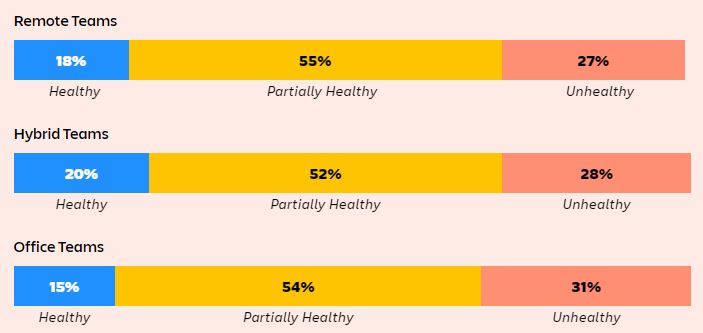
If you are busy trying to understand whether your team should work remotely, in the office, or in an hybrid format, you are most likely busy with wrong kind of questions.

Atlassian, State of Teams report – There is no material difference in a team’s health based on where they work from.

It might be yet another issue that distracts from focusing on the need to reassess what management means and what people seeks in organisations and their work.

Let’s stay on point.

Making up

Saying that you are sorry is great, and of course when you do that often for the very same reason, then deep down you are not sorry anymore.

I am sorry I am always late.

I am sorry I never call.

I am sorry I keep getting mad.

If you catch yourself doing that, there are two options.

Either you realize that the thing you are always sorry for is not as important for you as something else.

I am always late (not important) because I like to arrive when everyone is already there (important).

I never call (not important) because I do not want to talk to you (important).

I keep getting mad (not important) because that is my go-to way to express discomfort (important).

It is legitimate, and you have got to accept that others might have a different set of priorities and decide to move on.

Or you might realize that, while you genuinely want to change the behaviour, you are stuck. And in that case, as you go through your own soul searching, there is one important question you need to answer: How can I make up with them?

I am sorry I am always late, I will take some time after the meeting to edit the notes and send them around.

I am sorry I never call, I will keep you updated by sending you an email every week.

I am sorry I keep getting mad, I will make it clear to others it is on me if we are not getting along.

Of course, you can always ask: How can I make up with you?

Compensation strategy

Data about average salaries at a company, combined with data about average salaries at similar companies, is a huge and underutilized opportunity for any organization.

And not because one has to match or surpass the others, ensuring that they offer the top rates in the market. Quite the opposite, in fact. It is an opportunity because it gives the company the chance to start a conversation about an important piece of their culture and identity, and about how that compares with the rest of the market.

Money is but one motivator for most people, and not even the most relevant in many cases. Offering lower salaries and more of the rest can be a powerful statement and a winning strategy when done intentionally.

The alternative is what already happens in most cases: money as the main leverage in individual, secretive, transactional negotiations that leave each employee with the conviction that they can leave as soon as somebody will pay them more.

It is wasted potential.