Not acting on feedback

Never act on every single piece of feedback. And be aware that not acting on feedback is a strong signal you are sending.

What are you going to say when asked about it?

Option number one. “I forgot”. It can certainly happen, and what you are basically saying is that the relationship with the person who delivered the feedback is probably not as important as they thought. Not necessarily a bad signal to send, but one to go about extremely carefully.

Option number two. “I considered it, and did this instead”. It shows reflection and thoughtfulness, nonetheless it will probably not buy you any additional points with the person who delivered the feedback. Make a strong argument and possibly support it with facts. It will at least solidify your reasoning for going a different way.

Option number three. “I don’t care”. The person who delivered the feedback is not your audience, somebody you care about, somebody your work is for. It is actually positive to make this decision every now and then, be extremely mindful about it.

Where did you stand the last time you did not act on feedback received?
Take my data

You are more ok with the idea of paying taxes if you regularly benefit from tangible services your taxes contribute to cover.

The same is valid with data.

The problem with companies collecting information about us is not the collection per se.

It’s the secrecy of the operation, the impossibility to control what is collected and what not, and the fact that six months after buying a new car you are still getting ads with car offers.

“Have you already purchased a car?”

“Yes.”

“Ok, from now on you will stop seeing car offers while navigating the web. If you want to reactivate car offers in the future, you can do so by typing ‘activate car offers’.”

“Thanks, and feel free to take my data.”

What you need

You don’t need another article that tells you how to get what you want to get, no other “how-to” or “five steps” guides to determine what you are going to do today.

All you need is a starting point and a destination.

In between is the journey.

Let it be your own story.

The same

We are stuck in patterns.

We do the same things over and over again. React to the same things in the same way. Behave the same way with the very same person. Think the same thoughts, feel the same feelings, fall into the same narratives.

We do this until it becomes our reality, who we are, what we breath. And it is often self-destructive.

If only we could take a step back, point the finger at the pattern, and laugh.

Mentor

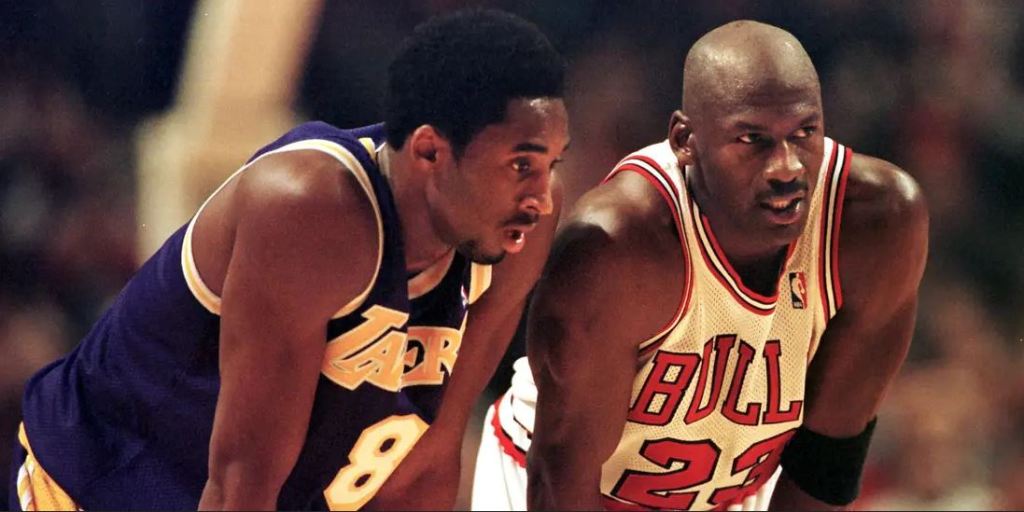
In December 1997, Los Angeles Lakers played the Bulls in Chicago. Many consider that the first real face-off between Kobe Bryant (who had been drafted the year before) and Michael Jordan (who had already won five championships).

During a break in the game, Bryant is close to Jordan. Bryant grew up watching Jordan play, he’s his idol. Bryant is bold enough to ask Jordan a question about his game: “how do you feel the defense when you turn around on your jump shot?”.

Now, Jordan could have done many different things here. He was the undisputed star of the NBA, he was going to win another championship that year. Yet, he knew that could not last forever, and many thought Bryant was his successor, the new rising star destined to take his place in the hearts of millions of fan.

Jordan could have done many different things. He could have walked away, he could have laughed it off, he could have hidden his secret, he could have shared the wrong information, he could have told the newbie to come back after winning five rings.

And he decided to share his expertise. “You feel them with your legs.”

Knowledge is no longer a limited resources (provided it ever was). Knowledge is incremental, and every time you share your knowledge, you add another person’s perspective, experience, take to it. Knowledge grows, and eventually it makes a community (whether it is the National Basketball Association, your team, your neighborhood or your family) better.

Mentoring is the very act of sharing knowledge. We can make of it a practice and be generous with what we know, be open to give it away, and perhaps see it returning in time with some new twists.

And if you are in the young Bryant’s shoes, be bold enough to ask.

This is the practice of leadership.