Overestimating

We are bad at communicating in written form.

We overestimate our capability to share meaning via a written message, and most importantly to share the underlying emotions, mainly because we fail to understand that our audience is often in a different state of mind.

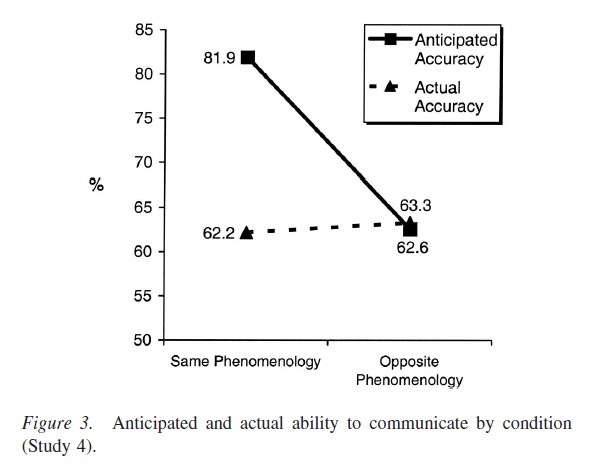
Two considerations.

If you are about to send a written message, and even more so if you do that for a living (as is the case for marketers), you will increase the chances to be effective when you spend enough time understanding who you are sending to. Also, if you plan to add some color to the message (anger, sadness, sarcasm, humor), use visual cues (emoticons, GIFs, images).

If you are responsible for the internal communication of an organization, you will increase the chances for your employees to be effective by providing more training and tools that support visual communication rather than written communication.

Fair

If you look around for fairness, you will find little of it.

Different people see the world in different ways, and fair becomes a fluid concept when you change perspective.

If you look inside for fairness, on the other hand, that is something you can more easily work with. You can train it, build it, apply it, and eventually spread it around. You can make it contagious, and impact those who are close to you.

And it all starts with being fair to yourself. What can you expect of you? What will you hold yourself accountable for? How will you express this to others, how will your actions impact them, and how are you going to find out?

Before asking the world to be fair, ask that of yourself. Imagine if everyone would do that.

Old friends

If you are a manager and you are starting at a new company, it is great that you have already some key people from your past experiences that you would like to bring onboard to fill key roles and take important responsibilities.

As you do that, be mindful of two things though.

The people in the company might feel like they are missing an opportunity. How are you going to address that? What is the rationale behind you hiring new people you know versus promoting somebody who has already done a great job in the organisation? Do you have a process in mind to assess competence and eventually make a decision?

And even most importantly, by doing that you are accepting the idea that what worked previously at another company will also work this time around. Is that realistic or is that wishful thinking? How much does it have to do with you wanting it to be that way? Are you going to make sure you can keep your eyes open to the unexpected and the unknown?

Harsh

You can resort to raising your voice to establish a power dynamic in an argument you are having, but you will not make the argument go away.

You can rush telling your piece before the other person has even done speaking, but you will not appreciate what the other has to say.

You can shout to get the attention, but you will not keep it to change minds and behaviours.

Relationships are never built with harsh manners and rude self-centrism.

And it is relationships you want to build, throughout all your life.

On hold

When we hear, read, or consume content, all we get is often about us.

Our fears, expectations, experience, knowledge. What we think about the author, about the medium, about the source. The day we are having, the day we are not having. Likes and dislikes. How confident we are today, what we have been told yesterday, where we are going tomorrow.

In order for us to learn, we need to be able to put all that on hold. To make it about the one delivering the message. To suspend our reaction and just be hearing, reading, consuming content in the moment.

If we do not that, everything will just be a confirmation of what we already know.