It’s the stories

It’s not what happened in our past that determines what will happen in our future.

Instead, it’s the stories we tell ourselves (and others) about what happened in the past that can have a profound impact on the stories we tell ourselves (and others) today and tomorrow.

We build narratives to make sense of what is going on, and they are powerful. But the good thing is, we can shape those narratives in a way that gives us purpose (vs takes purpose away), that shows a path (vs ends on a wall), that builds a future (vs destroys the past). And the even better thing is, the hope we give with our stories is contagious.

Let’s carefully work on our stories.
A shortcut

There is an old joke, I am not sure where it is originally from, but at least I am quite sure I have heard it in the series The Middle.

It’s about a wife, frustrated at her husband as he never shares his feelings for her. “You never say I love you”, she says. “I told you when we got married”, he counters. “If anything changes, I will let you know.”

This reflects quite well the attitude towards praise in business.

Managers think members of their teams know where they stand, because they once shared a “good job!” with them, or at the very least because if things would not be ok, for sure they would let them know.

It is an easy shortcut to avoiding a serious conversation about the job that is being done, one that requires a careful look at the whole (what we are doing as a company, why it does matter, where we are headed, …) and at its parts (how does what you are doing fits into it, what I did like of your job in particular, what can be improved, …).

If you do not express sufficient (and specific) appreciation for the people you lead, chances are they are going to look for it somewhere else.

Do not be surprised when they do.

Keep them close

It is very easy to project

fear,
anxiety,
doubts,
concerns,
pressure,
shortages,
anger,
failures

on others.

That’s what most of us do most of the time, as a shortcut to get those things out of the way. The problem is, other people care, and relationships get increasingly challenging when projecting becomes an habit.

One way to tackle this, is stop considering what we feel as negative (or positive).

Feelings can help us understand some important pieces about the world we leave in and our place in it. We should keep them close instead of ditching them, even when they hurt. Eventually, they’ll turn into something else.

They are not who we are, and certainly they are not who others around us are.

Start yesterday

One of the greatest misconceptions of our days is that we can connect only when we are at our best.

I am not going outside as the outfit I wear is not appropriate.
I will not meet anybody as my hair have not been done yet.
This is not good to publish as I look like a pig in it.
I am not really photogenic, so go ahead and take the picture without me.

This also translates in a broader approach to doing.

I am not going to that event, I have nothing interesting to share.
I am not writing, I have not a great story to tell.
I will still shut up at the next meeting, people do not want to hear what I have to say.
I can’t do my best job, I am not in my most perfect condition.

The fact is, most relationships are built on difficult moments, challenges and adversities. And you will not realize what interesting, great and perfect are like until you will have done uninteresting, not great and imperfect at least a thousands time before.

Of course, the misconception and its broader translation is simply another face of resistance.

We should all have started yesterday.

Smoothing

If we would be better at communicating change underlying its benefits for the target, we could perhaps make transitions smoother.

A mistake that is often made in corporate communication is telling the customer:

Here, we changed this, it’s good for you, trust us. And this is the list of things you have to do, on your own, to make the change effective.

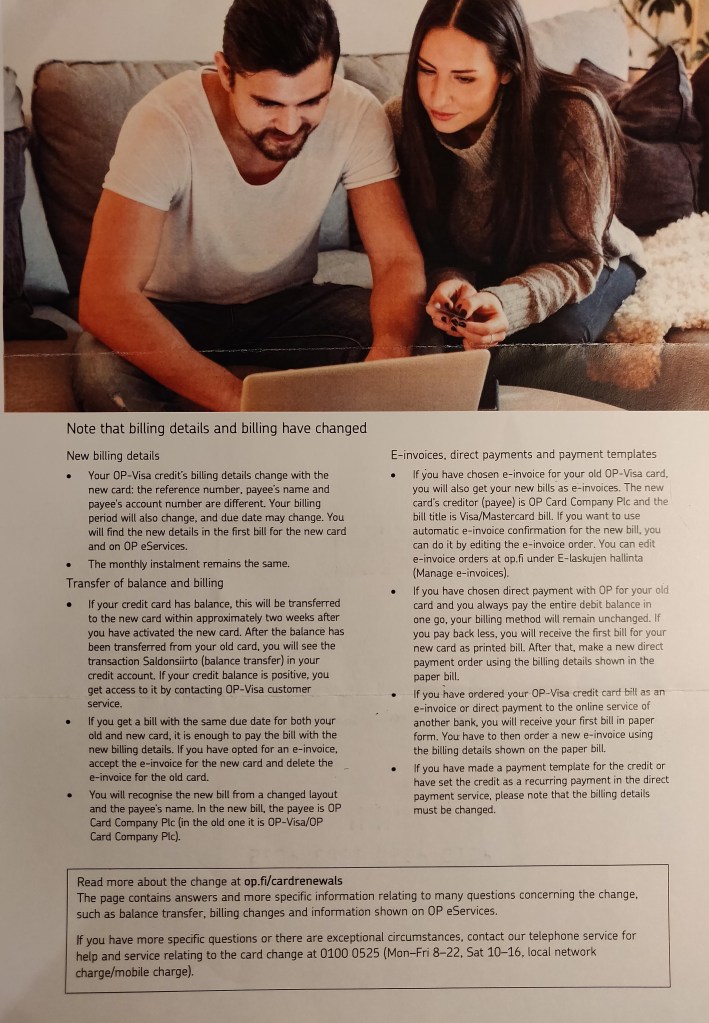
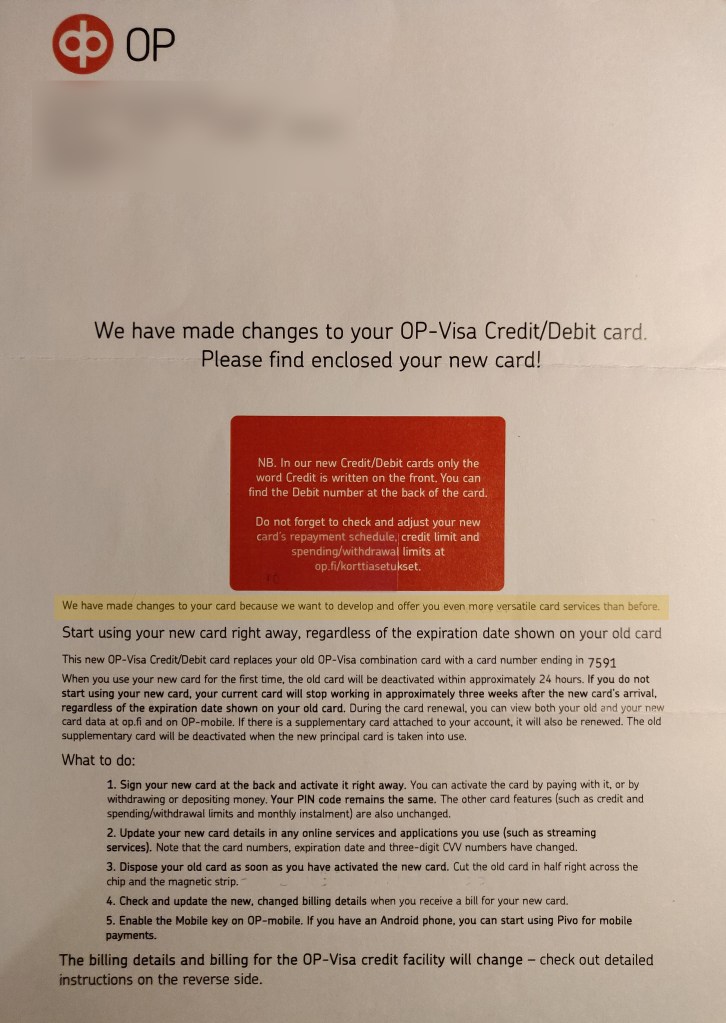
You can see a good example at the end of this post. One line to tell “more versatile services” will be offered (when? to whom? which services? do they matter?), and two pages full of things I have to do, or I have to check, or applicable to me in case I have this or that service (don’t you know which services I have subscribed? or if my card has balance? or if I have chosen e-invoice?).

Of course, we can see this type of messages as something that “needs to be done”.

Or, we could approach them as an opportunity to strengthen the relationship with our audience. A way to make it personal without second-guessing, to be of service, to establish our brand as helpful, relatable, trustworthy, even indispensable in the long term.

What’s your choice?