One might think that deep work is for hermits only – people who can take a break from the rest of the world for months or years to write a book, do some important research, code a new way to address a challenge that matters.
The truth is that the more we manage to implement deep work practices in our days, the better we will be equipped to succeed in the current economic and social environment.
Deep work – which draws from concepts such as flow and deliberate practice – matters because we live in times where we need to learn new things fast, and we need to master the things we learn so that an audience with scarce attention will find them worthy of their time.
Moreover, deep work is crucial to our happiness and success when we consider two ways our minds work.
First, as we move from one task to another, some “things” of the first task stick with us. It’s what researchers call attention residue, and it drains our mental energy. Just think at how you feel after a full day of meetings, calls, and emails.
Second, when we do shallow work, following things that capture our attention span, we are most likely to feel upset, nervous, stressed at the end of the day: “when you lose focus, your mind tends to fix on what could be wrong with your life instead of what’s right“. (Winifred Gallagher, Rapt)
The ability to perform deep work is becoming increasingly rare at exactly the same time it is becoming increasingly valuable in our economy. As a consequence, the few who cultivate this skill, and then make it the core of their working life, will thrive
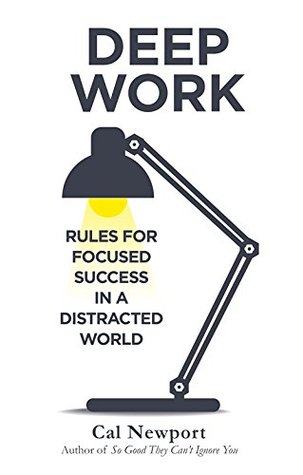
Cal Newport, Deep Work
There is an approach to deep work that should fit in everyone’s lifestyle, particularly in those of us who fall into the “knowledge worker” category.
It is called rhythmic approach, and it is about transforming deep work into a regular habit. By transforming deep work into a habit, you avoid having to figure out when it is the right time or the right setting to do deep work. You just do it, because it is part of the rhythm.
Jerry Seinfeld writes a joke every day. You could write a chapter every day, you could journal every day, you could meditate every day. You could study your favorite topic every day, from 11am to 3pm. You could focus on solving a tricky problem in your work every weekday morning.
By doing a little bit of what matters to you on a regular basis, you will get to do a whole lot in a longer period. Perhaps even the whole thing.
Rituals support the practice of deep work, because rituals reduce the amount of decisions you are going to take. Try to figure out in advance:
- Where you will do deep work
- What rules you will follow (e.g., no internet, no mobile phones, no social media etc.)
- What support you need (e.g., a bottle of water, some snacks, etc.)
Ensure that you put a stop to work, so that you can recharge the batteries and be fresh the following day. Four hours of deep work in a day should be your limit. If a task is unfinished, use the last 5-10 minutes of your deep work practice to plan what you will be doing to finish it.
Deep work is also about challenging things we take for granted.
- Should I be connected to the internet at all times when I work? Organizing the day in internet-blocks and no-internet blocks is a great way to go deep.
- Does productivity equal replying emails and attending meetings? Figure out what happens if you do not reply to emails that do not include a direct question to you, or decline invitations to meetings where you should be just audience.
- Is social media necessary to my life? Try quit it for a week and see if people notice, if you notice.
- Does your boss want you to commit to shallow work? Discuss the topic with them, and see if you can agree on a maximum amount of hours you will spend in meetings and with emails.
For many, there’s a comfort in the artificial busyness of rapid e-mail messaging and social media posturing, while the deep life demands that you leave much of that behind. There’s also an uneasiness that surrounds any effort to produce the best things you’re capable of producing, as this forces you to confront the possibility that your best is not (yet) that good. […] if you’re willing to sidestep these comforts and fears, and instead struggle to deploy your mind to its fullest capacity to create things that matter, then you’ll discover, as others have before you, that depth generates a life rich with productivity and meaning.
Cal Newport, Deep Work
 You've got this