Enamored

Doing more of what you have done so far is seldom the recipe for growth.

This is valid both for individuals and organizations. At different stages, there’s a need to identify what can take you to the next level. And the more you can do this without putting what took you so far front and center, the more likely it is that the exercise will be successful.

Studying hard will most likely get you a degree, but won’t get you that far once you land your first job.

Putting all your marketing budget in acquisition can be effective at early stages, but the value of this operation will decrease as your company grows.

Taking on different projects and trying various things can be great when you are in your twenties, but it’s going to become counterproductive once you get older.

Assuming a directive approach to leadership can work as long as your team is extremely junior, but as they start making experience you’ll most likely get more benefit (and commitment) from letting go of the reins.

This is the tricky part.

Once you find something that works, you’ll probably have to adapt to changing conditions soon enough and find a new way. Don’t get too enamored.
Right and funny

Marketing is often about doing what is right.

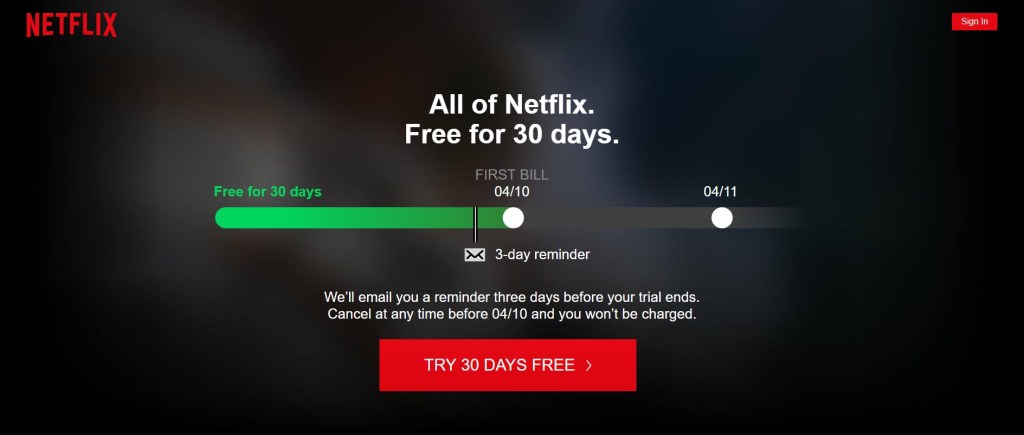
As in this beautiful, clear, honest page by Netflix introducing their free trial. They don’t fear you won’t like the service, and so they are straighforward about when the trial will end (even before you sign up). They will also let you know three days earlier, so that you can cancel if you want (they know you won’t). A credit card is still needed, but I am more likely to trust them with it with this kind of approach.

Marketing is (sometimes) also about doing what is funny.

That happens when you spot an opportunity in somebody mispronouncing your brand name at a conference. Instead of rectifying, you build numerous products with names very close to yours, and run campaigns to promote them. Everyone cheers you, and your brand is stronger than ever.

Smoothing

If we would be better at communicating change underlying its benefits for the target, we could perhaps make transitions smoother.

A mistake that is often made in corporate communication is telling the customer:

Here, we changed this, it’s good for you, trust us. And this is the list of things you have to do, on your own, to make the change effective.

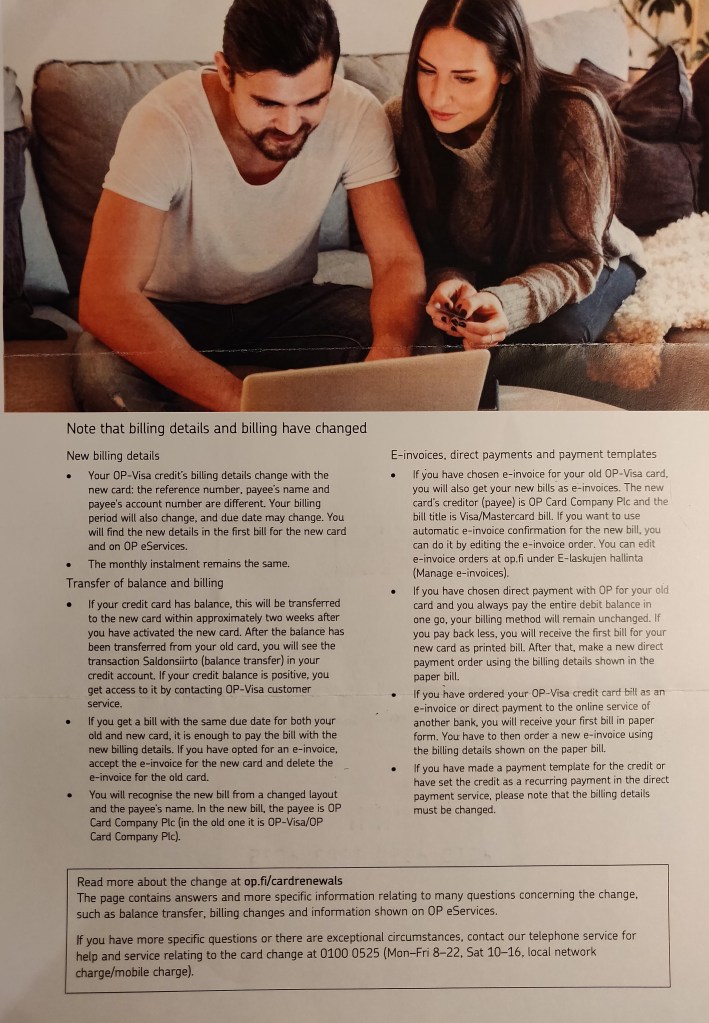
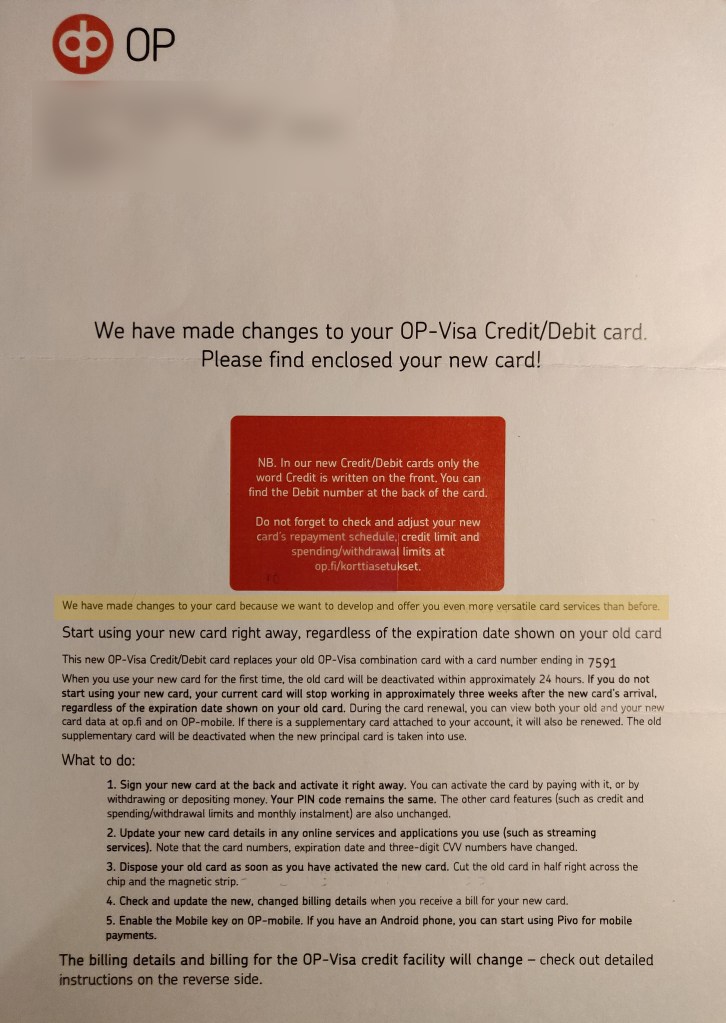
You can see a good example at the end of this post. One line to tell “more versatile services” will be offered (when? to whom? which services? do they matter?), and two pages full of things I have to do, or I have to check, or applicable to me in case I have this or that service (don’t you know which services I have subscribed? or if my card has balance? or if I have chosen e-invoice?).

Of course, we can see this type of messages as something that “needs to be done”.

Or, we could approach them as an opportunity to strengthen the relationship with our audience. A way to make it personal without second-guessing, to be of service, to establish our brand as helpful, relatable, trustworthy, even indispensable in the long term.

What’s your choice?

Brandsplain

If a customer leaves negative feedback, files a complaint, gets mad for something, writes a bad review, speaks ill of your product or service, stops paying you, one of two things is true.

  1. They are right.
  2. They are not your customers

Trying to explain they are wrong, and behaving as if 1 or 2 (or both) are not possible is simply a worthless, damaging exercise.

If even Google forgets this, it’s probably a good idea to keep it in mind in our daily marketing practices.

One message

Kantar Millward Brown has found that the more you try to say, the less likely your message is going to get across and stick.

A great reminder for all the times we are tempted to tell of all the great things our product does, of all the features our service has, of all the magic we can deliver.

When the temptation kicks in, just think how effective such a message would be if you were the customer. Would you understand it, appreciate it, remember it? Would it make you buy?

Keep it simple.