To market marketing

Marketers market products. And marketers also market marketing.

Some are good at the former, few even understand that the latter is just as important.

To market marketing means promoting the role of marketing internally. It means asking around what the expectations around marketing are, kicking off a dialogue, setting and reporting on the right metrics, being consistent at building a narrative that supports all of the above.

When marketers do only market products, you see marketers going around and trying to apply the same tactics in completely different circumstances. Then coming up with a new fad to try and keep things fresh.

Marketing is a practice, not a campaign.

Business card

This viral picture reminded me of a couple of things.

First, that creativity (coming up with ideas) and innovation (the implementation of those same ideas) can be applied to anything, even something as old as business cards.

And second, that creativity and innovation are often a good way to create early stages buzz. Whether that will spread further down the line, though, is a different matter.

Make it better

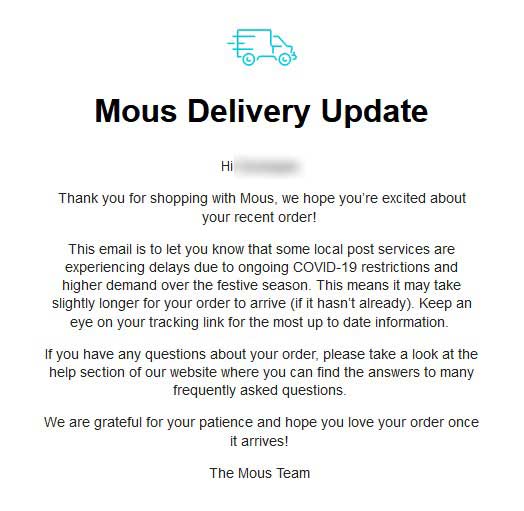
Customer communication is an opportunity to establish and strengthen a relationship. Not just a way to deflect a possible inquiry.

You should know (and tell) whether a package has been delivered or not. And if it has, spare the customer the clutter in their inbox.

You could add the link to track the delivery. And spare the customer the trouble to dig into their incoming messages to find it.

You could suggest a direct way to ask a question. And spare the customer the time to go through the website, the help section, the knowledge base articles, and the feedback form.

Good customer communication often goes unnoticed, because it makes the experiences smooth and does not impose additional tasks on the receiver.

It’s not impossible, and can be achieved with some intention.

Reporting marketing

It’s a responsibility as marketers to make marketing accessible to the rest of the organization. We are the ones good at communicating, after all.

It starts with reporting on your KPIs.

If you have 20 slides with tables filled with character size 12 numbers, covering all the regions, all the channels, all the assets, all the stages of the funnel, you are doing everybody a disservice. Nobody will understand what you are up, and by not understanding it, they will not be excited about the next thing you will present or ask money for.

Pick three numbers. Make them about awareness, conversion, and pipeline. Report on them with three slides, splashing the big number on one side and an explanation of the number on the other (what you did, what happened, why it matters, what’s next – keep it character size 30 at least). Do it every month or every quarter and let readers ask their own questions about regions, channels, assets, and so on.

That’s a way to build credibility and interest around the marketing function.

Come together

Three things to consider when you write new marketing content.

  1. It needs to be relevant to your audience – “me” is not relevant.
  2. It needs to be different from what is out there.
  3. It needs to be distributed in a channel where your audience hangs out.

All of the above needs research, so writing marketing content never starts with a blank page and very rarely starts with a brilliant idea. It starts with questions, data, insights, and the right expectations about how long it takes to make it all come together.