All the time

We will act fairly.

Once this bad period is over.

As soon as we have launched this very important new service.

When the new manager will be up to speed.

If only we would win this next bet.

The fact is, integrity does not allow conditions. You are either fair, or you are not. And actually, once you start cheating, cutting corners, taking shortcuts, there is good evidence that you are onto a slippery slope that will take you deeper down the hole. Raising up from there is not as easy as one would think.

Find your principles, set your boundaries, draft your rules. And be genuinely committed to them.

All the time.

The lesson I learned from this is that it’s easier to hold to your principles 100% of the time than it is to hold to them 98% of the time. If you give in to “just this once,” based on a marginal cost analysis, as some of my former classmates have done, you’ll regret where you end up. You’ve got to define for yourself what you stand for and draw the line in a safe place.

Clayton Christenses, How will you measure your life?

P.S.: How important this is for organizations! This is why organizational culture fails so often. As culture is often built in meetings and not anchored to reality, a company can find hundreds of ways and reasons to deviate from it. When that happens, there is no sanction. And the culture drifts …

My people resist change

Three ways to go about change in companies.

  1. Engage with the people affected in time. Instead of going for behind-closed-doors decisions and big reveals, make everyone part of the process. You won’t lose control, and you will win a variety of perspectives and a clear view on what the major problems will be.
  2. Meet people where they are. It is way to easy to say my door is always open. So easy, in fact, that nobody will ever come to you. Make an intentional effort, instead, to check in with people where they hang out: meetings, 1-1s, chats, kitchen tables. You won’t lose power, and you will win connections, face time, and trust.
  3. Say it. Say it again. Say it once more. The saying goes, I told you I love you when we got married, I’ll let you know if anything changes. Of course, it is a joke. Then why do you do just that when it comes to change? Build a marketing campaign around change, make the message relevant, clear, inspiring, and then repeat it in every possible occasion. You won’t waste time, and you will win commitment and alignment.

And change is so much more than this. But since none of the above ever gets done, you could try starting here before complaining that your people resist change.

How far

At some point, you have to realize that busyness is hurting people around you.

It hurts your boss, who cannot count on you to deliver what you should.

It hurts colleagues and team members, who have to deal with somebody who is unprepared and unresponsive.

It hurts your partner and kids, who never know when you will be around with body and mind.

It hurts your friends, who are stuck listening to the stories you keep telling.

Many consider busyness as a measure of success. It is actually more often a measure of how far you are pushing your responsibilities.

Overestimating

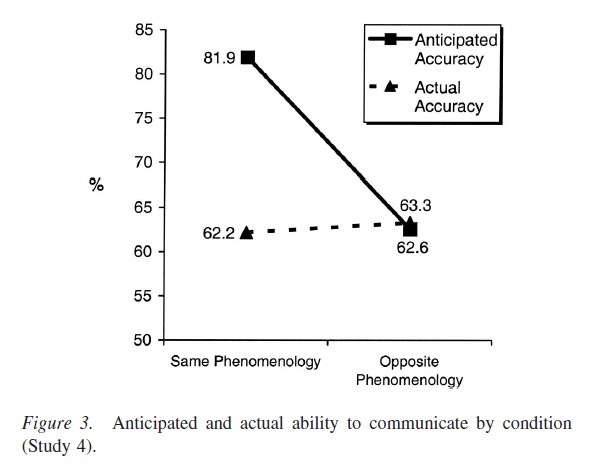
We are bad at communicating in written form.

We overestimate our capability to share meaning via a written message, and most importantly to share the underlying emotions, mainly because we fail to understand that our audience is often in a different state of mind.

Two considerations.

If you are about to send a written message, and even more so if you do that for a living (as is the case for marketers), you will increase the chances to be effective when you spend enough time understanding who you are sending to. Also, if you plan to add some color to the message (anger, sadness, sarcasm, humor), use visual cues (emoticons, GIFs, images).

If you are responsible for the internal communication of an organization, you will increase the chances for your employees to be effective by providing more training and tools that support visual communication rather than written communication.

Rapport

Just because you say it needs to happen, doesn’t mean it will happen.

If you give somebody an urgency, you better frame it in a way that makes sense to them or to the greater cause. Important is subjective, even when you are close, even when you work in the same team, even when there is a generic agreement on high level targets.

A sure way to inspire action is to build rapport first. Trust is what makes things important for a group of people. Not because somebody says it, but because we have a common understanding and we are in this together.

Just because it will happen, doesn’t mean you have changed their minds.

Of course, if you repeat that something is important enough times, people will eventually go ahead and merely do it. And next time you will have to ask again, repeat again, exhaust them again.

A sure way to inspire change is to sustain rapport. Dedicate time to it, expand it, nurture it, heal it, prioritize it, protect it. Not because somebody wants something, but because you care.