Protect or build

You can protect your name, your reputation, your prestige. Or you can build it.

Rarely you can do both at the same time.

Protecting is about public relations, networking, promising, giving speeches. It is a reactive game. It is about ensuring that what you do determines who you are, how others see you. It is trying to control the outcome, that you can’t really control.

Building is about doing. It is a proactive game. It is about ensuring that who you are determines what you do, day after day. It is fully mastering the input, that you can always control.

Choose carefully.

Be dumb

When you ask dumb questions, people get often irritated and dismissive. But if you explain that you are asking simply because you do not genuinely know, they are usually happy to help. They can also go great lengths to make it click for you.

There are benefits in taking a dumb approach to things, new things in particular. Understanding why something is done in a certain way can unlock new meaning, and eventually you will become better at expressing yourself.

Next time you are in a meeting, and somebody nonchalantly asks “you know that, right?”, or says “you have certainly heard about this”, or mentions a term you are not familiar with. Instead of nodding and pretending, stop and ask the dumb question: “can you explain that, please?”.

You will not loose status. You will gain the possibility to learn.

How far

At some point, you have to realize that busyness is hurting people around you.

It hurts your boss, who cannot count on you to deliver what you should.

It hurts colleagues and team members, who have to deal with somebody who is unprepared and unresponsive.

It hurts your partner and kids, who never know when you will be around with body and mind.

It hurts your friends, who are stuck listening to the stories you keep telling.

Many consider busyness as a measure of success. It is actually more often a measure of how far you are pushing your responsibilities.

Overestimating

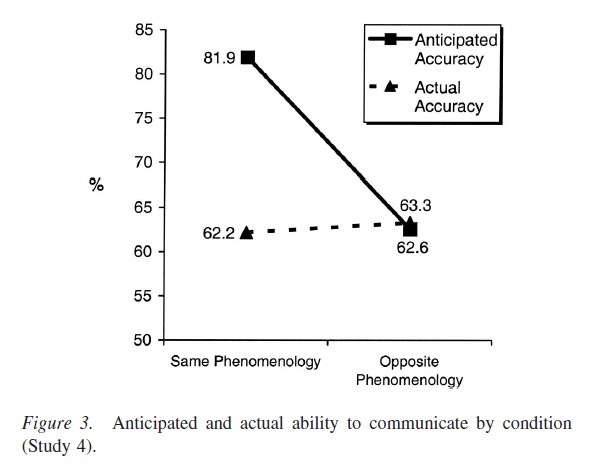
We are bad at communicating in written form.

We overestimate our capability to share meaning via a written message, and most importantly to share the underlying emotions, mainly because we fail to understand that our audience is often in a different state of mind.

Two considerations.

If you are about to send a written message, and even more so if you do that for a living (as is the case for marketers), you will increase the chances to be effective when you spend enough time understanding who you are sending to. Also, if you plan to add some color to the message (anger, sadness, sarcasm, humor), use visual cues (emoticons, GIFs, images).

If you are responsible for the internal communication of an organization, you will increase the chances for your employees to be effective by providing more training and tools that support visual communication rather than written communication.

Fair

If you look around for fairness, you will find little of it.

Different people see the world in different ways, and fair becomes a fluid concept when you change perspective.

If you look inside for fairness, on the other hand, that is something you can more easily work with. You can train it, build it, apply it, and eventually spread it around. You can make it contagious, and impact those who are close to you.

And it all starts with being fair to yourself. What can you expect of you? What will you hold yourself accountable for? How will you express this to others, how will your actions impact them, and how are you going to find out?

Before asking the world to be fair, ask that of yourself. Imagine if everyone would do that.