When you share an idea, some will find it impractical.
When you launch a project, some will say it will never work.
When you have a solution, some will argue it’s not the right one.
When you find a problem, some will say they can live with it.
Of course, the point has never been to have everybody agree. The point is doing something that feels right, and doing it consistently and continuously enough, so that others can find it and come on board.
We are social. And we are used to communicate through speaking. We talk to those we know, we catch hints on their understanding, we monitor their behaviour, their eyes, their face, their expression. We are asked to clarify when something is not clear, and we can then continue.
With writing, though, everything is more complicated. The reader exists only in our imagination. And to ensure that communication actually happens, we need to take some extra care.
It is not about following a list of rules and directives.
It is about having a good understanding of the make-believe world in which we pretend to communicate.
To achieve such understanding, classic style can be helpful.
The guiding metaphor of classic style is seeing the world. The writer can see something that the reader has not yet noticed, and he orients the reader’s gaze so that she can see it for herself. The purpose of writing is presentation, and its motive is disinterested truth. It succeeds when it aligns language with the truth, the proof of success being clarity and simplicity. The truth can be known, and is not the same as the language that reveals it; prose is a window onto the world. The writer knows the truth before putting it into words; he is not using the occasion of writing to sort out what he thinks. Nor does the writer of classic prose have to argue for the truth; he just needs to present it.
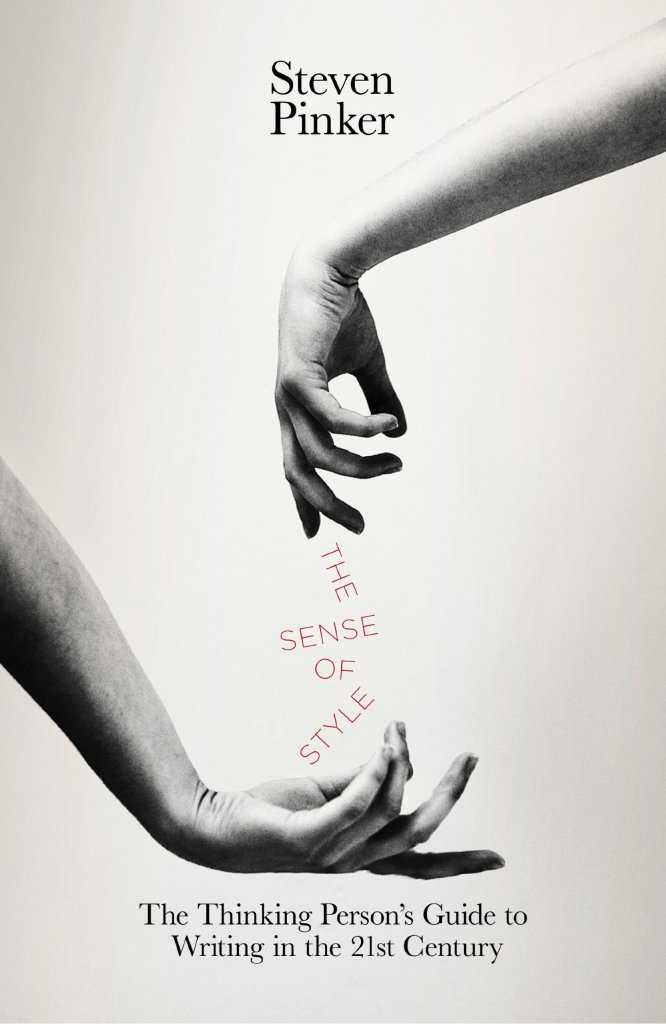
Steven Pinker, The Sense of Style
Classic style makes the reader feel like a genius. The goal is to make it seem as if the writer’s thoughts were fully formed before they were put into words.
Classic style is about:
Cutting an argument to its essentials;
Narrating it in an orderly sequence;
Illustrating it with analogies that are both familiar and accurate.
This is made more difficult by the curse of knowledge, and particularly by chunking – when we put together ideas and concepts so that they are easier to memorize -, and by functional fixity – the more we become familiar with something, the less we think about what it looks like and what it is made of.
We are primates, with a third of our brains dedicated to vision, and large swaths devoted to touch, hearing, motion, and space. For us to go from “I think I understand” to “I understand,” we need to see the sights and feel the motions. Many experiments have shown that readers understand and remember material far better when it is expressed in concrete language that allows them to form visual images.
Steven Pinker, The Sense of Style
There are things we can do to become better writers.
Reading is the essence of good writing, and we should take the habit of lingering over good writing when we find it – what makes it so good and memorable?
Have somebody, possibly from your audience, read what you wrote.
Read what you wrote out loud.
Re-read what you wrote after some time has passed.
Right-branching – In Sophocles’ play, Oedipus married his mother.
Left-branching – Admitted Olympic skater Nancy Kerrigan attacker Brian Sean Griffith dies.
Center-embedded construction – The view that beating a third-rate Serbian military that for the third time in a decade is brutally targeting civilians is hardly worth the effort is not based on a lack of understanding of what is occurring on the ground.
Before adding something to a sentence, make sure that what comes first is clear – keeping sentences open for too long puts a strain on the reader. Also, save the heaviest for last (topic, then comment; given, then new).
Use similar sentence structures to make it easier for the reader – e.g., avoid changing the subject from one sentence to the other, or going from active to passive voice.
Ensure coherence throughout the text by
introducing the topic early;
stating the point (what you are trying to accomplish) early;
using indefinite (e.g., an Englishman) first, then definite (e.g., the Englishman, him, he) to refer to the same;
using the same form to refer to the same thing – being mindful of avoiding too much repetition;
connecting ideas and thoughts with examples, explanations, sequences, causes, effects.
Look things up, as memory is fallible.
Have sound arguments, that can easily be verifiable independently by the reader.
Don’t confuse an anecdote or personal experience with the state of the world.
Understand that disagreement and criticism are ok, and it is not the role of the writer to prove everybody wrong, or lazy, or stupid, or motivated by the wrong values and principles.
We are experts on how to live the lives of others.
We know exactly what others should do, say, wear. We know how they feel and what motivates them. We tackle their problems better than if they were our own. We plan, argue, debate for them. We know everything, we hear everything, we understand everything.
And when it is our turn, we are stuck.
We are wonderful spectators and mediocre actors.
Because being under the spotlight is never easy. It is not for us – and indeed, we come up with many excuses when that happens -, it is not for those around us.
What you do is always going to be met with criticism.
Not everybody is going to like it, not everybody is going to agree with it, not everybody is going to want to hear, read, listen more.
The way you approach this basic fact is going to determine how much you are going to achieve. Make it a focus, try to change minds, invest in proving them wrong, and you will be depleted in no time. Take it as an assumption, filter what can help you, muscle through the rest, and you’ll have a real shot at unleashing your potential.
 You've got this