Feeling in charge

I have done some of my best job under pressure and deadlines. Thing is, that pressure, those deadlines, they were not imposed from the outside. They were consequences of me feeling responsible for a project, a document, a team, a deliverable.

If you impose pressure and deadlines, particularly when you do not share clear reasoning (as in “we do this because it helps us this way”), people might still do the job. Great job, though, needs internalization.

You are building future

Always do things with the long-term in mind.

What type of person do you want to be?
What companies do you want to build?
What community do you want to live in?

If you keep your focus on the long-term, and appreciate that choices you make every day are the building blocks of what long term will look like, it will be a whole lot easier to avoid the allure of shortcuts and of short term gains.

Bridges over gaps

There’s a gap between you and everyone else.

A gap between what you do and what they do. A gap between what you want and what they want. A gap between how you think things should be run and how they think things should be run. A gap between what you believe is true and what they believe is true. A gap between how you see yourself in ten years and how they see themselves (and yourself) in ten years.

It is quite easy and instinctual, in front of the gap, to either impose our point of view or completely give it up. Both are ways to avoid conflict. “You better do what I say!” or “Ok, let’s do it your way..” are shortcuts for the short terms. They work for a while. Until the other, or we, realise what it’s been renounced. Then we find the gap is still there, only wider.

Another option, more difficult to practice, taking more effort, energy and empathy, is to work to build a bridge over the gap. You build a little bit on your side, the other builds a little bit on their side. Both work to make their sides more solid, and eventually, with time, the two parts will meet.

The meeting point is something completely new, as it is not your side nor it is the other’s side. It is a new perspective, a new idea, a new way of acting, a new vision for your common future. Built on common understanding.

Great thing about bridges, others can walk on them too.

The quit stage

Content marketing cannot just be an excuse to collect an email address.

I give you my contact because I am interested in one piece of your content. You follow up to ask if I enjoyed it, and then you start sending out regular emails I have not asked for, on topics that barely touch on my initial interest, widening the range as time goes by. And the bottom line of each of these communication is the exhortation: “buy!”.

This is not how it’s supposed to work. This is not how it’s supposed to be effective.

It’s not, because you are breaking an early relationship based on trust. I have trusted you with my contact, and you have trusted me with your piece of content. And then, what? How would you treat a human being in a face-to-face interaction, after the initial exchange of trust?

Perhaps, asking them what their interests are. Sending them something similar to what made them give you trust, and carefully see if it works. Answering their questions if they have any. Politely enquiring on what can be done to improve the relationship.

And at some point, draw the line and quit.

There must be a moment, a time, when you’ve tried enough. A moment when it’s clear it was just a temporary exchange more than a real interest. A time when sending one additional email is more damaging than not sending it.

In a world in which everything is free (only in monetary terms), we are not used to design the “quit” stage. And yet, one of the most remarkable marketing email I remember is the one of a company who did.


Right in the moment

As an Italian abroad, I am a huge importer of pasta from Italy. When I saw this today, I got hopeful.
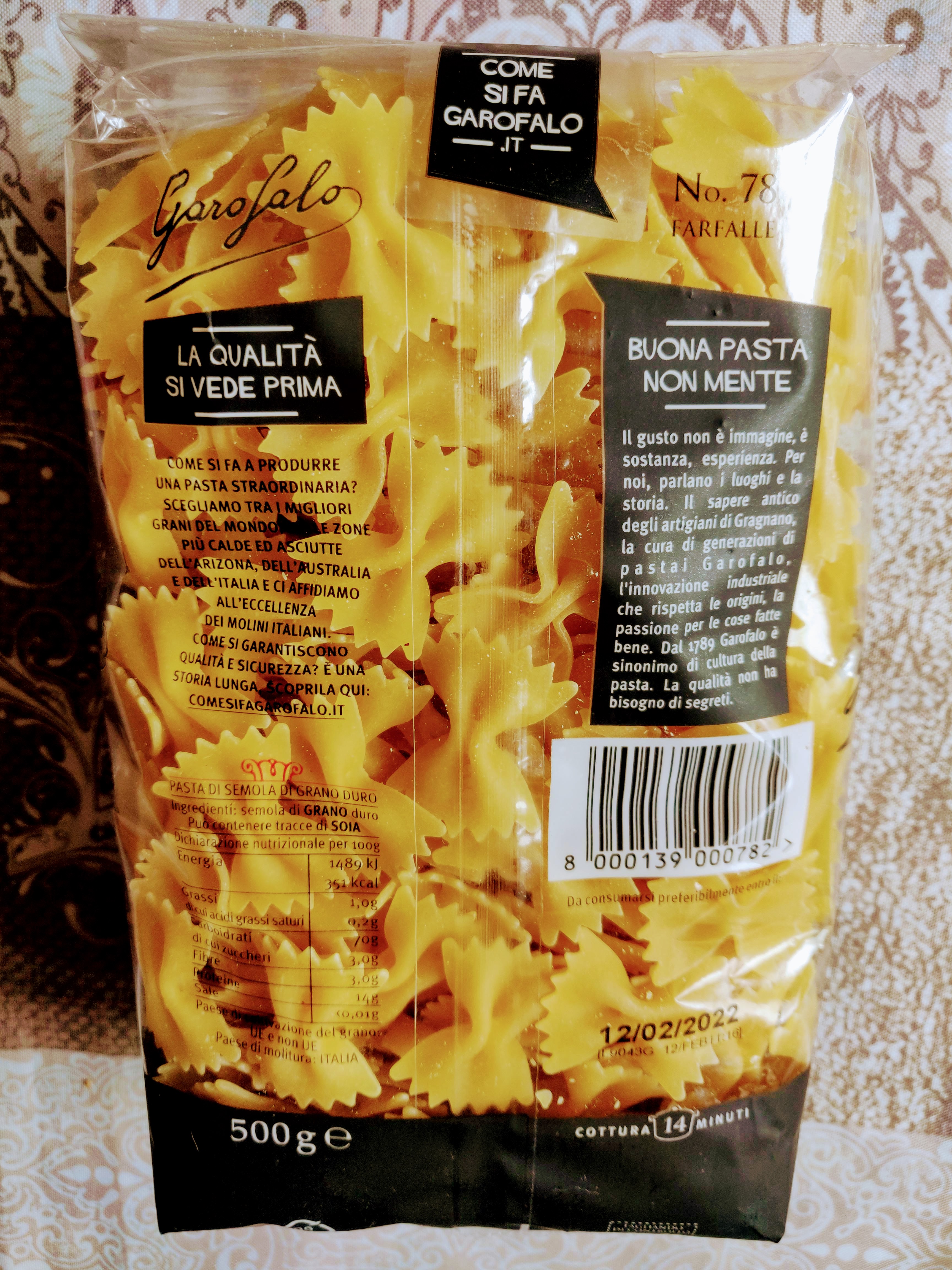
fabrizio-trotti-pasta-garofalo

The packaging is in Italian, but what got my train of thoughts started was the little branded tape that sealed the thing. It reads “comesifagarofalo.it”. A custom site the producer really wants me to check out as I am opening the package! (“come si fa Garofalo” could be translated into “how Garofalo is made”, yet in Italian the verb “to make” could also be used as “to cook”).

I got interested in the label as I have experienced many people do not know how to cook pasta. I have been asked about that quite a lot since I moved out of Italy, and I have some horror stories about how people actually go about cooking pasta that I will leave for a stormy night in the forest.

I hoped the company did recognize the problem and decided to put up a mini-site to educate people about this. I imagined a very simple site with the 3-4 key instructions (it is really that simple) right on top, perhaps a video, some hilarious “don’ts”, and a bunch of recipes. A company who made its name because of the quality of its pasta (Garofalo definitely has) should also care about how that is cooked and consumed. The possibility got me really excited.

That did not last long, as I unfortuntely found the mini-site was a mere way to showcase the manufacturing process of Garofalo pasta (where the ingredients come from, what is the process that goes into it, and so on).

I find this a missed opportunity to build a meaningful relationship with customers. When people have a package of pasta in their hands, the water boiling in the pot, I doubt they might be interested in where that pasta comes from or whether the ingredients used are genuine. I don’t mean to imply these are not important things in the buying process of a package of pasta (to some people, at least, they are). Yet by the time you have read the information on the website, your guests might have arrived, your water will have evaporated, and pasta will not be served for another half an hour.

When you think about how to promote your brand and its quality, always keep in mind that the customer has different types of interactions with the product. And while consistency is important, that does not mean you have to feed information about manufacturing and quality when they are about to cook their dinner. Think about what their needs might be at every stage, and give them what they might need the most in that moment. It is that simple, and yet definitely not easy.