Signals

The things you say no to – and the things you say yes to as well of course – they signal what you care about. In the day to day, for most things, it might seem not too important (it is). But when you are in a leadership position, there is no excuse. You might have very good reasons to dedicate your attention or energy to this or that, yet eventually you are telling those around you what matters and what you all together are about.

Tread carefully with these kind of decisions, they do not affect yourself only.
Inspiring change

If all you give people are facts, they will take note and move on with their lives.

Give them a story they can feel and relate too, and you will have their long-term attention.

Give them empathy for their own story, and you will have them ready to change their behaviour.

Training

I am glad you did this (for me, for the company, for our family) is not really the best way to express gratitude. It is something to say, at best, when you tolerate what was done, when you think it was not necessary yet did not hurt, when it’s about something you are quite neutral about.

Thank you is more simple and gets to the point instead. Say it often, make of it a habit, and truly mean it. Gratitude is a muscle that can be trained.

A strategic choice

Why do people rarely talk frankly to each other when tension arises?

Time inflates difficult situations where two or more people feel resentment towards each other, yet it seems people float through such circumstances without taking action. They talk to other colleagues, families, friends. They feed their anxiety and frustration by crafting a defensive narrative. And they continue escaping a direct confrontation.

That’s how our mind is wired. Clearing the air is difficult, it takes effort and commitment. In the moment, when the time comes to choose between going ahead and speaking to the other person or ignoring the problem and carrying on with the day, the brain will always, instinctively, go for the latter. Because that’s what keeps us safe.

Of course, it is a short-term safety. And in most cases it’s not that we are really in danger of serious consequences should we decide to, once and for all, have that chat.

Difficult conversations are a strategic choice. Have them often, with intention.

Google

Google’s mission used to be “to organize the world’s information and make it universally accessible and useful”.

It still is.

Yet, that’s no longer what Google does.

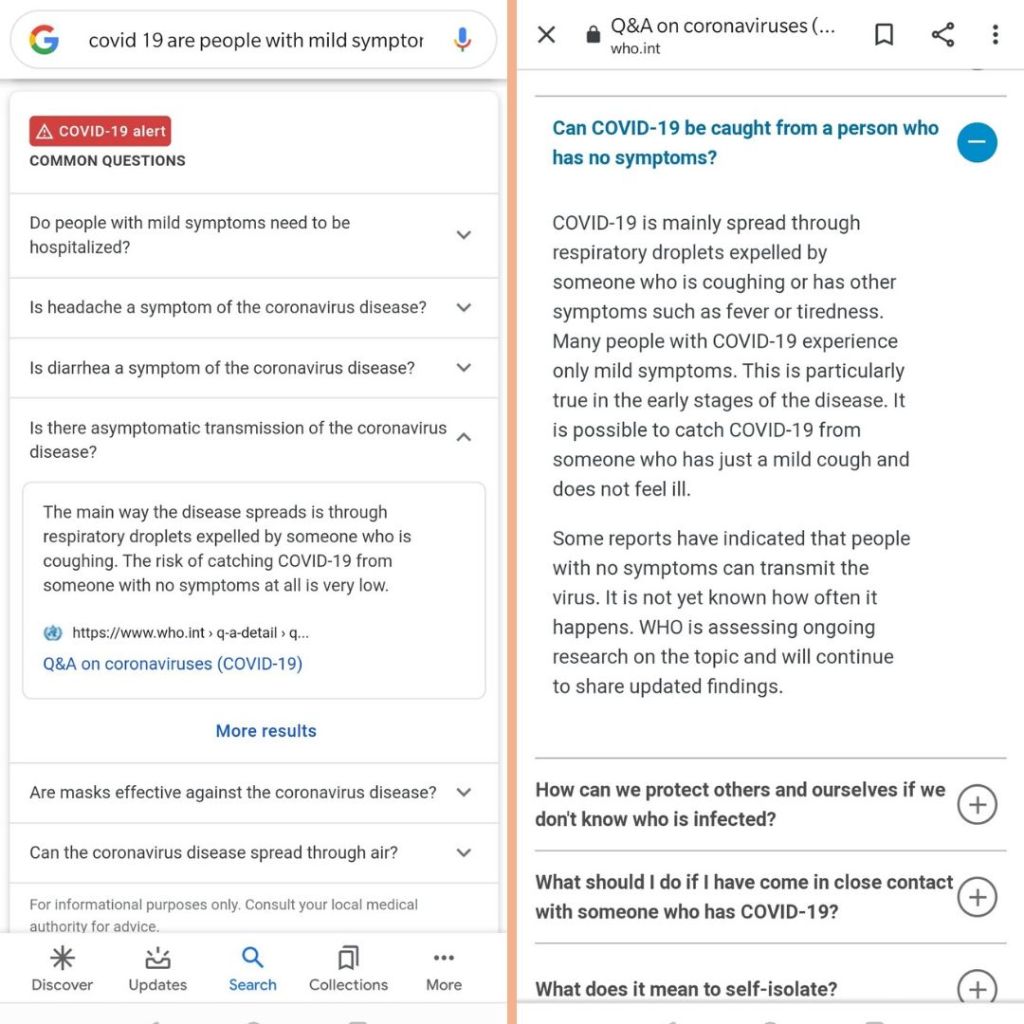
Google is now in the business of deciding what information is and what it is not, it shapes the way people consume the internet and its content, with a clear bias towards information that is either owned by Google or that companies pay Google to promote.

So much for accessibility and usefulness.

Of course, companies change as they grow. But should we trust Google to offer us the type of information we need, at the right time? Probably not.

That’s not what they do anymore.