A strategic choice

Why do people rarely talk frankly to each other when tension arises?

Time inflates difficult situations where two or more people feel resentment towards each other, yet it seems people float through such circumstances without taking action. They talk to other colleagues, families, friends. They feed their anxiety and frustration by crafting a defensive narrative. And they continue escaping a direct confrontation.

That’s how our mind is wired. Clearing the air is difficult, it takes effort and commitment. In the moment, when the time comes to choose between going ahead and speaking to the other person or ignoring the problem and carrying on with the day, the brain will always, instinctively, go for the latter. Because that’s what keeps us safe.

Of course, it is a short-term safety. And in most cases it’s not that we are really in danger of serious consequences should we decide to, once and for all, have that chat.

Difficult conversations are a strategic choice. Have them often, with intention.
Conversation

The mere presence of a meeting on a calendar does not imply that the meeting has happened. Even if it started at the right time, with the right people, each one of them sharing some words, cheering, laughing, nodding, moving on. That still does not mean that the meeting has happened.

Meetings should inspire action, and yet how often does that happen in reality? How many meetings do you need before you actually get something done?

Consider spending half of the time you have scheduled for meetings tomorrow in a conversation instead. Turn to someone who could help you get unstuck, ask thoughtful questions, relax and listen. Then spend the remaining time applying what you learned to what you are doing.

Get going.

Single-tasking

If there is one thing we can learn from moments of crisis is the importance of focus.

We can only be effective if our attention is on one thing at a time. It is not possible to work as you are helping your kids through their day. It is not possible to enjoy time with your son if all you think about is the email you will have to send later in the evening. It is not possible to engage in a meaningful conversation with your partner if you are surfing the news at the same time.

Different interests and pursuits have their own time, and you should become accustomed to isolating your attention as you dedicate resources to each one of them.

Multi-tasking is a myth, rarely a necessity, never a skill.

We should get rid of it.

Google

Google’s mission used to be “to organize the world’s information and make it universally accessible and useful”.

It still is.

Yet, that’s no longer what Google does.

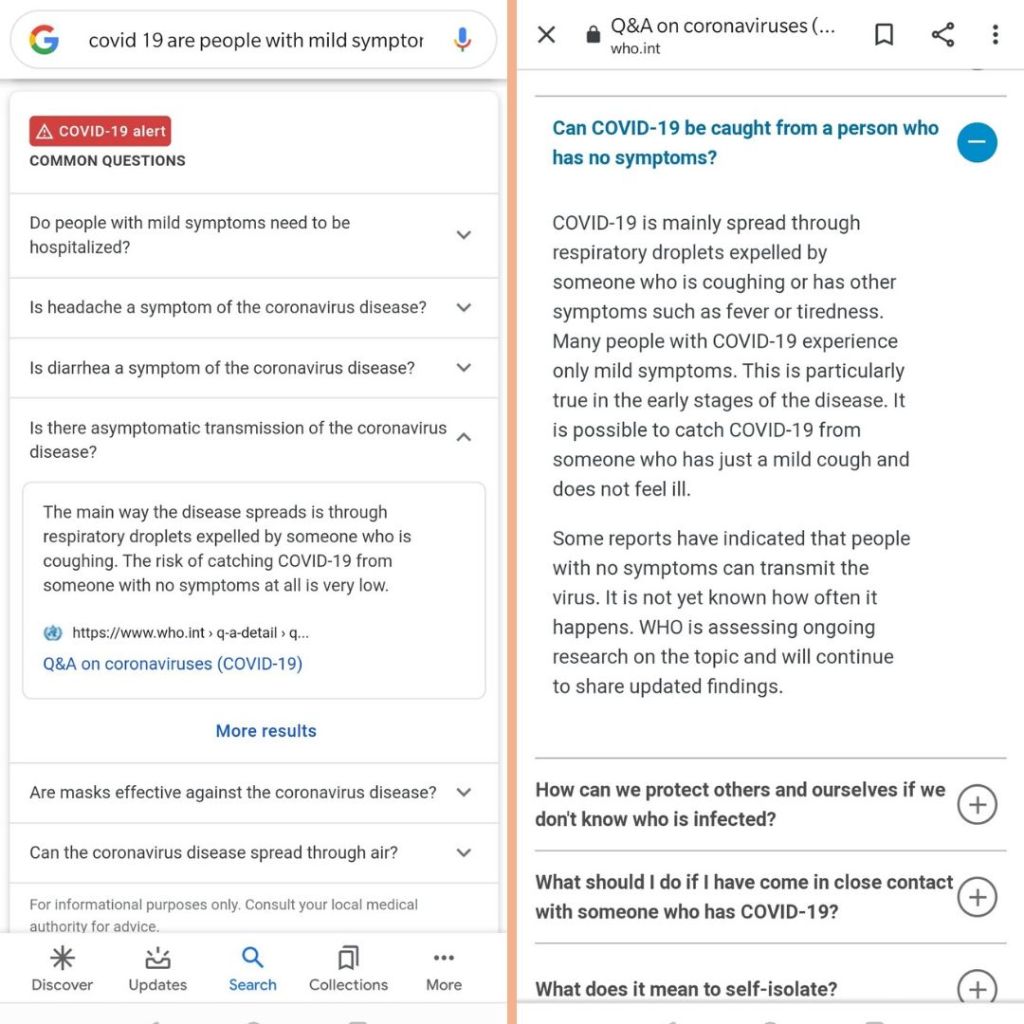
Google is now in the business of deciding what information is and what it is not, it shapes the way people consume the internet and its content, with a clear bias towards information that is either owned by Google or that companies pay Google to promote.

So much for accessibility and usefulness.

Of course, companies change as they grow. But should we trust Google to offer us the type of information we need, at the right time? Probably not.

That’s not what they do anymore.

Good eggs

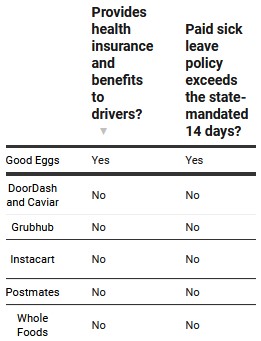
Business decisions can be good marketing too. A way to differentiate from your competitors, express your values and tell everybody what you stand for.

Good Eggs got this right. And for once, a page stating corporate values does not sound like shallow promises.

The original article by KQED is here. The full chart here.