Be dumb

When you ask dumb questions, people get often irritated and dismissive. But if you explain that you are asking simply because you do not genuinely know, they are usually happy to help. They can also go great lengths to make it click for you.

There are benefits in taking a dumb approach to things, new things in particular. Understanding why something is done in a certain way can unlock new meaning, and eventually you will become better at expressing yourself.

Next time you are in a meeting, and somebody nonchalantly asks “you know that, right?”, or says “you have certainly heard about this”, or mentions a term you are not familiar with. Instead of nodding and pretending, stop and ask the dumb question: “can you explain that, please?”.

You will not loose status. You will gain the possibility to learn.

Overestimating

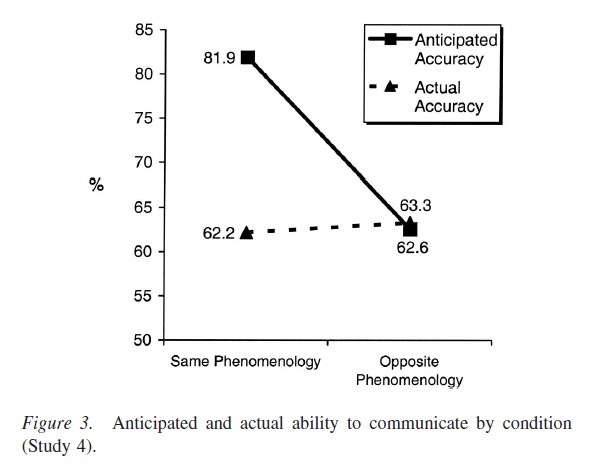
We are bad at communicating in written form.

We overestimate our capability to share meaning via a written message, and most importantly to share the underlying emotions, mainly because we fail to understand that our audience is often in a different state of mind.

Two considerations.

If you are about to send a written message, and even more so if you do that for a living (as is the case for marketers), you will increase the chances to be effective when you spend enough time understanding who you are sending to. Also, if you plan to add some color to the message (anger, sadness, sarcasm, humor), use visual cues (emoticons, GIFs, images).

If you are responsible for the internal communication of an organization, you will increase the chances for your employees to be effective by providing more training and tools that support visual communication rather than written communication.

A different way

When you feel like you want to lash out at somebody.

Get aggressive, forget about manners, say it as it is. Ask a provocative question, answer in a passive aggressive tone. Send an irate reply, or no reply at all. Take it public, escalate it, raise the flag.

There is one question you should ask yourself first.

Why?

It is often so that, when that emotion takes us, we want to act to get it out, to relieve ourselves, to trade a long-term effect for a short-term boost.

If it is change we want, we have to find a different way.

Harsh

You can resort to raising your voice to establish a power dynamic in an argument you are having, but you will not make the argument go away.

You can rush telling your piece before the other person has even done speaking, but you will not appreciate what the other has to say.

You can shout to get the attention, but you will not keep it to change minds and behaviours.

Relationships are never built with harsh manners and rude self-centrism.

And it is relationships you want to build, throughout all your life.

Forcing

Nobody is forcing you to stay where you are.

Somebody perhaps asked, or maybe it is exactly where you wanted to be, or it might be that it is fear that’s sticking you to that seat. You might feel the responsibility. You are probably telling yourself there is no other option. You are asking others to validate your desperate attempts, and the faintest nod makes you double down on your fragile certainty.

But the truth is, nobody is forcing you.

So, if it starts feeling wrong. If people around you tell you that it is wrong. If you can’t find peace of mind, despite the desperate attempts and the faint nods. If anywhere you look is despair, rejection, sadness.

Move.

Nobody is forcing you to stay there.