Shit

We all go through the same shit.

That does not mean our pain, despair, fights, passions are all the same, indistinct reasons why we feel miserable. It means that most likely others can relate to it. Can understand. Can empathize. And it also means that we are not alone, not in our suffering.

So, the first thing to do is talk about it. Reach out to a friend, a family member, a doctor, somebody in this deep sea of misunderstanding we can relate to. Talk honestly and don’t hold back.

And the second thing to do, arguably the most difficult, is to listen when we are on the receiving end of a request of help.

Gentleness

Understanding what is happening within has one sole purpose.

Gentleness.

When it becomes clear where your actions and reactions come from, what’s behind the patterns you keep falling in, why it is so difficult to be a certain way and do a certain thing. Then you can relax.

That is not the same as giving up, or finding excuses. Actually, the moment you accept the trigger for what it is (a thought, a situation, a feeling, a sensation) and refuse to label it as “me” and “reality”, is the moment you can open to proactivity. Good thing will come from it.

Finding new stories

We often misjudge the relationship between cause and effect.

I have been fine being lazy all my life, but since I started exercising, it’s one injury after the other.

I have always had a job, but since immigrants started pouring into our country, I cannot find anything that’s worth my time.

I have never felt remorse from trying to be better than others, but since I began listening to people, now I am stuck and cannot progress in my career.

That’s what I have always done, so why should I change now?

The reasons we find to justify our behaviour, or the lenses we use to look into the past, are never neutral. We want to feel what we are doing or did is ok, and we do our best to find reasons not to have to change.

The world around us, though, does not matter about cause and effect. Time passes, societies evolve, technology progresses, relationships degrade, people leave, and we might very easily find ourselves in a world that we struggle to comprehend.

And at this very moment, we have a choice. We can find fake comfort in the stories we have told ourselves so far or we can go out with an open heart to find new stories.

I’ll go back to being lazy to make sure I continue staying healthy or I’ll continue exercising, taking into account the fact my body is not used to it, and I might have to take it easier in the beginning.

I’ll fight against immigration to make sure there’s a job for me or I’ll check if I can update my skills to better match the needs of the modern world.

I’ll stop listening and caring about people so to make sure I can get an edge or I’ll make an attempt to help people be better at what they are doing, and who knows what opportunities might open up for me.

If you are brave enough to choose what’s new, that does not mean you have to repudiate the old at the same time. It is part of you, of the person you have become, and there’s no reason to reject of forget it.

Just don’t build around yourself a prison made of what’s been. Use it as a stepping stone to leap into what will be.
The quit stage

Content marketing cannot just be an excuse to collect an email address.

I give you my contact because I am interested in one piece of your content. You follow up to ask if I enjoyed it, and then you start sending out regular emails I have not asked for, on topics that barely touch on my initial interest, widening the range as time goes by. And the bottom line of each of these communication is the exhortation: “buy!”.

This is not how it’s supposed to work. This is not how it’s supposed to be effective.

It’s not, because you are breaking an early relationship based on trust. I have trusted you with my contact, and you have trusted me with your piece of content. And then, what? How would you treat a human being in a face-to-face interaction, after the initial exchange of trust?

Perhaps, asking them what their interests are. Sending them something similar to what made them give you trust, and carefully see if it works. Answering their questions if they have any. Politely enquiring on what can be done to improve the relationship.

And at some point, draw the line and quit.

There must be a moment, a time, when you’ve tried enough. A moment when it’s clear it was just a temporary exchange more than a real interest. A time when sending one additional email is more damaging than not sending it.

In a world in which everything is free (only in monetary terms), we are not used to design the “quit” stage. And yet, one of the most remarkable marketing email I remember is the one of a company who did.


Right in the moment

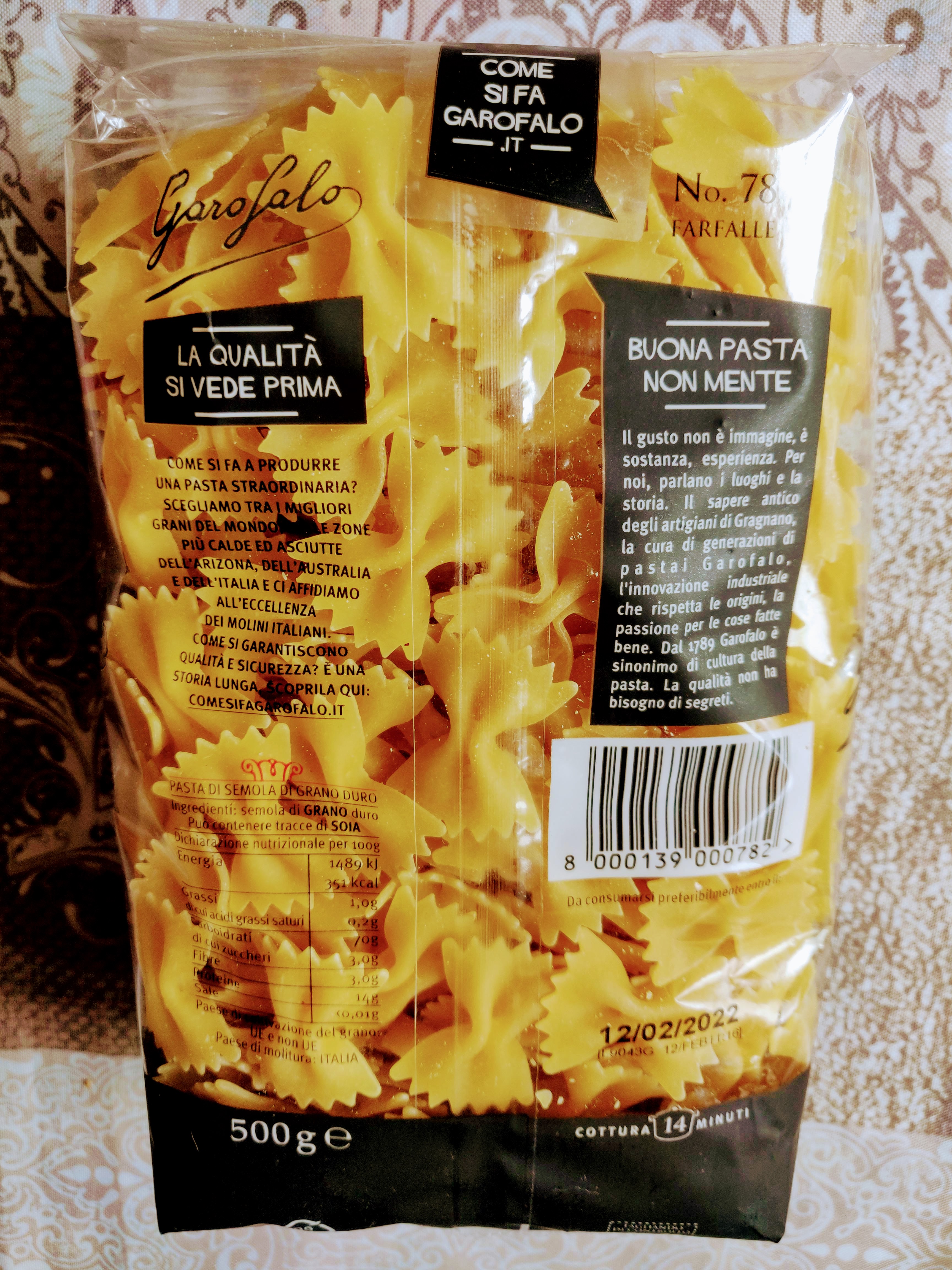
As an Italian abroad, I am a huge importer of pasta from Italy. When I saw this today, I got hopeful.

fabrizio-trotti-pasta-garofalo

The packaging is in Italian, but what got my train of thoughts started was the little branded tape that sealed the thing. It reads “comesifagarofalo.it”. A custom site the producer really wants me to check out as I am opening the package! (“come si fa Garofalo” could be translated into “how Garofalo is made”, yet in Italian the verb “to make” could also be used as “to cook”).

I got interested in the label as I have experienced many people do not know how to cook pasta. I have been asked about that quite a lot since I moved out of Italy, and I have some horror stories about how people actually go about cooking pasta that I will leave for a stormy night in the forest.

I hoped the company did recognize the problem and decided to put up a mini-site to educate people about this. I imagined a very simple site with the 3-4 key instructions (it is really that simple) right on top, perhaps a video, some hilarious “don’ts”, and a bunch of recipes. A company who made its name because of the quality of its pasta (Garofalo definitely has) should also care about how that is cooked and consumed. The possibility got me really excited.

That did not last long, as I unfortuntely found the mini-site was a mere way to showcase the manufacturing process of Garofalo pasta (where the ingredients come from, what is the process that goes into it, and so on).

I find this a missed opportunity to build a meaningful relationship with customers. When people have a package of pasta in their hands, the water boiling in the pot, I doubt they might be interested in where that pasta comes from or whether the ingredients used are genuine. I don’t mean to imply these are not important things in the buying process of a package of pasta (to some people, at least, they are). Yet by the time you have read the information on the website, your guests might have arrived, your water will have evaporated, and pasta will not be served for another half an hour.

When you think about how to promote your brand and its quality, always keep in mind that the customer has different types of interactions with the product. And while consistency is important, that does not mean you have to feed information about manufacturing and quality when they are about to cook their dinner. Think about what their needs might be at every stage, and give them what they might need the most in that moment. It is that simple, and yet definitely not easy.