Insecurity

We lash out at people, we judge, we confine, we define, we spend most of our days commenting and evaluating what others do. And the truth is, we do not know any better.

It is perhaps our insecurity that makes us feel so certain when it comes to others.

Assuming good intentions

Assuming good intentions is truly the only way to build relationships and stay sane.

Some people might act out of malicious intents, trying to manipulate others in order to get ahead. Most though go about their lives in the exact same way as we do. They might have different ideas, points of view, preferences. But they are trying to do their best with the cards they have been dealt.

The alternative is to question everything and doubt everyone.

It is possible, and some choose that. I am not sure though they understand how much energy, attention, resources that is taking from them.

No real thing

For most people, there is no real thing that is going to be better if you are going to work one more day, or check your email on Christmas day, or take a meeting while your family is gathered for dinner.

It’s just your fear of giving away control and of finding out that you are not that important.

Take a break, go on vacation, spend quality time with your family. I promise you, when you will go back, the same problems and challenges will be there waiting for you.

You might just have some more resources to tackle them.

Have some

You can’t have it all.

It’s a sentence we often hear and one that is incredibly difficult to live by.

Of course, when you think, act, are as if that were true, the single thing that’s left is to understand what is important. Remove the distractions and the infinite opportunities, get them out of the way.

You can’t have it all means you can still have some. The trick is ensuring the “some” is highly relevant.

Make it better

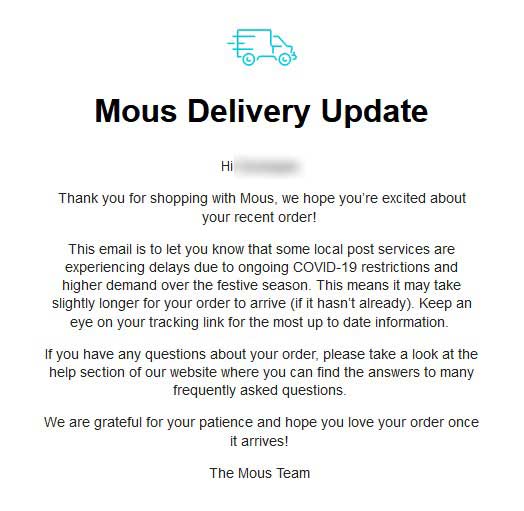
Customer communication is an opportunity to establish and strengthen a relationship. Not just a way to deflect a possible inquiry.

You should know (and tell) whether a package has been delivered or not. And if it has, spare the customer the clutter in their inbox.

You could add the link to track the delivery. And spare the customer the trouble to dig into their incoming messages to find it.

You could suggest a direct way to ask a question. And spare the customer the time to go through the website, the help section, the knowledge base articles, and the feedback form.

Good customer communication often goes unnoticed, because it makes the experiences smooth and does not impose additional tasks on the receiver.

It’s not impossible, and can be achieved with some intention.