Openly ask

Do you ever bother to openly ask?

A team member, what they would like to work on.

A customer, how they will be using your product.

A user, what topic would they be happy receiving content about.

Your partner, how would they feel if something would happen.

Your boss, what’s keeping them up at night.

Most of our businesses and lives are based on assumptions. Sometimes we hide them under the labels “experience” and “data”, and yet assumptions they are and they will be.

Should we instead bother and ask the question?

A whole lot more

I can find all the praises for your product or service easily.

I can talk to one of your reps in minutes.

If I prefer so, your chatbot will guide me to the content most relevant to my situation.

I can painlessly answer a survey to help you improve your website, and with one single click give you consent to using (and share) information about my interests.

Your marketing will seek me out to offer more, for free, as long as I stay engaged.

That rep is still trying to schedule a follow-up call to offer a discount if I sign now.

And then, once I am finally your customer, if I need some information, I have to dig them out of an overly complicated help center page, or pray for a telephone number to appear below one of the folds of your website and wait in queue.

And if I decide that, for any reason, I do not need your service anymore, you frustrate the hell out of me with rules, counteroffers, bundles, and eventually a cold goodbye.

There’s no balance in the way companies allocate budget throughout the customer journey. Or perhaps it’s just they think the journey ends when the customer has paid.

There’s a whole lot more to it.
Do, measure and adjust

There are many different ways to address any case. Unfortunately, you probably have resources (attention, money, energy, motivation) to try one or two of them at the same time.

The point is then to avoid lengthy discussions about which way is the better (not to mention pointless scenario-building that change the rules of the case), and put some effort instead in identifying what successfully addressing the case looks like.

And then just do, measure and adjust.

Unrealized potential

Customer service should be a function of marketing.

It’s an opportunity to establish a personal relationship with the customer, right in the moment when the customer wants to speak to you and is willing to provide information about their experience.

Not only.

If an organisation is smart enough to mine the information collected from customer service interactions and analyse them qualitatively (sentiment, voice of customer, etc.) rather than quantitatively (first rime response, contact rate, etc.), a treasure trove of customers insights could be found, good to use in messaging, positioning, differentiation, price and promotion, and more.

Customer service has the potential to become a true channel for personalisation, as well as the source from which all other personalisations originate.

Smoothing

If we would be better at communicating change underlying its benefits for the target, we could perhaps make transitions smoother.

A mistake that is often made in corporate communication is telling the customer:

Here, we changed this, it’s good for you, trust us. And this is the list of things you have to do, on your own, to make the change effective.

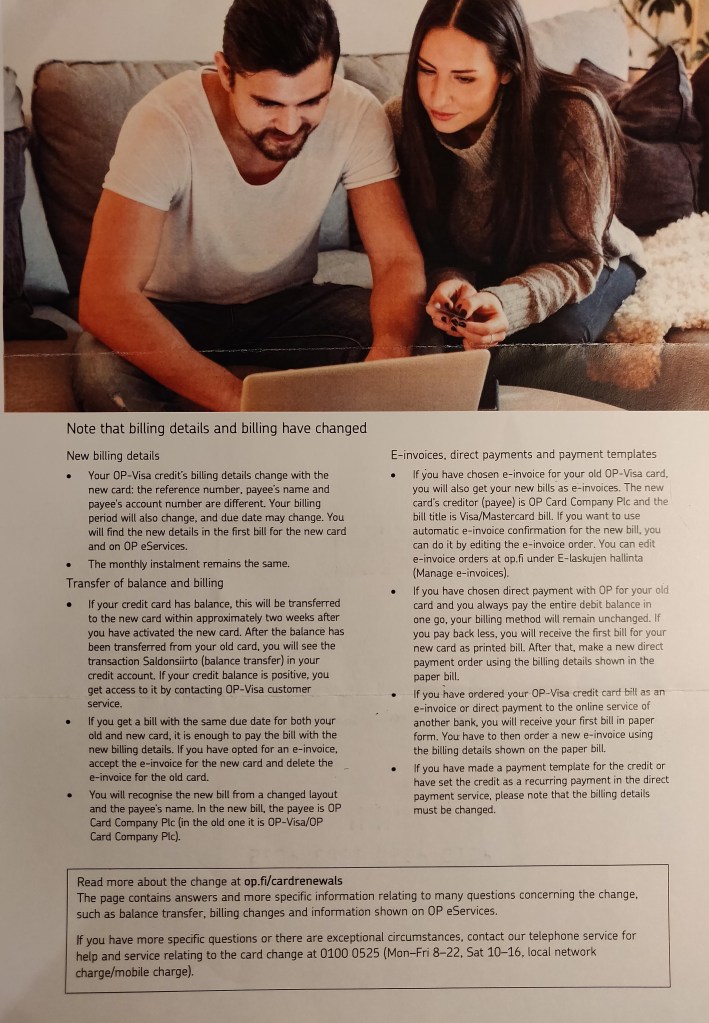
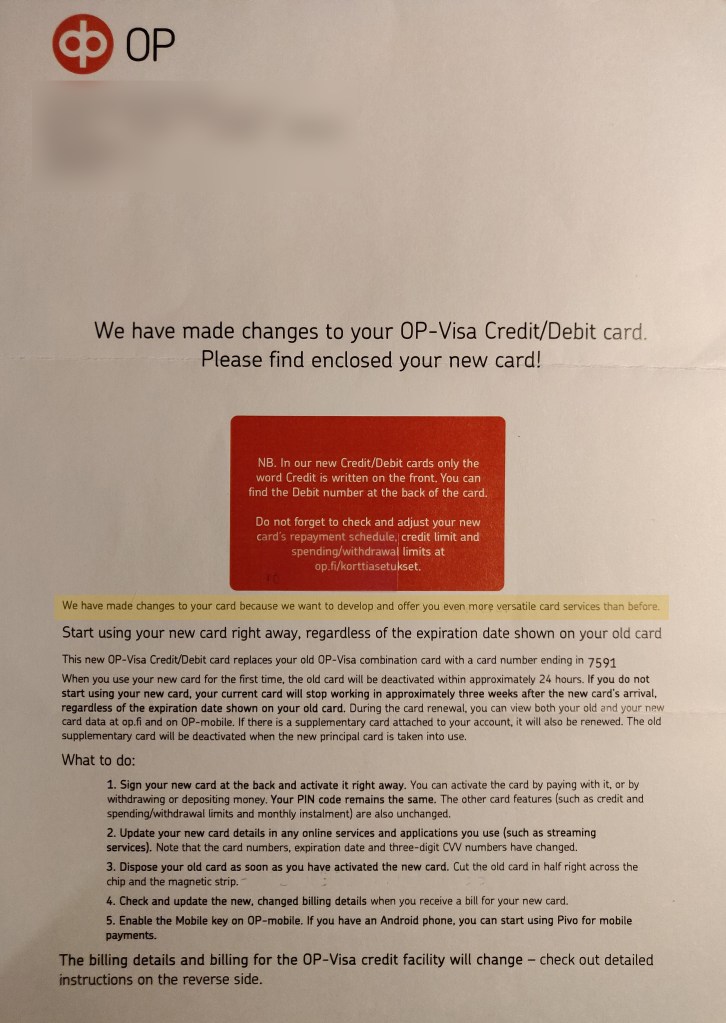
You can see a good example at the end of this post. One line to tell “more versatile services” will be offered (when? to whom? which services? do they matter?), and two pages full of things I have to do, or I have to check, or applicable to me in case I have this or that service (don’t you know which services I have subscribed? or if my card has balance? or if I have chosen e-invoice?).

Of course, we can see this type of messages as something that “needs to be done”.

Or, we could approach them as an opportunity to strengthen the relationship with our audience. A way to make it personal without second-guessing, to be of service, to establish our brand as helpful, relatable, trustworthy, even indispensable in the long term.

What’s your choice?