Bureaucratic mindset

Bureaucracy is there mainly because somebody wants to save their ass.

Perhaps it’s because they don’t want to take a chance, or because they feel the risk is too high, or because they prefer not to be bothered rethinking a process that has worked once, or because they are disturbed by the chaos that different opinions and ways would bring about, or because nobody has ever done it before.

Bureaucracy puts an end to all that and it protects somebody’s ass. It’s infuriating, unnerving, impossible to understand. But it’s safe.

Bureaucracy is inevitable in many aspects of life, but a bureaucratic mindset can sneak in places where it should probably not be.

Like a team, or a project that aims at being innovative.

That’s what you need to be careful about.

Consulting

If you are going to call a consultant in to help with one area of the business, you should involve those whose work is going to be impacted by the consultant’s work, at least for:

  • Defining the scope of the consultant work
  • Selecting the consultant
  • Onboarding the consultant
  • Working with the consultant

It still puzzles me how many companies only require for management and leadership team to be involved, every step of the way. And how they expect to get long term outcomes from the investment.

To each their own things

The things you always notice, the things that rile you up, the things you just can’t stand anymore, the things you’d rather do without, the things your really cannot understand.

Those things are a thing for you.

And others, well others have their own things.

Just move on.

Indicators

A change in focus requires a change in indicators.

If you decide to focus on employees well-being and retention, why are you still talking about growth rate?

If you decide to break down the silos, why are you still setting goals and reporting results by department?

If you want to spend more time with your family, why is your salary still the measure of your success?

A change is a change.

Choose carefully

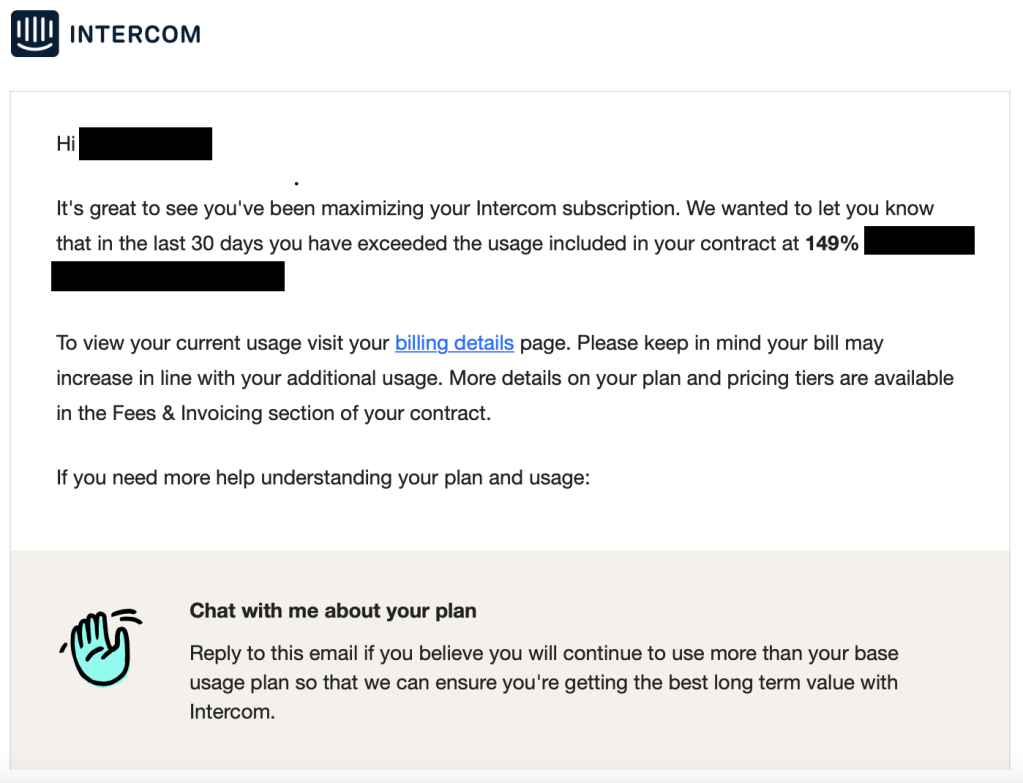
Hubspot and Intercom are very successful companies. And on the exact same type of communication to their customer, they choose two completely different approaches.

One is before, the other is after.

One raises awareness, the other raises alarm.

One gives you agency, the other takes it away.

One is about hope (“Your contacts database is growing”), the other is about failure (“You’ve exceeded the usage”).

Also (you can’t say that from the message alone, but I’ll ask you to trust me), one is true, the other is not.

There is no right or wrong way to do stuff.

But the choices you make say a lot about who you are and what you stand for.