What is the reason you give yourself to continue doing what you’re doing?
If it’s to make things better, to support, to spread an important message, to grow and make others grow, to change toxic habits, to repair something that is worth it. That is fantastic, and you are lucky.
If it’s to feed a habit, to continue a routine, to leverage information that no one else has, to make yourself indispensable, to add layers of complexity and titles to your business card, to keep your mind busy so that you do not have to face bigger, more painful questions, to share your opinion on things you don’t know even when not asked.
You don’t need another article that tells you how to get what you want to get, no other “how-to” or “five steps” guides to determine what you are going to do today.
All you need is a starting point and a destination.
We do the same things over and over again. React to the same things in the same way. Behave the same way with the very same person. Think the same thoughts, feel the same feelings, fall into the same narratives.
We do this until it becomes our reality, who we are, what we breath. And it is often self-destructive.
If only we could take a step back, point the finger at the pattern, and laugh.
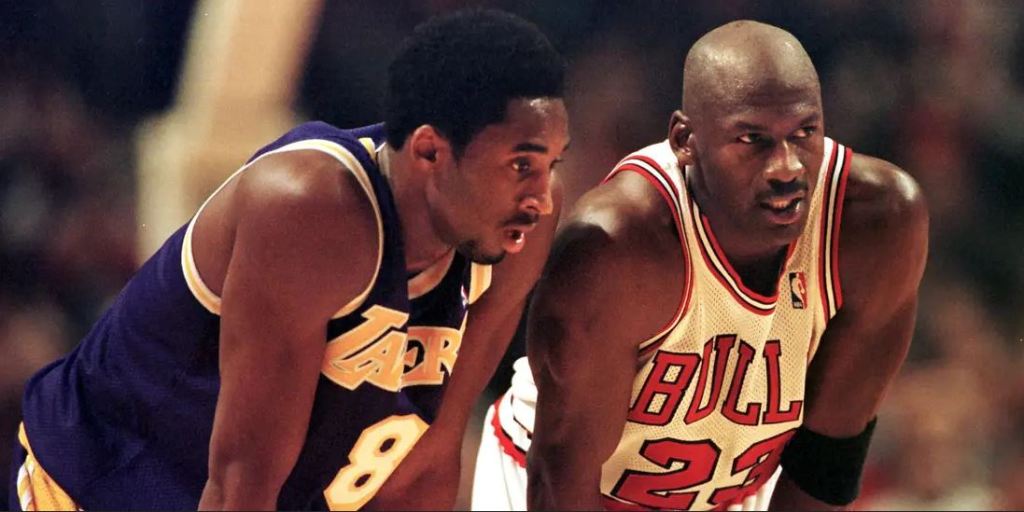
In December 1997, Los Angeles Lakers played the Bulls in Chicago. Many consider that the first real face-off between Kobe Bryant (who had been drafted the year before) and Michael Jordan (who had already won five championships).
During a break in the game, Bryant is close to Jordan. Bryant grew up watching Jordan play, he’s his idol. Bryant is bold enough to ask Jordan a question about his game: “how do you feel the defense when you turn around on your jump shot?”.
Now, Jordan could have done many different things here. He was the undisputed star of the NBA, he was going to win another championship that year. Yet, he knew that could not last forever, and many thought Bryant was his successor, the new rising star destined to take his place in the hearts of millions of fan.
Jordan could have done many different things. He could have walked away, he could have laughed it off, he could have hidden his secret, he could have shared the wrong information, he could have told the newbie to come back after winning five rings.
And he decided to share his expertise. “You feel them with your legs.”
Knowledge is no longer a limited resources (provided it ever was). Knowledge is incremental, and every time you share your knowledge, you add another person’s perspective, experience, take to it. Knowledge grows, and eventually it makes a community (whether it is the National Basketball Association, your team, your neighborhood or your family) better.
Mentoring is the very act of sharing knowledge. We can make of it a practice and be generous with what we know, be open to give it away, and perhaps see it returning in time with some new twists.
And if you are in the young Bryant’s shoes, be bold enough to ask.
You can’t respond to feedback with a counterargument, a justification, an elaboration of the original idea.
Feedback is not a discussion, something you ought to win, a way for you to influence others with your perspective. Feedback is not an attack, something you have to defend against, a way for others to bring you down. In most cases, feedback is also not supposed to start an action, something that puts an obligation onto you, a way for others to have your work rectified or changed.
The only, immediate, acceptable response to receiving feedback is always: thank you!